

Chronos taglia le ali di Cupido: Van Dyck racconta il trionfo del Tempo sull’amore
Tra le opere più affascinanti del periodo maturo di Antoon van Dyck si trova una potente meditazione sul trascorrere del tempo e sulla fragilità dei sentimenti umani: “Chronos taglia le ali di Cupido”, dipinto a olio su tela realizzato tra il 1630 e il 1632.
Conservato oggi nelle collezioni del Musée Jacquemart-André, il dipinto rappresenta una delle più intense allegorie barocche dedicate al rapporto tra Amore, Tempo e Morte, temi profondamente radicati nella cultura europea del XVII secolo.
La scena, apparentemente drammatica, racchiude un messaggio universale: anche il sentimento più potente è destinato a confrontarsi con il passare degli anni e con la caducità dell’esistenza.
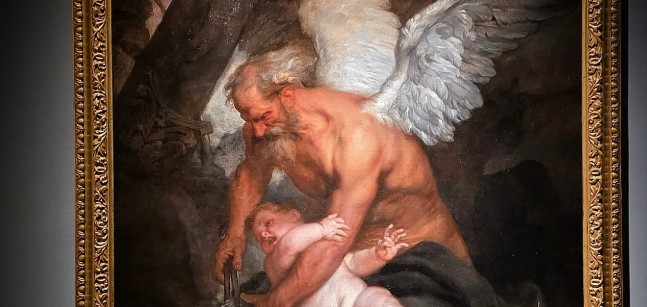
La scena: Chronos priva Cupido delle sue ali
Al centro della composizione Van Dyck raffigura Chronos, personificazione del Tempo, come un vecchio alato, nudo e imponente, seduto sulla propria falce.
Con una mano stringe il giovane Cupido, simbolo dell’amore passionale e del desiderio, mentre con l’altra ne recide le ali. Il dio dell’amore si agita e cerca di liberarsi, ma il gesto del Tempo appare inevitabile: nessuna forza terrena può sottrarsi al suo dominio.
Il significato allegorico è immediato: il tempo consuma ogni passione, indebolisce ogni desiderio e spegne ciò che sembra eterno.
Le ali tagliate di Cupido rappresentano la perdita della leggerezza e dell’impulso amoroso, mentre la presenza della falce richiama il potere distruttivo del tempo che conduce ogni essere verso la fine.
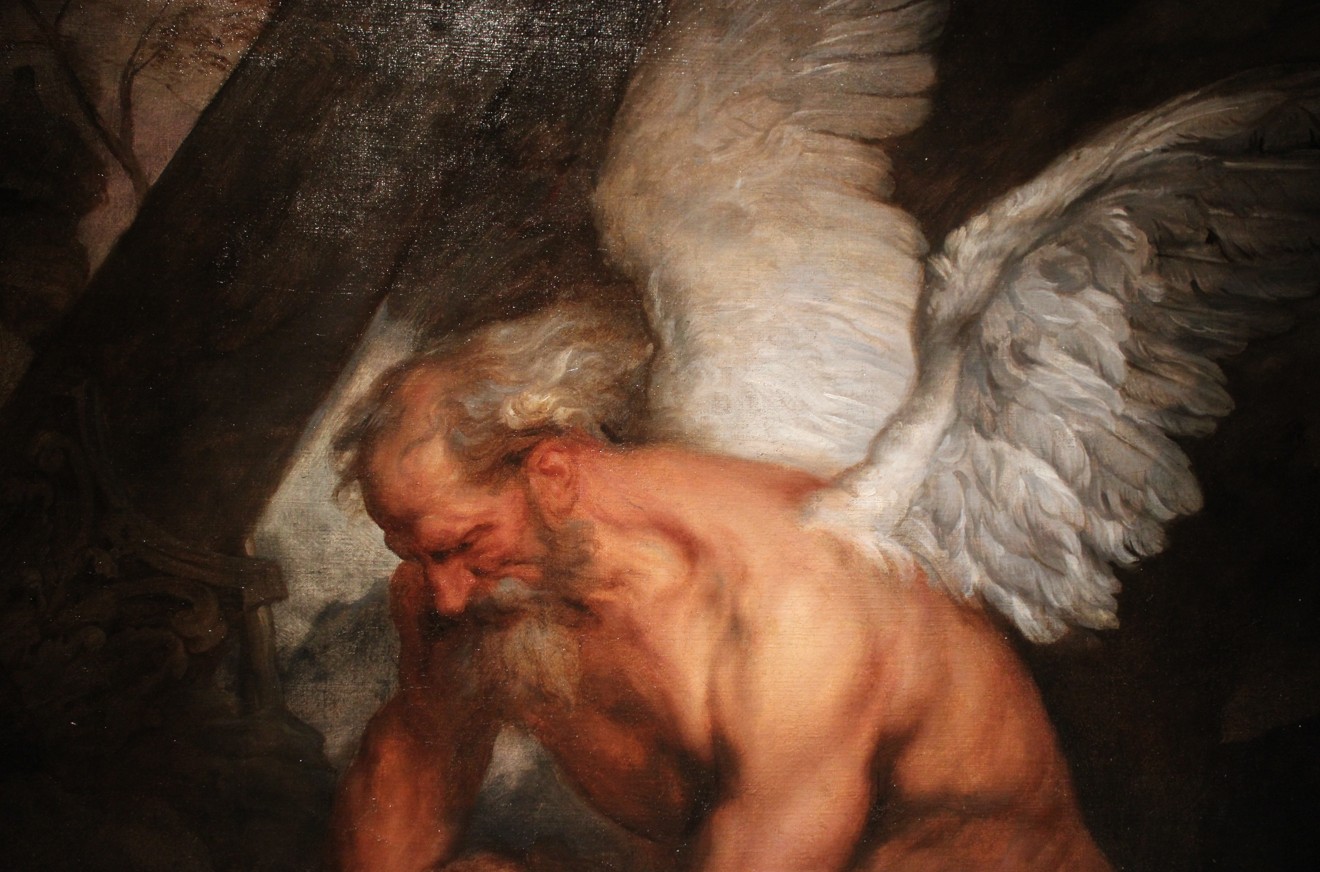
Amore, morte e caducità della vita
Van Dyck arricchisce la scena con dettagli che ampliano il significato filosofico dell’opera.
In basso a destra compare un teschio, simbolo della morte e della vanità delle ambizioni umane. La presenza di questo elemento collega il dipinto alla tradizione delle vanitas, immagini nate per ricordare allo spettatore che bellezza, ricchezza, potere e passioni sono destinate a svanire.
La grande falce di Chronos non rappresenta soltanto il trascorrere delle stagioni o dell’età, ma diventa lo strumento attraverso cui il tempo interrompe ogni felicità destinata a non durare.
Il messaggio del dipinto è quindi più ampio della semplice sconfitta dell’amore: il tempo domina ogni cosa terrena.
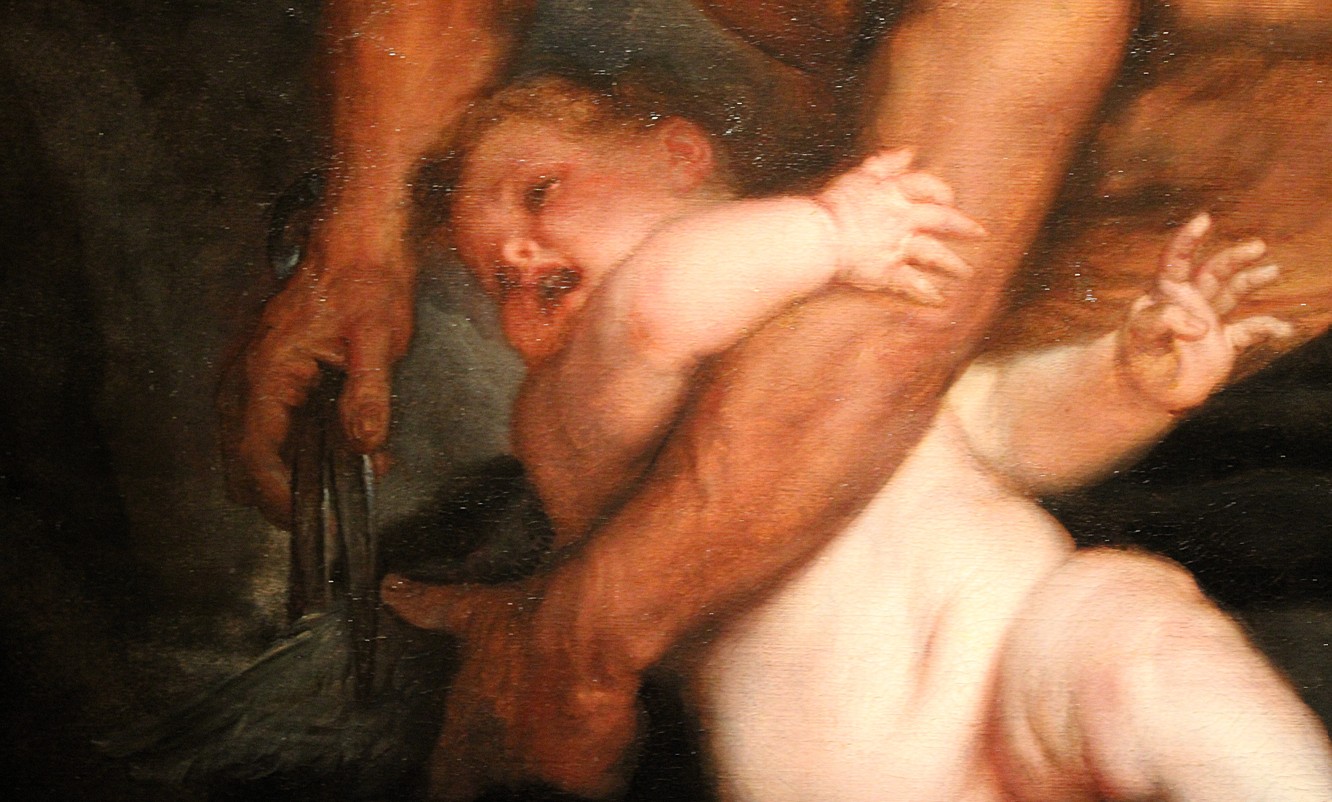
Un soggetto nato dagli emblemi dell’amore del Seicento
L’iconografia utilizzata da Van Dyck non nasce dal nulla. La scena richiama una raffigurazione presente negli “Amorum Emblemata” di Otto van Veen, pubblicati nel 1608.
La raccolta, molto diffusa nell’Europa del Seicento, proponeva immagini allegoriche accompagnate da testi morali dedicati al tema dell’amore. L’artista fiammingo riprende dunque un soggetto già noto al pubblico colto dell’epoca, trasformandolo però in una composizione monumentale e altamente teatrale.
Van Dyck conferisce alla scena una forza nuova grazie alla monumentalità delle figure e alla tensione emotiva dei protagonisti.
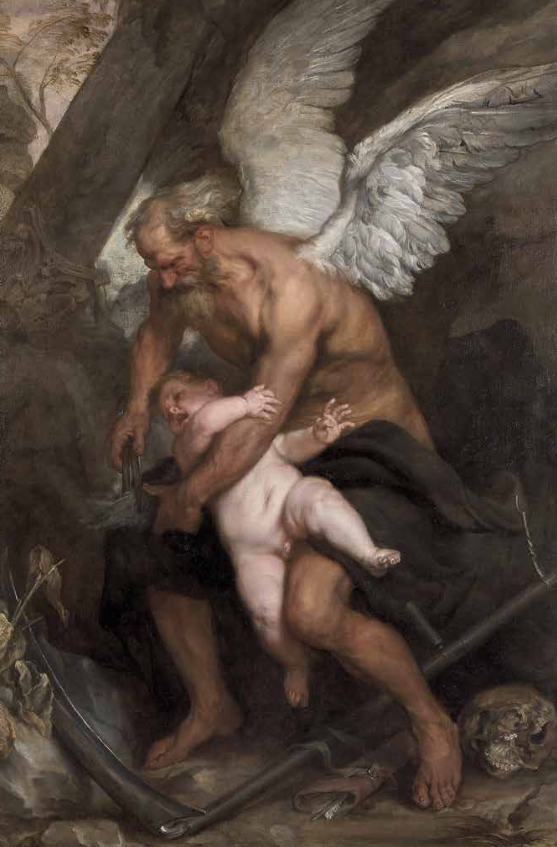
Lo stile di Van Dyck: eleganza, movimento e pittura veloce
La tela appartiene agli anni 1630-1632, un periodo particolarmente significativo della carriera dell’artista, quando Van Dyck aveva ormai raggiunto una straordinaria maturità tecnica.
La fortuna dell’opera è testimoniata anche dalla sua lunga e prestigiosa provenienza.
Il dipinto potrebbe essere identificato con un’opera citata nell’inventario post mortem del 1653 dei pittori e mercanti d’arte di Anversa Jan e Jeremias Wildens, descritta come:
“Un dipinto del Tempo che accorcia le ali di Cupido, di Van Dyck”.
Successivamente entrò probabilmente nelle raccolte della casa d’Orange, passando poi attraverso importanti collezioni inglesi, tra cui quella dei duchi di Marlborough a Blenheim Palace.
Nel XIX secolo l’opera fu acquistata da Sir John Everett Millais, uno dei principali esponenti della pittura vittoriana, prima di arrivare nella collezione parigina di Nélie Jacquemart-André.
Alla morte della collezionista, nel 1912, il dipinto venne lasciato in eredità all’Institut de France, entrando definitivamente nelle raccolte del Musée Jacquemart-André.
Per il momento il sempre vostro Michelangelo Buonarroti vi saluta dandovi appuntamento ai prossimi post e sui social.
Chronos Clipping Cupid’s Wings: Van Dyck Recounts the Triumph of Time Over Love
Among the most fascinating works of Anthony van Dyck’s mature period is a powerful meditation on the passage of time and the fragility of human emotions: “Chronos Clipping Cupid’s Wings,” an oil on canvas painted between 1630 and 1632.
Now housed in the collections of the Musée Jacquemart-André, the painting represents one of the most intense Baroque allegories dedicated to the relationship between Love, Time, and Death, themes deeply rooted in 17th-century European culture.
The seemingly dramatic scene conveys a universal message: even the most powerful feelings are destined to confront the passing of the years and the transience of existence.
The Scene: Chronos Strips Cupid of His Wings
At the center of the composition, Van Dyck depicts Chronos, the personification of Time, as a winged old man, naked and imposing, seated on his scythe.
With one hand, she grasps the young Cupid, a symbol of passionate love and desire, while with the other, she clips his wings. The god of love struggles and tries to free himself, but Time’s gesture seems inevitable: no earthly force can escape his dominion.
The allegorical meaning is immediate: time consumes every passion, weakens every desire, and extinguishes what seems eternal.
Cupid’s clipped wings represent the loss of lightness and the impulse of love, while the presence of the scythe recalls the destructive power of time, which leads all beings to their end.
Love, Death, and the Transience of Life
Van Dyck enriches the scene with details that broaden the work’s philosophical meaning.
At the bottom right, a skull appears, a symbol of death and the vanity of human ambition. The presence of this element links the painting to the tradition of vanitas, images created to remind the viewer that beauty, wealth, power, and passion are destined to vanish.
Chronos’s great scythe not only represents the passing of the seasons or of age, but also becomes the instrument through which time interrupts all happiness destined to be short-lived.
The painting’s message is therefore broader than the simple defeat of love: time dominates all earthly things.
A subject born from 17th-century emblems of love
The iconography used by Van Dyck does not arise from nothing. The scene recalls a depiction found in Otto van Veen’s “Amorum Emblemata,” published in 1608.
The collection, widespread in 17th-century Europe, featured allegorical images accompanied by moral texts on the theme of love. The Flemish artist thus takes up a subject already familiar to the cultured public of the time, transforming it into a monumental and highly theatrical composition.
Van Dyck imbues the scene with new force thanks to the monumentality of the figures and the emotional tension of the protagonists.
Van Dyck’s Style: Elegance, Movement, and Rapid Painting
The canvas dates to the years 1630-1632, a particularly significant period in the artist’s career, when Van Dyck had reached extraordinary technical maturity.
The work’s success is also evidenced by its long and prestigious provenance.
The painting could be identified with a work cited in the 1653 postmortem inventory of the Antwerp painters and art dealers Jan and Jeremias Wildens, described as:
“A painting of Time Shortening Cupid’s Wings, by Van Dyck.”
It later likely entered the collections of the House of Orange, then passed through important English collections, including that of the Dukes of Marlborough at Blenheim Palace.
In the 19th century, the work was purchased by Sir John Everett Millais, a leading exponent of Victorian painting, before arriving in the Parisian collection of Nélie Jacquemart-André.
Upon the collector’s death in 1912, the painting was bequeathed to the Institut de France, permanently entering the collections of the Musée Jacquemart-André.
For now, yours truly, Michelangelo Buonarroti bids you farewell and invites you to follow him in future posts and on social media.

Sostienici – Support Us
Se questo blog ti piace e ti appassiona, puoi aiutarci a farlo crescere sempre più sostenendoci in modo concreto condividendo i post, seguendo le pagine social e con un contributo che ci aiuta ad andare avanti con il nostro lavoro di divulgazione. . ENGLISH: If you like and are passionate about this blog, you can help us make it grow more and more by supporting us in a concrete way by sharing posts, following social pages and with a contribution that helps us to move forward with our dissemination work.
10,00 €
Condividi:


Questo sono io




sostienici

Sostienici – Support Us
Se questo blog ti piace e ti appassiona, puoi aiutarci a farlo crescere sempre più sostenendoci in modo concreto condividendo i post, seguendo le pagine social e con un contributo che ci aiuta ad andare avanti con il nostro lavoro di divulgazione. . ENGLISH: If you like and are passionate about this blog, you can help us make it grow more and more by supporting us in a concrete way by sharing posts, following social pages and with a contribution that helps us to move forward with our dissemination work.
€10,00


