
L’Adorazione dei Magi di Edward Burne-Jones: capolavoro preraffaellita
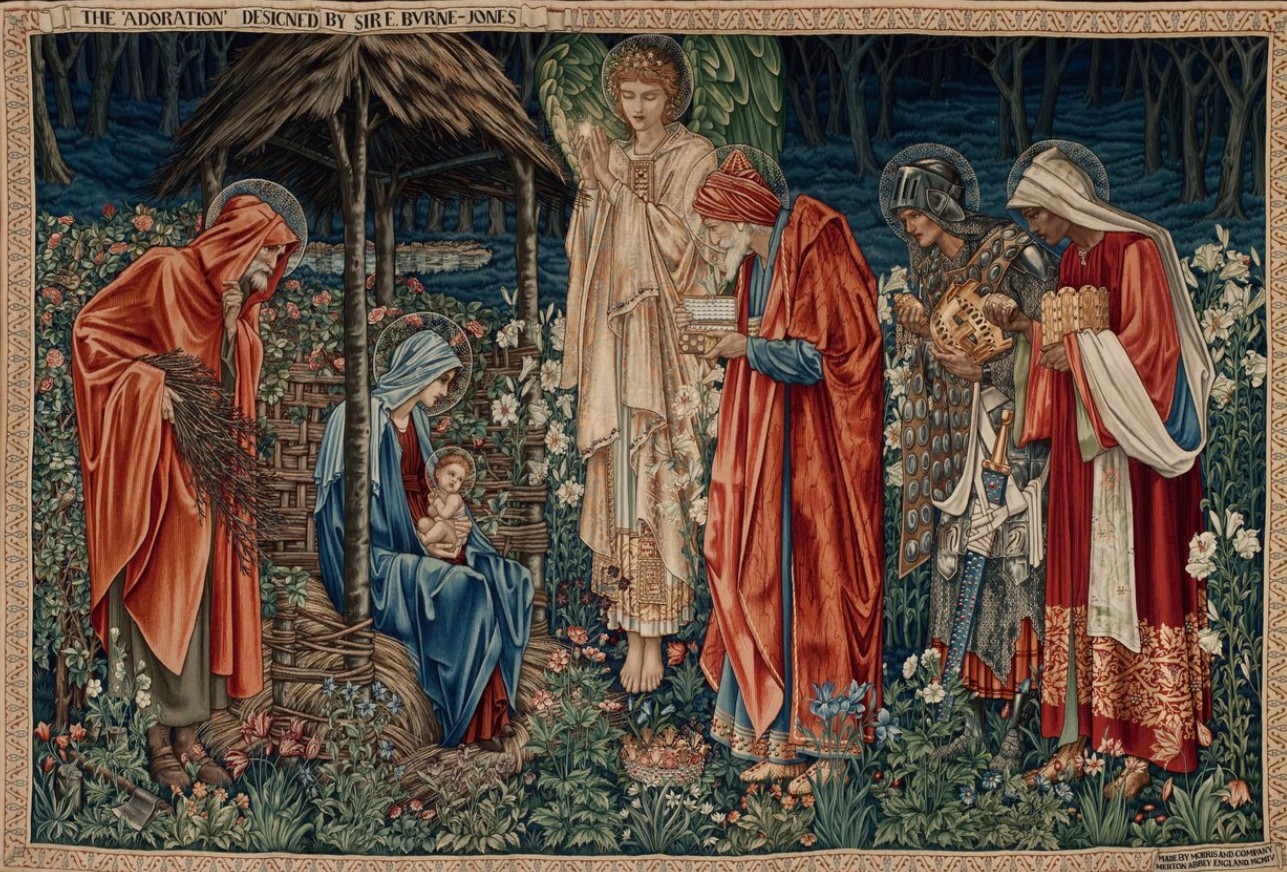
Tra le opere più affascinanti legate all’iconografia natalizia, L’Adorazione dei Magi di Edward Burne-Jones occupa un posto di assoluto rilievo.
Realizzata alla fine dell’Ottocento, questa straordinaria opera preraffaellita unisce spiritualità, simbolismo e raffinatezza decorativa, trasformando uno degli episodi centrali della Natività in una visione sospesa tra Medioevo ideale e sensibilità moderna.
Edward Burne-Jones, figura di spicco del Preraffaellismo inglese, concepisce L’Adorazione dei Magi come un’opera profondamente contemplativa, capace di evocare il mistero sacro del Natale e il significato universale della nascita di Cristo.
Un soggetto chiave del Natale cristiano
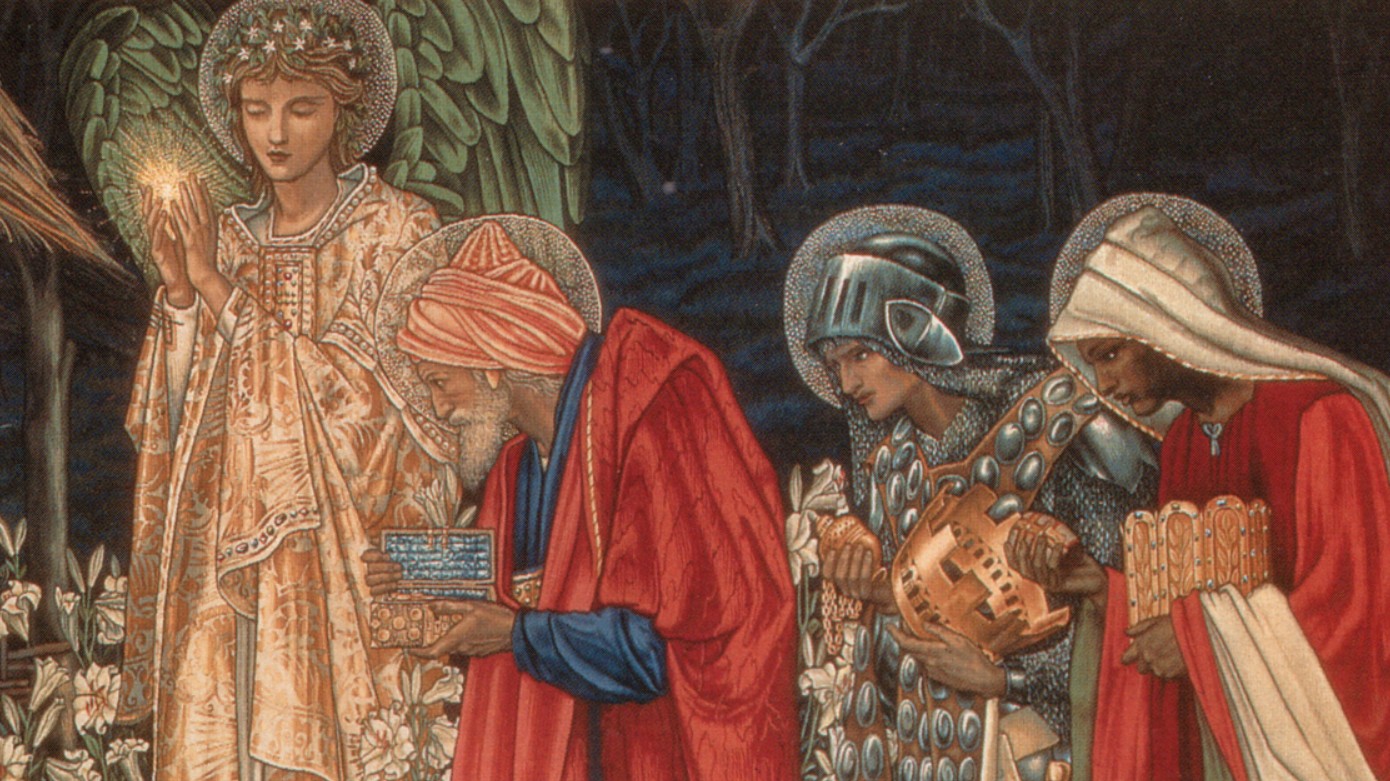
La scena rappresentata è quella narrata dal Vangelo di Matteo: i Re Magi, guidati dalla Stella di Betlemme, giungono ad adorare il Bambino Gesù, offrendo i loro doni simbolici: oro, incenso e mirra. Questo episodio, celebrato liturgicamente con l’Epifania, conclude idealmente il ciclo natalizio e rappresenta la manifestazione di Cristo a tutte le genti.
Nel contesto del Natale, l’Adorazione dei Magi assume un valore profondamente simbolico: non è solo un momento di omaggio, ma il riconoscimento della divinità del Bambino da parte del mondo intero. Burne-Jones riesce a tradurre questa dimensione spirituale in immagini cariche di silenzio, solennità e raccoglimento.
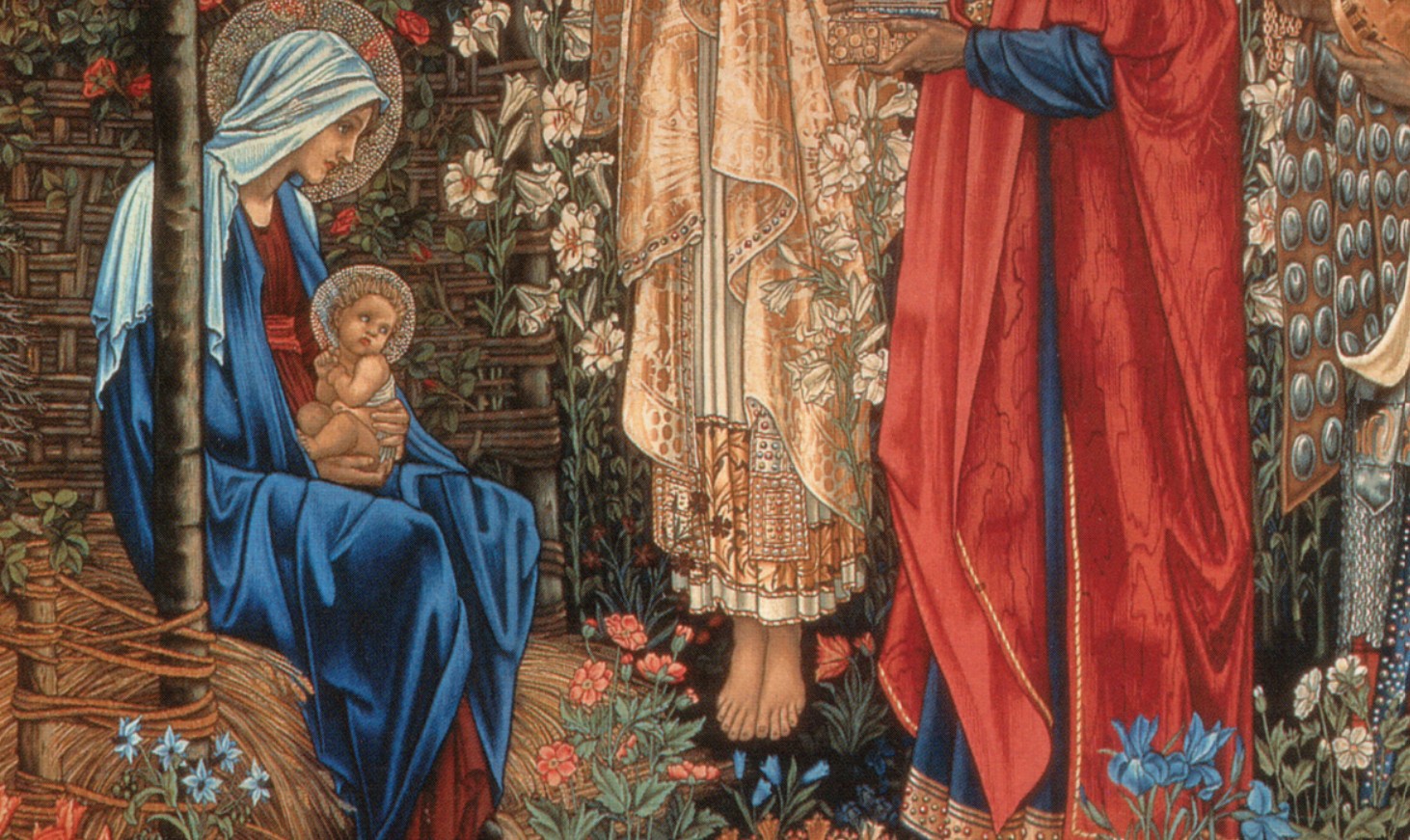
Osservate con attenzione come il Bambino appaia quasi intimorito dall’arrivo dei Magi introdotti dall’angelo: li guarda ma si rannicchia cercando protezione nella Madre.
Caratteristiche artistiche e stile preraffaellita
A differenza delle tradizionali pale d’altare dipinte, L’Adorazione dei Magi di Burne-Jones è un grande arazzo in lana e seta, realizzato nell’ambito del movimento Arts & Crafts grazie alla collaborazione con William Morris e John Henry Dearle per la celebre manifattura Morris & Co.
Lo stile è immediatamente riconoscibile con quelle figure slanciate ed eleganti, dai tratti idealizzati e dalle posture solenni e lente, quasi rituali. Tipico dei preraffaelliti è anche la ricchezza dei motivi ornamentali floreali, che incorniciano la scena e richiamano l’arte medievale.
Un’opera diffusa in più versioni
Uno degli aspetti più interessanti dell’Adorazione dei Magi di Burne-Jones è la sua diffusione in più versioni. Tra il 1890 e il 1907 furono realizzati circa dieci arazzi, ciascuno con leggere variazioni decorative.
Oggi le versioni più importanti dell’opera sono conservate in prestigiose istituzioni internazionali, tra cui l’Exeter College di Oxford, dove l’arazzo fu originariamente concepito per la cappella, il Musée d’Orsay di Parigi, che custodisce una delle versioni più celebri, l’Hermitage Museum di San Pietroburgo, l’Art Gallery of South Australia e il Castle Museum di Norwich.
Questa diffusione testimonia il grande successo dell’opera e il forte impatto che ebbe sull’arte decorativa tra fine Ottocento e inizio Novecento.
Il significato dell’opera nel periodo natalizio
Durante il Natale, L’Adorazione dei Magi assume una forza evocativa ancora maggiore. Burne-Jones non rappresenta l’evento come una scena festosa, ma come un momento di silenziosa rivelazione, in cui il sacro si manifesta attraverso la bellezza e l’armonia.
Il messaggio è profondamente natalizio: il dono, il viaggio, l’attesa e la contemplazione diventano simboli di un cammino spirituale. I Magi, provenienti da terre lontane, incarnano l’umanità intera che si avvicina al mistero della nascita di Cristo, rendendo questa opera una delle interpretazioni più poetiche del tema natalizio nella storia dell’arte moderna.
Per il momento il sempre vostro Michelangelo Buonarroti vi saluta dandovi appuntamento ai prossimi post e sui social.

The Adoration of the Magi by Edward Burne-Jones: A Pre-Raphaelite Masterpiece
Among the most fascinating works related to Christmas iconography, The Adoration of the Magi by Edward Burne-Jones holds a place of absolute prominence.
Created at the end of the 19th century, this extraordinary Pre-Raphaelite work combines spirituality, symbolism, and decorative refinement, transforming one of the central episodes of the Nativity into a vision suspended between medieval ideals and modern sensibilities.
Edward Burne-Jones, a leading figure in English Pre-Raphaelitism, conceived The Adoration of the Magi as a profoundly contemplative work, capable of evoking the sacred mystery of Christmas and the universal significance of Christ’s birth.
A Key Subject of the Christian Christmas
The scene depicted is from the Gospel of Matthew: the Three Wise Men, guided by the Star of Bethlehem, come to adore the Child Jesus, offering their symbolic gifts: gold, frankincense, and myrrh. This episode, celebrated liturgically with the Epiphany, ideally concludes the Christmas cycle and represents the manifestation of Christ to all people.
In the context of Christmas, the Adoration of the Magi takes on a profoundly symbolic meaning: it is not only a moment of homage, but the entire world’s recognition of the Child’s divinity. Burne-Jones succeeds in translating this spiritual dimension into images charged with silence, solemnity, and contemplation.
Observe carefully how the Child appears almost intimidated by the arrival of the Magi brought in by the angel: He looks at them but curls up, seeking protection from his Mother.
Pre-Raphaelite Artistic Characteristics and Style
Unlike traditional painted altarpieces, Burne-Jones’s Adoration of the Magi is a large wool and silk tapestry, created during the Arts & Crafts movement thanks to the collaboration with William Morris and John Henry Dearle for the renowned Morris & Co. factory.
The style is immediately recognizable with its slender, elegant figures, idealized features, and solemn, slow, almost ritualistic postures. Also typical of the Pre-Raphaelites is the richness of the floral ornamental motifs, which frame the scene and recall medieval art.
A work distributed in multiple versions
One of the most interesting aspects of Burne-Jones’s Adoration of the Magi is its multiple versions. Between 1890 and 1907, approximately ten tapestries were produced, each with slight decorative variations.
Today, the most important versions of the work are held in prestigious international institutions, including Exeter College, Oxford, where the tapestry was originally conceived for the chapel; the Musée d’Orsay in Paris, which houses one of the most famous versions; the Hermitage Museum in St. Petersburg; the Art Gallery of South Australia; and the Castle Museum in Norwich.
This widespread distribution testifies to the work’s great success and the profound impact it had on decorative art between the late 19th and early 20th centuries.
The Work’s Significance at Christmastime
During Christmas, The Adoration of the Magi takes on an even greater evocative power. Burne-Jones depicts the event not as a festive scene, but as a moment of silent revelation, in which the sacred manifests itself through beauty and harmony.
The message is profoundly Christmassy: the gift, the journey, the waiting, and the contemplation become symbols of a spiritual journey. The Magi, coming from distant lands, embody all of humanity approaching the mystery of Christ’s birth, making this work one of the most poetic interpretations of the Christmas theme in the history of modern art.
For now, yours truly, Michelangelo Buonarroti, bids farewell and invites you to join him in future posts and on social media.

Sostienici – Support Us
Se questo blog ti piace e ti appassiona, puoi aiutarci a farlo crescere sempre più sostenendoci in modo concreto condividendo i post, seguendo le pagine social e con un contributo che ci aiuta ad andare avanti con il nostro lavoro di divulgazione. . ENGLISH: If you like and are passionate about this blog, you can help us make it grow more and more by supporting us in a concrete way by sharing posts, following social pages and with a contribution that helps us to move forward with our dissemination work.
10,00 €
Articoli

Condividi:


Questo sono io





sostienici

Sostienici – Support Us
Se questo blog ti piace e ti appassiona, puoi aiutarci a farlo crescere sempre più sostenendoci in modo concreto condividendo i post, seguendo le pagine social e con un contributo che ci aiuta ad andare avanti con il nostro lavoro di divulgazione. . ENGLISH: If you like and are passionate about this blog, you can help us make it grow more and more by supporting us in a concrete way by sharing posts, following social pages and with a contribution that helps us to move forward with our dissemination work.
€10,00


