

Natale nell’arte: l’Adorazione dei pastori di Matthias Stomer
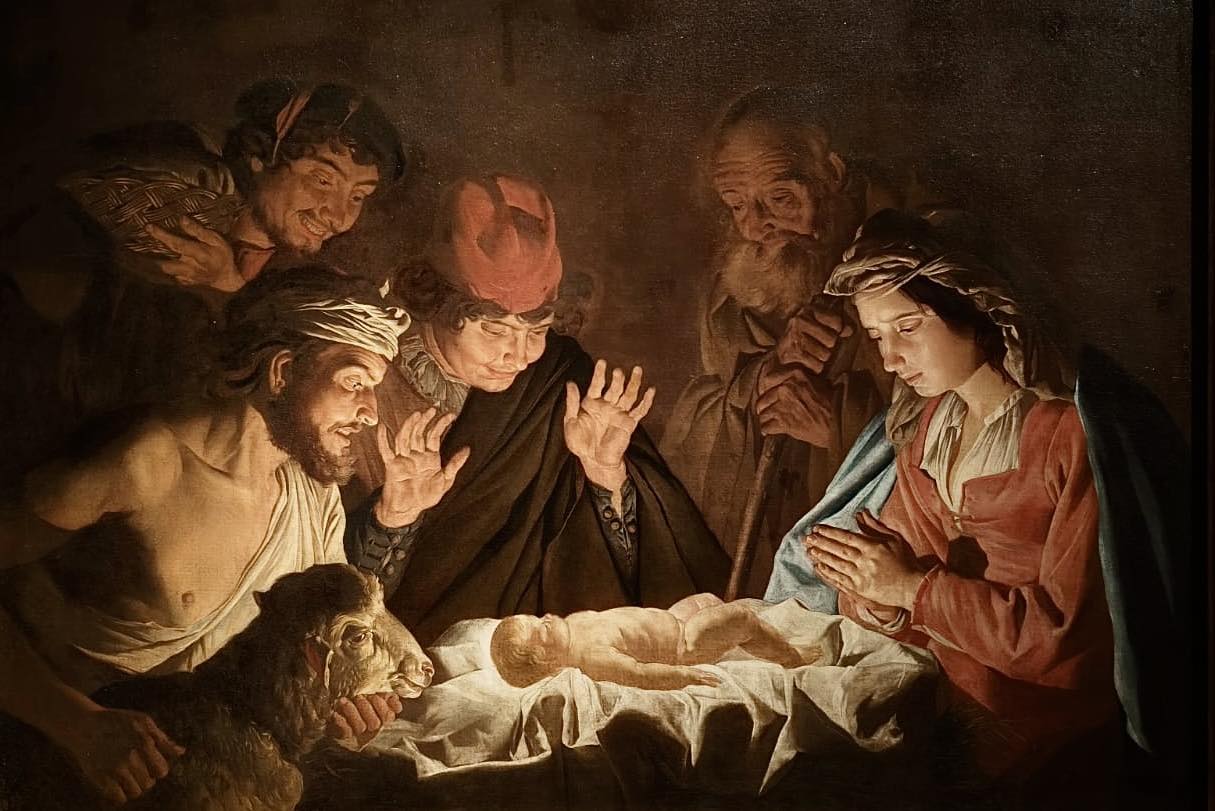
Tra le immagini più intense e suggestive legate al Natale nell’arte, l’Adorazione dei pastori di Matthias Stomer occupa un posto di prim’ordine.
Dipinto tra il 1632 e il 1635, durante il soggiorno napoletano dell’artista, l’olio su tela, oggi appartenente alla Collezione Borbone del Museo di Capodimonte, è uno degli esempi più alti della pittura caravaggesca di matrice nordica.

Matthias Stomer e il caravaggismo del Seicento
Matthias Stomer (Amersfoort, ca. 1600 – Sicilia, dopo il 1650) fu uno dei principali esponenti di quella folta colonia di pittori nordici attivi tra Roma e Napoli nel Seicento, profondamente influenzati da Caravaggio e dai caravaggisti del Nord Europa.
La sua pittura si distingue per l’uso drammatico della luce, per il naturalismo intenso e per una profonda capacità narrativa, qualità che trovano piena espressione proprio nei soggetti religiosi legati alla Natività.
L’Adorazione dei pastori: significato e iconografia natalizia
Nel racconto evangelico, l’Adorazione dei pastori segue l’annuncio della nascita del Messia, portato dall’arcangelo Gabriele ai guardiani delle greggi. Dal punto di vista iconografico, la scena si afferma come soggetto autonomo a partire dalla fine del XV secolo, diventando uno dei temi centrali dell’arte natalizia.
I pastori, spesso raffigurati in numero di tre per analogia con i Magi, si avvicinano al Bambino con atteggiamenti di umile devozione, talvolta offrendo doni rustici, come agnelli, simbolo del futuro sacrificio di Cristo, anche se non menzionati nei Vangeli.
La luce come simbolo del Natale
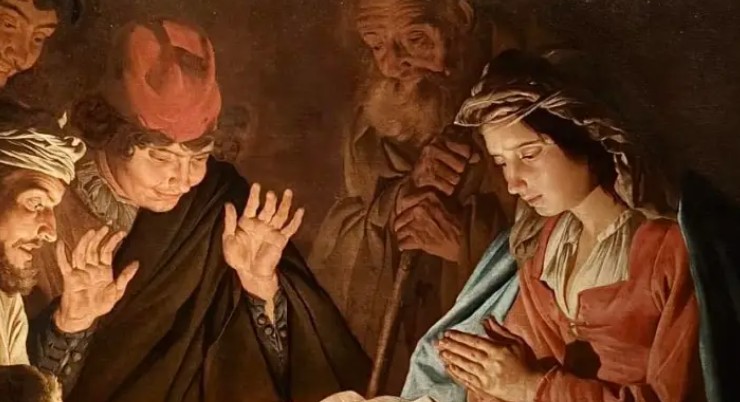
Uno degli elementi più affascinanti dell’Adorazione dei pastori di Stomer è la composizione a lume di candela, tipica dei caravaggisti nordici.
La scena è costruita attorno a una fonte luminosa artificiale – una torcia – che illumina i personaggi in primo piano, mentre il Bambino Gesù sembra emanare una luce purissima, riflessa dal panno candido su cui è adagiato.
Questo gioco di chiaroscuro non è solo un espediente tecnico, ma assume un forte valore simbolico: la luce che squarcia il buio diventa metafora della nascita di Cristo, tema centrale del Natale cristiano.
Intimità, emozione e naturalismo
Tutti i personaggi sono rappresentati in uno spazio raccolto, emotivamente vicini, quasi sospesi in un dialogo silenzioso e intimo. L’impaginazione è equilibrata, le superfici levigate e la resa dei volti estremamente realistica.
Durante gli anni napoletani, Stomer assorbe anche l’influenza dei pittori naturalisti attivi a Napoli, arricchendo il suo linguaggio con una maggiore attenzione ai dettagli quotidiani e alla verità dei gesti.
L’Adorazione dei pastori di Matthias Stomer è una riflessione visiva sul mistero del Natale: la semplicità, la luce che vince l’oscurità, l’umanità che si fa sacra.
Per il momento il sempre vostro Michelangelo Buonarroti vi saluta dandovi appuntamento ai prossimi post e sui social.

Christmas in Art: Matthias Stomer’s Adoration of the Shepherds
Among the most intense and evocative images of Christmas in art, Matthias Stomer’s Adoration of the Shepherds occupies a prominent place.
Painted between 1632 and 1635, during the artist’s stay in Naples, the oil on canvas, now part of the Bourbon Collection of the Capodimonte Museum, is one of the finest examples of Caravaggio-style painting of Northern European origin.
Matthias Stomer and 17th-Century Caravaggism
Matthias Stomer (Amersfoort, ca. 1600 – Sicily, after 1650) was one of the leading exponents of that large colony of Northern European painters active between Rome and Naples in the 17th century, profoundly influenced by Caravaggio and the Caravaggists of Northern Europe.
His painting is distinguished by his dramatic use of light, intense naturalism, and profound narrative ability, qualities that find full expression in his religious subjects related to the Nativity.
The Adoration of the Shepherds: Meaning and Christmas Iconography
In the Gospel story, the Adoration of the Shepherds follows the announcement of the birth of the Messiah, brought by the Archangel Gabriel to the shepherds of the flock. Iconographically, the scene emerged as an independent subject from the late 15th century onward, becoming one of the central themes of Christmas art.
The shepherds, often depicted in threes by analogy with the Magi, approach the Child with attitudes of humble devotion, sometimes offering rustic gifts, such as lambs, a symbol of Christ’s future sacrifice, although not mentioned in the Gospels.
Light as a Symbol of Christmas
One of the most fascinating elements of Stomer’s Adoration of the Shepherds is the candlelit composition, typical of Northern Caravaggists.
The scene is constructed around an artificial light source—a torch—that illuminates the figures in the foreground, while the Baby Jesus seems to emanate a pure light, reflected from the white cloth on which he lies.
This play of chiaroscuro is not merely a technical device, but takes on a powerful symbolic value: the light piercing the darkness becomes a metaphor for the birth of Christ, a central theme of the Christian Christmas.
Intimacy, Emotion, and Naturalism
All the figures are depicted in a secluded space, emotionally close, almost suspended in a silent and intimate dialogue. The composition is balanced, the surfaces smooth, and the facial rendering is extremely realistic.
During his Neapolitan years, Stomer also absorbed the influence of the naturalist painters active in Naples, enriching his artistic language with a greater attention to everyday details and the authenticity of gestures.
Matthias Stomer’s Adoration of the Shepherds is a visual reflection on the mystery of Christmas: simplicity, light conquering darkness, humanity becoming sacred.
For now, yours truly, Michelangelo Buonarroti bids farewell and invites you to join him in future posts and on social media.

Sostienici – Support Us
Se questo blog ti piace e ti appassiona, puoi aiutarci a farlo crescere sempre più sostenendoci in modo concreto condividendo i post, seguendo le pagine social e con un contributo che ci aiuta ad andare avanti con il nostro lavoro di divulgazione. . ENGLISH: If you like and are passionate about this blog, you can help us make it grow more and more by supporting us in a concrete way by sharing posts, following social pages and with a contribution that helps us to move forward with our dissemination work.
10,00 €
Condividi:


Questo sono io





sostienici

Sostienici – Support Us
Se questo blog ti piace e ti appassiona, puoi aiutarci a farlo crescere sempre più sostenendoci in modo concreto condividendo i post, seguendo le pagine social e con un contributo che ci aiuta ad andare avanti con il nostro lavoro di divulgazione. . ENGLISH: If you like and are passionate about this blog, you can help us make it grow more and more by supporting us in a concrete way by sharing posts, following social pages and with a contribution that helps us to move forward with our dissemination work.
€10,00


