

15 dicembre 1675: muore Johannes Vermeer, il maestro del silenzio e della luce
Il 15 dicembre 1675, a Delft, muore Johannes Vermeer, uno dei più enigmatici e affascinanti pittori del Seicento olandese. La sua scomparsa avvenne nel silenzio e nella difficoltà economica, ma la sua arte, riscoperta secoli dopo, lo ha consacrato come uno dei massimi interpreti della luce e dell’intimità nella storia dell’arte occidentale.
Johannes Vermeer: vita e contesto storico
Johannes Vermeer nacque a Delft nel 1632, nelle Province Unite dei Paesi Bassi, in un periodo di straordinaria fioritura economica e culturale noto come Secolo d’Oro olandese. Figlio di un locandiere e mercante d’arte, crebbe in un ambiente a stretto contatto con dipinti, collezionisti e artisti.

Nel 1653 entrò a far parte della Gilda di San Luca di Delft, istituzione che regolava l’attività dei pittori. Nello stesso anno sposò Catharina Bolnes, appartenente a una famiglia cattolica benestante: una scelta che comportò probabilmente la conversione di Vermeer al cattolicesimo. La coppia ebbe 15 figli, di cui almeno 11 sopravvissero, aggravando una situazione economica spesso precaria.
Vermeer lavorò lentamente e con estrema cura, producendo pochissime opere all’anno. Accanto all’attività pittorica, svolse anche il ruolo di mercante d’arte, ma la crisi economica seguita alla guerra franco-olandese (1672) compromise il mercato artistico. Alla sua morte, il 15 dicembre 1675, Vermeer lasciò la famiglia gravata dai debiti; la moglie lo descrisse come “caduto in frenesia e malinconia” negli ultimi anni di vita.
Lo stile pittorico di Johannes Vermeer
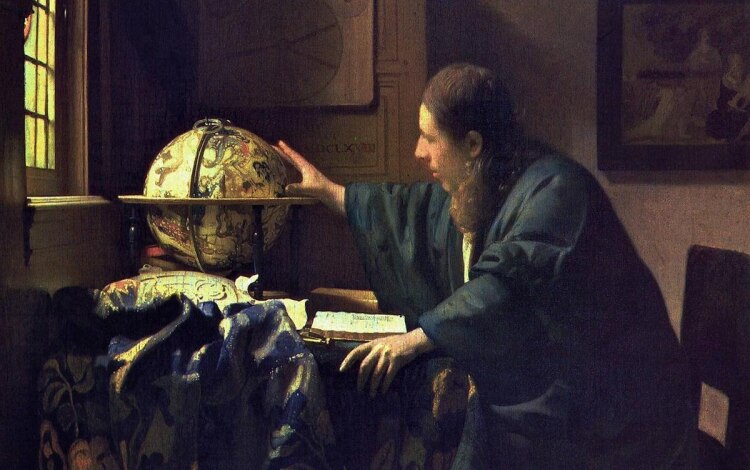
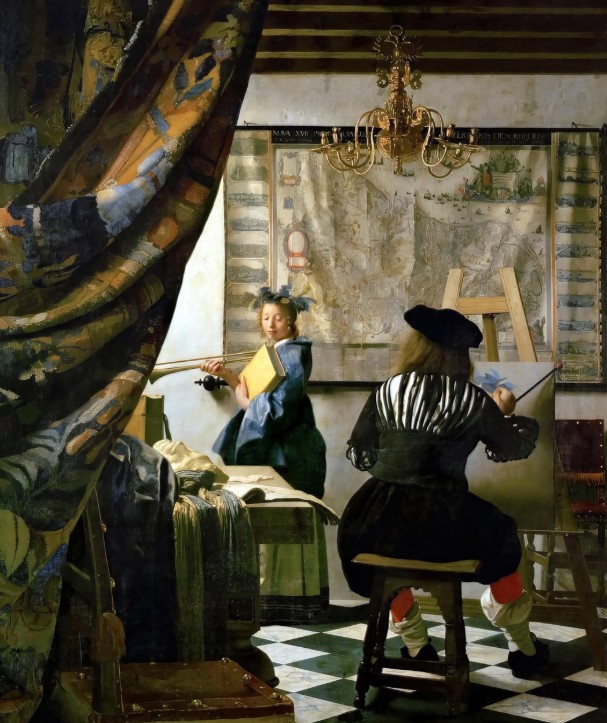
Lo stile di Vermeer è immediatamente riconoscibile e si distingue per una combinazione unica di rigore compositivo e poesia visiva. I suoi dipinti sono caratterizzati da un uso magistrale della luce naturale, quasi sempre proveniente da sinistra e da un’attenzione ai materiali e alle superfici come tessuti, perle, vetri, mappe.
Vermeer realizzò composizioni equilibrate, costruite secondo rapporti geometrici precisi adoperando una tavolozza raffinata, con largo impiego del blu oltremare ricavato dal lapislazzuli macinato.
Molti studiosi ipotizzano l’uso della camera oscura, strumento ottico che avrebbe aiutato Vermeer a ottenere effetti di sfocatura, riflessi luminosi e una resa quasi fotografica della realtà.
I soggetti: la poesia della vita quotidiana
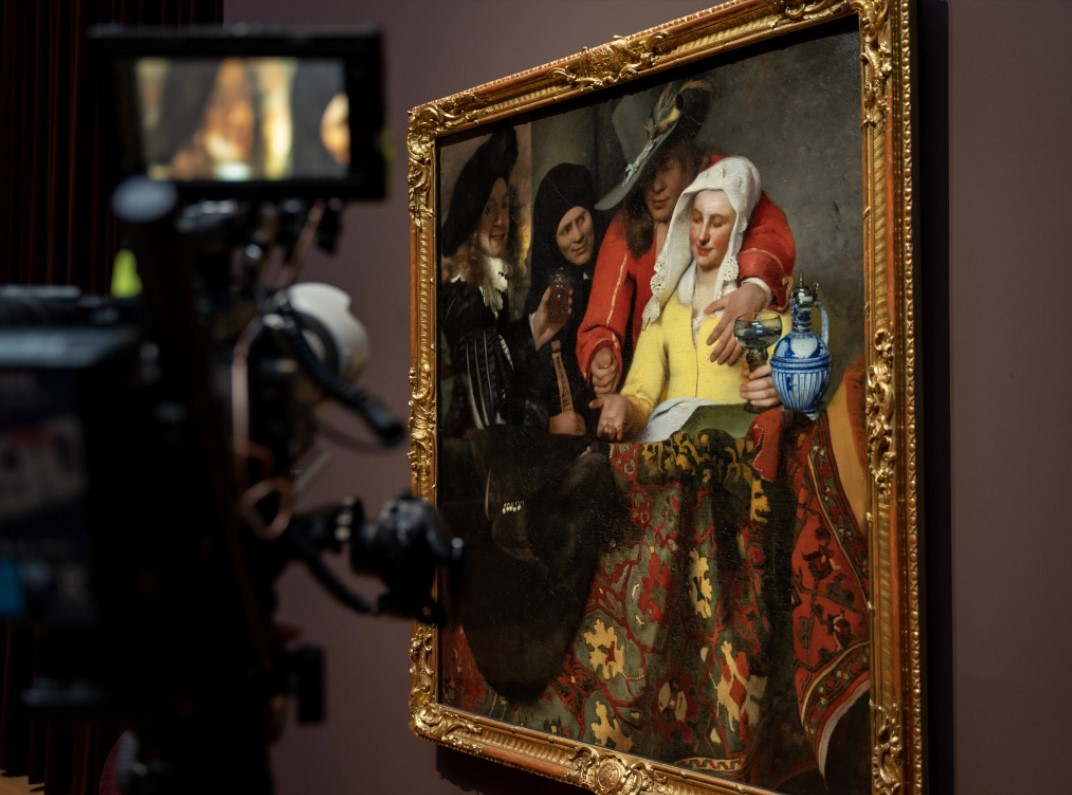
A differenza dei grandi pittori di storia, Vermeer si concentrò su scene di vita domestica, spesso ambientate nella stessa stanza, con pochi personaggi e gesti minimi. Donne che leggono, scrivono, suonano strumenti musicali o svolgono lavori domestici diventano protagoniste di immagini sospese nel tempo.
Queste scene, apparentemente semplici, sono cariche di significati simbolici: lettere, bilance, strumenti musicali e mappe alludono all’amore, alla morale, alla conoscenza e all’equilibrio interiore.

Le opere più celebri di Johannes Vermeer
A Vermeer sono attribuiti circa 35 dipinti, un corpus ristretto ma di altissima qualità.
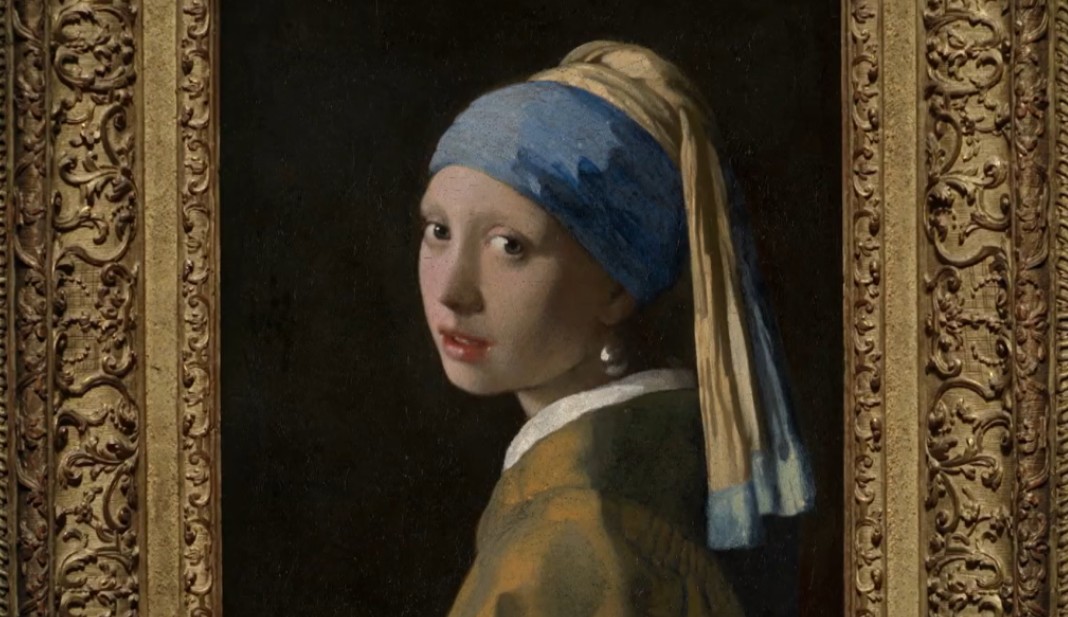
La ragazza con l’orecchino di perla (1665 ca.)
Capolavoro assoluto e icona della storia dell’arte, spesso soprannominata la “Gioconda del Nord”. Non è un ritratto tradizionale, ma uno studio di fisionomia ed espressione che colpisce per l’intensità dello sguardo e la resa luminosa della perla.
La lattaia (1658–1660)
Una scena di lavoro domestico trasformata in un’immagine monumentale. La luce modella le forme con precisione quasi scultorea, celebrando la dignità del quotidiano.
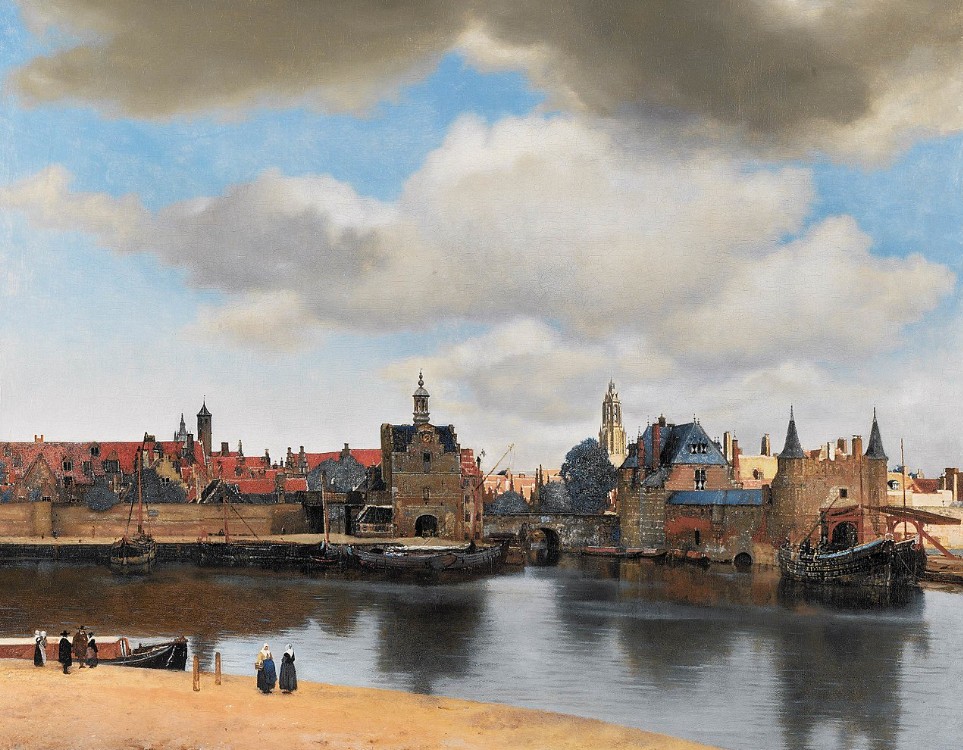
Veduta di Delft (1660–1661)
Una delle vedute urbane più celebri della pittura occidentale. Marcel Proust la definì uno dei dipinti più belli mai realizzati, lodando il famoso “muro giallo”.
Donna con bilancia (1664 ca.)
Un’opera di grande raffinatezza simbolica, in cui il gesto della donna diventa metafora di equilibrio morale e spirituale, rafforzata dalla presenza di un dipinto del Giudizio Universale sullo sfondo.
Oblio e riscoperta di Vermeer
Dopo la morte, Johannes Vermeer fu quasi completamente dimenticato e molte sue opere vennero attribuite ad altri artisti. Solo nel XIX secolo, grazie allo storico dell’arte francese Théophile Thoré-Bürger, la sua figura venne riscoperta e rivalutata.
Da allora, Vermeer è diventato uno degli artisti più studiati, esposti e amati dal grande pubblico, protagonista di mostre internazionali e fonte d’ispirazione per cinema, letteratura e fotografia.
L’eredità artistica di Johannes Vermeer
Johannes Vermeer è oggi considerato il pittore del silenzio e della luce. La sua capacità di trasformare gesti ordinari in immagini di intensa contemplazione lo rende straordinariamente moderno. Le sue opere invitano lo spettatore a rallentare, osservare e ascoltare il silenzio.
Nel giorno della sua morte, il 15 dicembre 1675, si chiudeva una vita difficile; iniziava però una leggenda destinata a crescere nei secoli.
Per il momento il sempre vostro Michelangelo Buonarroti vi saluta dandovi appuntamento ai prossimi post e sui social.

December 15, 1675: Johannes Vermeer, the Master of Silence and Light, Dies
On December 15, 1675, Johannes Vermeer, one of the most enigmatic and fascinating painters of the Dutch 17th century, died in Delft. His death occurred amidst silence and financial hardship, but his art, rediscovered centuries later, established him as one of the greatest interpreters of light and intimacy in the history of Western art.
Johannes Vermeer: Life and Historical Context
Johannes Vermeer was born in Delft in 1632, in the United Provinces of the Netherlands, during a period of extraordinary economic and cultural prosperity known as the Dutch Golden Age. The son of an innkeeper and art dealer, he grew up in an environment in close contact with paintings, collectors, and artists.
In 1653, he joined the Delft Guild of Saint Luke, an institution that regulated the activity of painters. That same year, he married Catharina Bolnes, from a wealthy Catholic family: a choice that likely led to Vermeer’s conversion to Catholicism. The couple had 15 children, at least 11 of whom survived, worsening an often precarious economic situation.
Vermeer worked slowly and with extreme care, producing very few works per year. Alongside his painting, he also acted as an art dealer, but the economic crisis following the Franco-Dutch War (1672) compromised the art market. Upon his death on December 15, 1675, Vermeer left his family burdened by debt; his wife described him as having “fallen into frenzy and melancholy” in the last years of his life.
Johannes Vermeer’s Painting Style
Vermeer’s style is immediately recognizable and stands out for a unique combination of compositional rigor and visual poetry. His paintings are characterized by a masterful use of natural light, almost always coming from the left, and by a careful attention to materials and surfaces such as fabrics, pearls, glass, and maps.
Vermeer created balanced compositions, constructed according to precise geometric ratios, using a refined palette, with extensive use of ultramarine blue obtained from ground lapis lazuli.
Many scholars hypothesize the use of the camera obscura, an optical instrument that helped Vermeer achieve blurring effects, light reflections, and an almost photographic rendering of reality.
The Subjects: The Poetry of Everyday Life
Unlike the great history painters, Vermeer focused on scenes of domestic life, often set in the same room, with few characters and minimal gestures. Women reading, writing, playing musical instruments, or performing household chores become the protagonists of images suspended in time.
These seemingly simple scenes are charged with symbolic meaning: letters, scales, musical instruments, and maps allude to love, morality, knowledge, and inner balance.
Johannes Vermeer’s Most Famous Works
Approximately 35 paintings are attributed to Vermeer, a small but highly refined body of work.
Girl with a Pearl Earring (c. 1665)
An absolute masterpiece and an icon of art history, often nicknamed the “Mona Lisa of the North.” It is not a traditional portrait, but a study of physiognomy and expression, striking for the intensity of the gaze and the luminous rendering of the pearl.
The Milkmaid (1658–1660)
A scene of domestic chores transformed into a monumental image. The light shapes the forms with almost sculptural precision, celebrating the dignity of everyday life.
View of Delft (1660–1661)
One of the most famous urban views in Western painting. Marcel Proust called it one of the most beautiful paintings ever made, praising the famous “yellow wall.”
Woman with Scales (ca. 1664)
A work of great symbolic refinement, in which the woman’s gesture becomes a metaphor for moral and spiritual balance, reinforced by the presence of a painting of the Last Judgment in the background.
Oblivion and Rediscovery of Vermeer
After his death, Johannes Vermeer was almost completely forgotten, and many of his works were attributed to other artists. Only in the 19th century, thanks to the French art historian Théophile Thoré-Bürger, was his figure rediscovered and reevaluated.
Since then, Vermeer has become one of the most studied, exhibited, and beloved artists by the general public, a protagonist of international exhibitions and a source of inspiration for cinema, literature, and photography.
The Artistic Legacy of Johannes Vermeer
Johannes Vermeer is today considered the painter of silence and light. His ability to transform ordinary gestures into images of intense contemplation makes him extraordinarily modern. His works invite the viewer to slow down, observe, and listen to the silence.
On the day of his death, December 15, 1675, a difficult life ended; but it also began a legend destined to grow over the centuries.
For now, yours truly, Michelangelo Buonarroti bids you farewell, and we’ll see you in future posts and on social media.

Sostienici – Support Us
Se questo blog ti piace e ti appassiona, puoi aiutarci a farlo crescere sempre più sostenendoci in modo concreto condividendo i post, seguendo le pagine social e con un contributo che ci aiuta ad andare avanti con il nostro lavoro di divulgazione. . ENGLISH: If you like and are passionate about this blog, you can help us make it grow more and more by supporting us in a concrete way by sharing posts, following social pages and with a contribution that helps us to move forward with our dissemination work.
10,00 €
Condividi:


Questo sono io





sostienici

Sostienici – Support Us
Se questo blog ti piace e ti appassiona, puoi aiutarci a farlo crescere sempre più sostenendoci in modo concreto condividendo i post, seguendo le pagine social e con un contributo che ci aiuta ad andare avanti con il nostro lavoro di divulgazione. . ENGLISH: If you like and are passionate about this blog, you can help us make it grow more and more by supporting us in a concrete way by sharing posts, following social pages and with a contribution that helps us to move forward with our dissemination work.
€10,00


