

Le opere del Natale: la Natività seicentesca di El Greco
L’opera del Natale che vi propongo oggi è la Natività finita di dipingere nel 1605 da Domínikos Theotokópoulos, meglio conosciuto alle cronache come El Greco.
La Natività, iniziata dall’artista nel 1603 e terminata nel 1605, venne realizzata per la pala d’altare del collegio madrileno di Doña María de Aragón. Di quell’imponente complesso purtroppo oggi restano solamente alcune tele disperse in vari musei e l’opera in questione è stata trasferita nel Santuario di Nostra Signora della Carità a Illescas, sempre in Spagna.
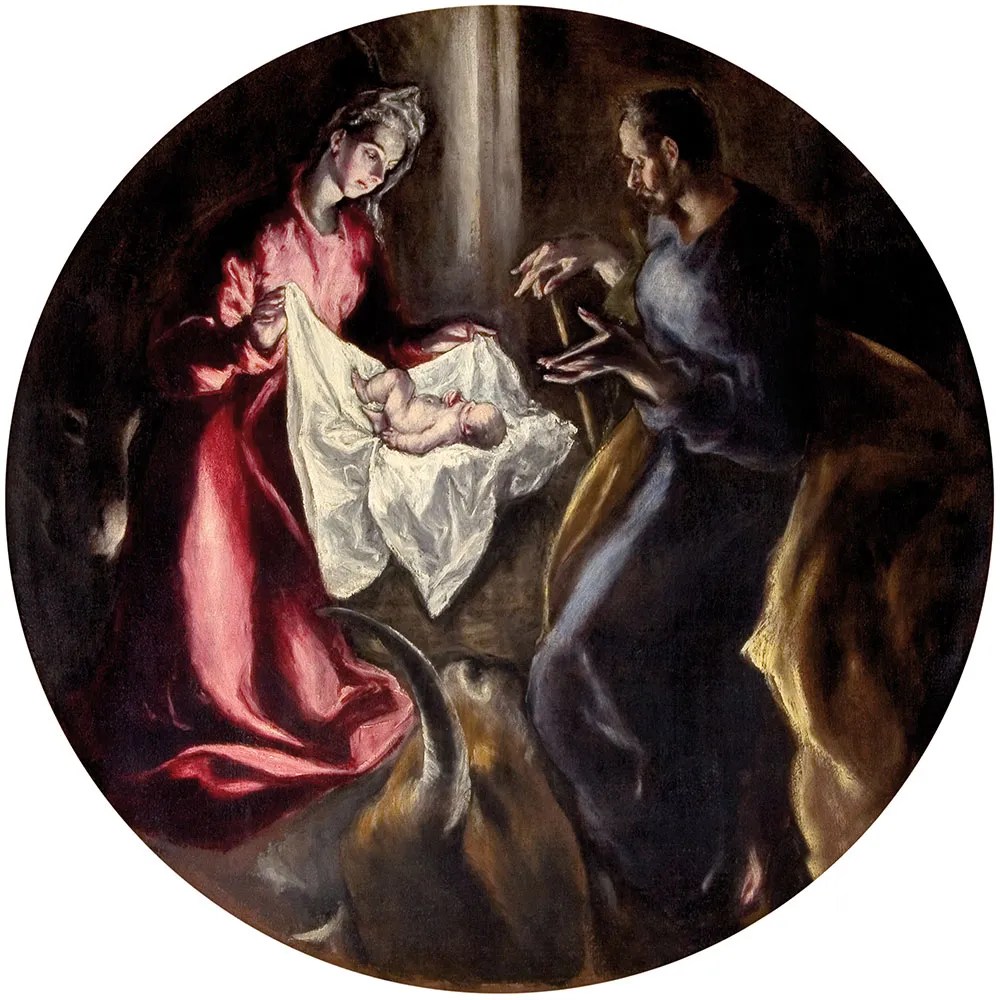

Al centro della composizione, disteso su un panno candido, il Bambino appena venuto al mondo irradia una luce soprannaturale che squarcia il buio. È la tipica luminosità “interiore” cara a El Greco: espediente simbolico di profonda intensità spirituale.
Il mondo contempla il Salvatore, sorgente divina che guida l’umanità lungo il cammino verso la verità. Questa luce non solo illumina la scena, ma sembra trasformare i personaggi stessi, quasi dissolvendone le forme nella vibrante spiritualità che caratterizza l’artista cretese.
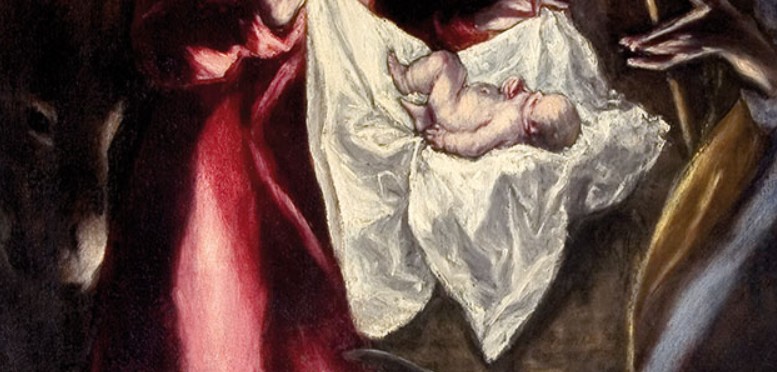
A destra e a sinistra della mangiatoia si vedono la Madonna e San Giuseppe. La Vergine, colta nell’atto tenero di coprire o più probabilmente scoprire il Bambino, lo osserva dolcemente.
La postura allungata e slanciata delle figure è tipica di El Greco, che unisce suggestioni bizantine e influssi della pittura veneta e romana di fine Cinquecento.
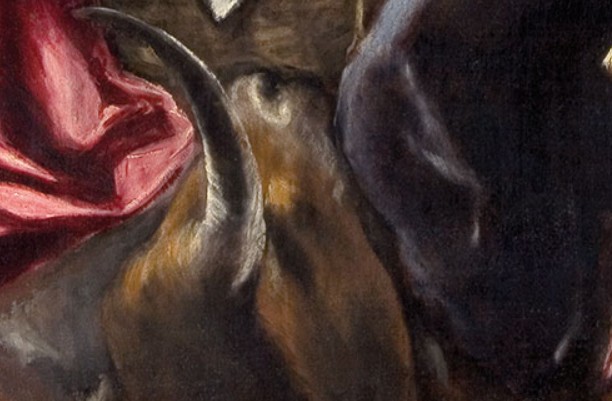
Alle spalle della Vergine si intravede il muso bianco e grigio dell’asinello. Osservate però la posa ardita del capo del bue, in primo piano. El Greco spesso adottava figure collocate in scorcio per accentuare la visione dal basso tipica delle pale d’altare, così da guidare lo sguardo dello spettatore verso il nucleo luminoso della scena.
Per il momento il sempre vostro Michelangelo Buonarroti vi saluta dandovi appuntamento ai prossimi post e sui social.
Christmas Works: El Greco’s 17th-Century Nativity
The Christmas work I’m featuring today is the Nativity, painted in 1605 by Domínikos Theotokópoulos, better known to the public as El Greco.
The Nativity, begun by the artist in 1603 and completed in 1605, was created for the altarpiece of the Madrid college of Doña María de Aragón. Unfortunately, only a few canvases remain of that imposing ensemble, scattered among various museums.
At the center of the composition, lying on a pure white cloth, the newborn Child radiates a supernatural light that pierces the darkness. It is the typical “inner” luminosity dear to El Greco: a symbolic device of profound spiritual intensity.
The world contemplates the Savior, the divine source that guides humanity along the path to truth. This light not only illuminates the scene, but seems to transform the figures themselves, almost dissolving their forms in the vibrant spirituality that characterizes the Cretan artist.
To the right and left of the manger are the Madonna and Saint Joseph. The Virgin, captured in the tender act of covering, or more likely uncovering, the Child, gently observes her Son.
The elongated, slender posture of the figures is typical of El Greco, who combines Byzantine influences with those of Venetian and Roman painting of the late sixteenth century.
Behind the Virgin, the white and gray muzzle of the donkey can be glimpsed. Notice, however, the bold pose of the ox’s head in the foreground. El Greco often used foreshortened figures to accentuate the low-angle view typical of altarpieces, thus guiding the viewer’s gaze toward the luminous center of the scene.
For now, yours truly, Michelangelo Buonarroti bids you farewell and invites you to join him in future posts and on social media.

Sostienici – Support Us
Se questo blog ti piace e ti appassiona, puoi aiutarci a farlo crescere sempre più sostenendoci in modo concreto condividendo i post, seguendo le pagine social e con un contributo che ci aiuta ad andare avanti con il nostro lavoro di divulgazione. . ENGLISH: If you like and are passionate about this blog, you can help us make it grow more and more by supporting us in a concrete way by sharing posts, following social pages and with a contribution that helps us to move forward with our dissemination work.
10,00 €
Condividi:


Questo sono io





sostienici

Sostienici – Support Us
Se questo blog ti piace e ti appassiona, puoi aiutarci a farlo crescere sempre più sostenendoci in modo concreto condividendo i post, seguendo le pagine social e con un contributo che ci aiuta ad andare avanti con il nostro lavoro di divulgazione. . ENGLISH: If you like and are passionate about this blog, you can help us make it grow more and more by supporting us in a concrete way by sharing posts, following social pages and with a contribution that helps us to move forward with our dissemination work.
€10,00


