
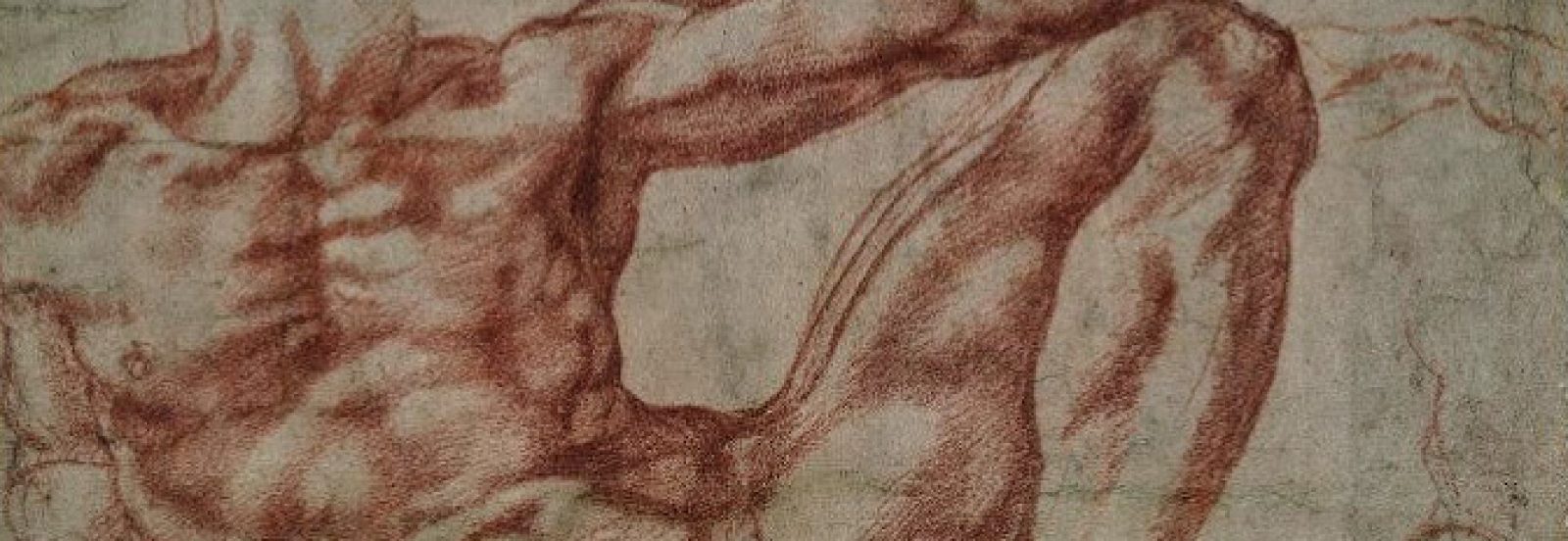
Le opere del Natale: la Natività fiamminga di Petrust Christus di metà Quattrocento
L’opera del Natale che vi propongo oggi è la Natività di Petrus Christus dipinta nel 1450 circa. E’ custodita alla National Gallery of Art di Washington ed è un’inusuale opera fiamminga del Quattrocento in cui il Bambino viene adagiato a terra, sopra il manto della Madonna.
Si tratta di un olio su tavola di piccole dimensioni: misura infatti solo 127 × 94 cm ma affascina per la ricchezza dei dettaglio un po’ come spesso accade nelle opere fiamminghe.
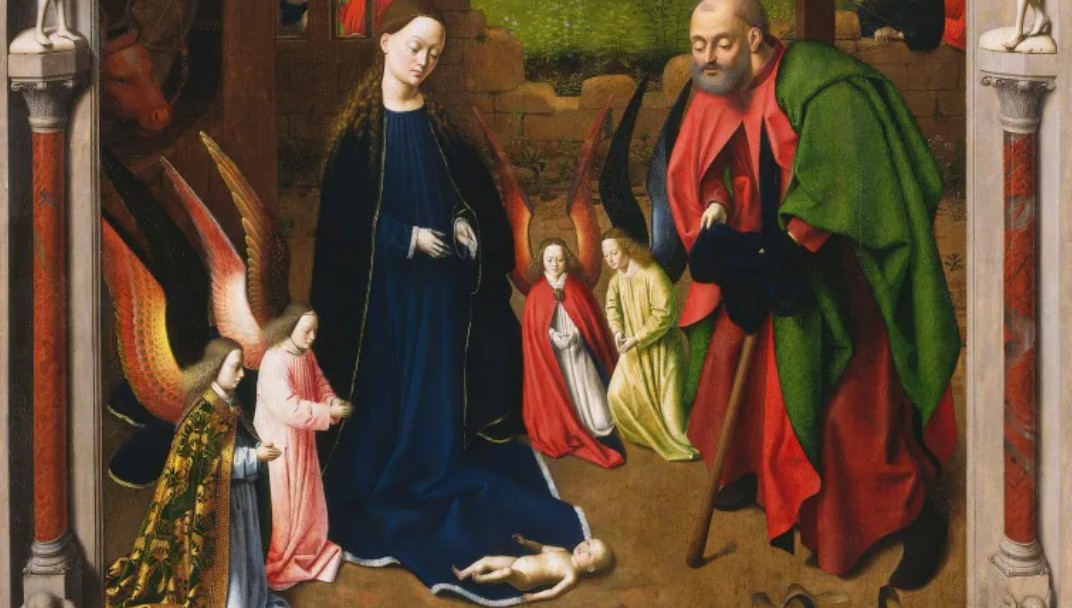

Chi era Petrus Christus
Petrus Christus era nato a Baerle, probabilmente nei primi anni del XV secolo. Venne considerato a ragione come uno dei continuatori dell’eredità dei fratelli van Eyck. Lavorò principalmente a Bruges, al tempo capitale commerciale dell’Europa settentrionale e polo artistico internazionale. Vi ricorda niente la città di Bruges? Fu proprio lì infatti che inviai la mia Madonna con Bambino scolpita per i mercanti Musucron.
La Natività di Petrus Christus
La Natività dipinta da Christus avviene in uno scenario raccolto e intimo sebbene sia inserito in un contesto ricco di dettagli di grande significato simbolico. Maria vestita di blu e con un manto di un blu ancora più scuro bordato d’oro osserva in piedi in Figlio appena venuto alla luce.
Notate i capelli sciolti di Maria: all’epoca simbolo di verginità o di facilità di costumi. Il pittore sicuramente ha voluto suggerire la Vergine Madre con questo dettaglio, non certo il secondo significato che vi ho detto.
Gesù Bambino ha il capo poggiato sulla terra nuda mentre il corpo giace sul manto della Madre.
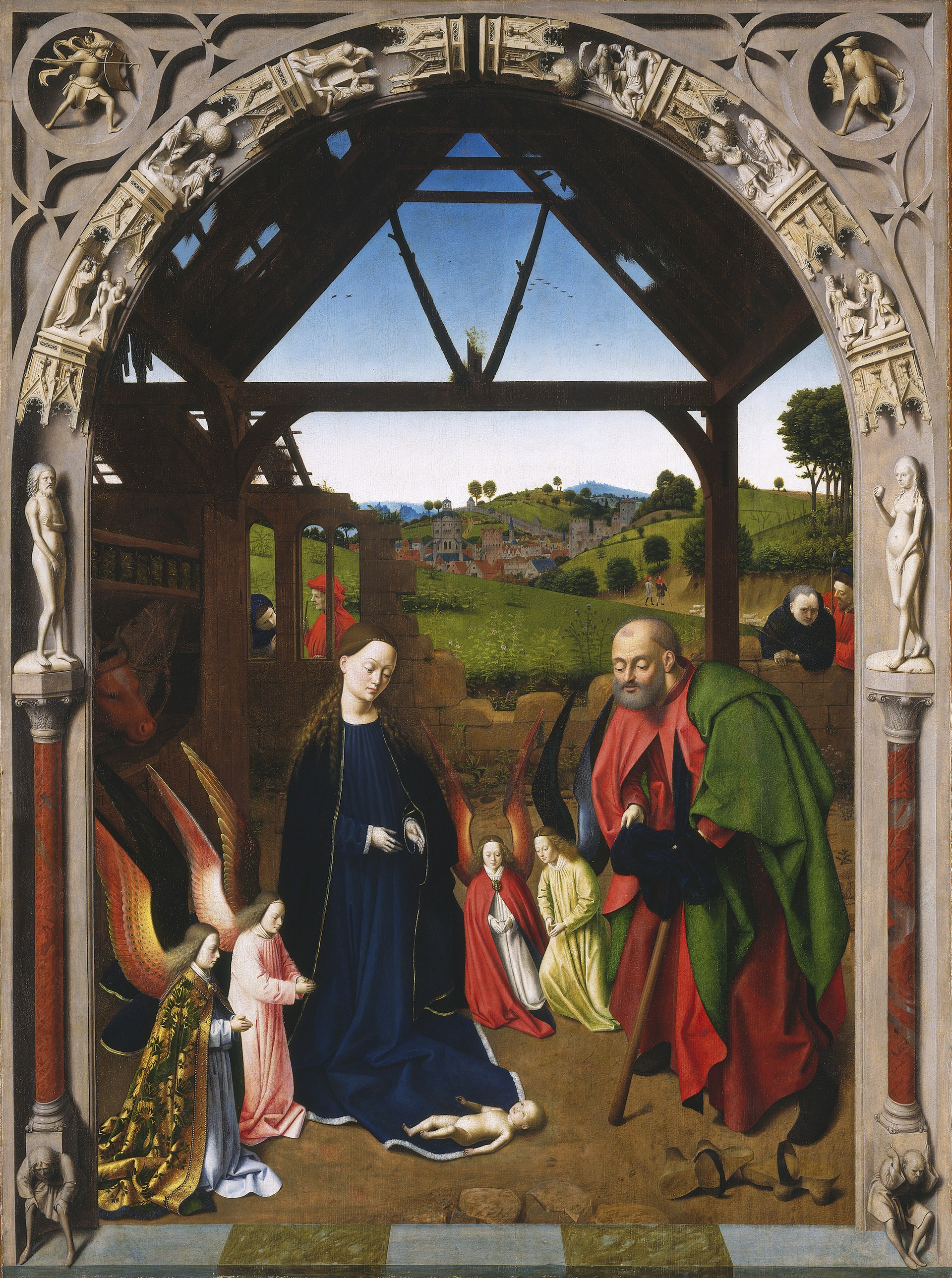

In secondo piano, a sinistra, il bue guarda la scena mentre l’asinello sembra stia ragliando. San Giuseppe contempla il Figlio mentre quattro angeli di dimensioni più piccole sono in adorazione.
Osservate il manto del primo angelo a sinistra vestito con uno straordinario broccato: un capolavoro che forse l’artista aveva avuto modo di vedere in qualche corte o indosso a qualche personaggio di spicco dell’epoca. Non è da escludere la famiglia committente abbia dato un drappo di quella stoffa a Christus affinché la includesse nell’opera.
Sapete, un tempo le famiglie più ricche custodivano gelosamente i disegni che usavano per far tessere le loro stoffe e quindi, da ogni disegno, si poteva risalire al nome della famiglia a cui apparteneva.
Sebbene l’opera non sia così celebre, è un vero e proprio capolavoro da ammirare con attenzione soprattutto per la ricercatezza dei particolari. La cornice dipinta in cui è inserita la Natività, le sfumature colorate delle ali degli angeli, il paesaggio che si vede al di là delle rovine: un’opera straordinaria in cui vale la pena perdersi.
Per il momento il sempre vostro Michelangelo Buonarroti vi saluta dandovi appuntamento ai prossimi post e sui social.
Christmas Works: The Flemish Nativity by Petrus Christus, Mid-Fifteenth-Century
The Christmas work I’m featuring today is the Nativity by Petrus Christus, painted around 1450. It’s housed at the National Gallery of Art in Washington and is an unusual fifteenth-century Flemish work in which the Child is laid on the ground, atop the Madonna’s cloak.
It’s a small oil on panel, measuring only 127 × 94 cm, but it’s captivating with its rich detail, as is often the case with Flemish works.
Who was Petrus Christus?
Petrus Christus was born in Baerle, probably in the early fifteenth century. He was rightly considered one of the continuators of the van Eyck brothers’ legacy. He worked primarily in Bruges, then the commercial capital of Northern Europe and an international artistic hub. Does Bruges remind you of anything? It was there, in fact, that I sent my Madonna and Child sculpted for the Musucron merchants.
The Nativity by Petrus Christus
The Nativity painted by Christus takes place in a secluded and intimate setting, yet it is set in a context rich in details of great symbolic significance. Mary, dressed in blue and wearing an even darker blue cloak edged in gold, stands gazing at her newborn Son.
Notice Mary’s loose hair: at the time, a symbol of virginity or ease of morality. The painter certainly intended to suggest the Virgin Mother with this detail, certainly not the second meaning I mentioned.
The Baby Jesus has his head resting on the bare ground while his body lies on his Mother’s cloak.
In the background, on the left, the ox watches the scene while the donkey appears to be braying. Saint Joseph contemplates his Son while four smaller angels stand in adoration. Notice the mantle of the first angel on the left, dressed in an extraordinary brocade cloak: a masterpiece the artist may have seen in some court or on the backs of some prominent figure of the time. It’s possible the commissioning family gave a piece of that fabric to Christus so he could include it in the work.
You know, in the past, the wealthiest families jealously guarded the patterns they used to weave their fabrics, and therefore, from each pattern, it was possible to trace the name of the family to which it belonged.
Although the work isn’t particularly famous, it’s a true masterpiece worth admiring for its meticulous attention to detail. The painted frame surrounding the Nativity, the colorful hues of the angels’ wings, the landscape visible beyond the ruins: an extraordinary work worth losing yourself in.
For now, yours truly, Michelangelo Buonarroti bids you farewell and says he’ll see you in future posts and on social media.

Sostienici – Support Us
Se questo blog ti piace e ti appassiona, puoi aiutarci a farlo crescere sempre più sostenendoci in modo concreto condividendo i post, seguendo le pagine social e con un contributo che ci aiuta ad andare avanti con il nostro lavoro di divulgazione. . ENGLISH: If you like and are passionate about this blog, you can help us make it grow more and more by supporting us in a concrete way by sharing posts, following social pages and with a contribution that helps us to move forward with our dissemination work.
10,00 €
Condividi:


Questo sono io





sostienici

Sostienici – Support Us
Se questo blog ti piace e ti appassiona, puoi aiutarci a farlo crescere sempre più sostenendoci in modo concreto condividendo i post, seguendo le pagine social e con un contributo che ci aiuta ad andare avanti con il nostro lavoro di divulgazione. . ENGLISH: If you like and are passionate about this blog, you can help us make it grow more and more by supporting us in a concrete way by sharing posts, following social pages and with a contribution that helps us to move forward with our dissemination work.
€10,00


