

L’Antinoo-Bacco: la Bellezza resa eterna dall’imperatore Adriano
L’opera del giorno che vi propongo oggi è la scultura colossale di Antinoo-Bacco scolpita in marmo bianco da mano ignota che raffigura Antinoo, il giovane favorito dell’imperatore Adriano, divinizzato secondo le sembianze di Bacco.
La scultura fu realizzata tra il 130 e il 138 dopo Cristo e appartiene alla Collezione Farnese del Museo Archeologico di Napoli.
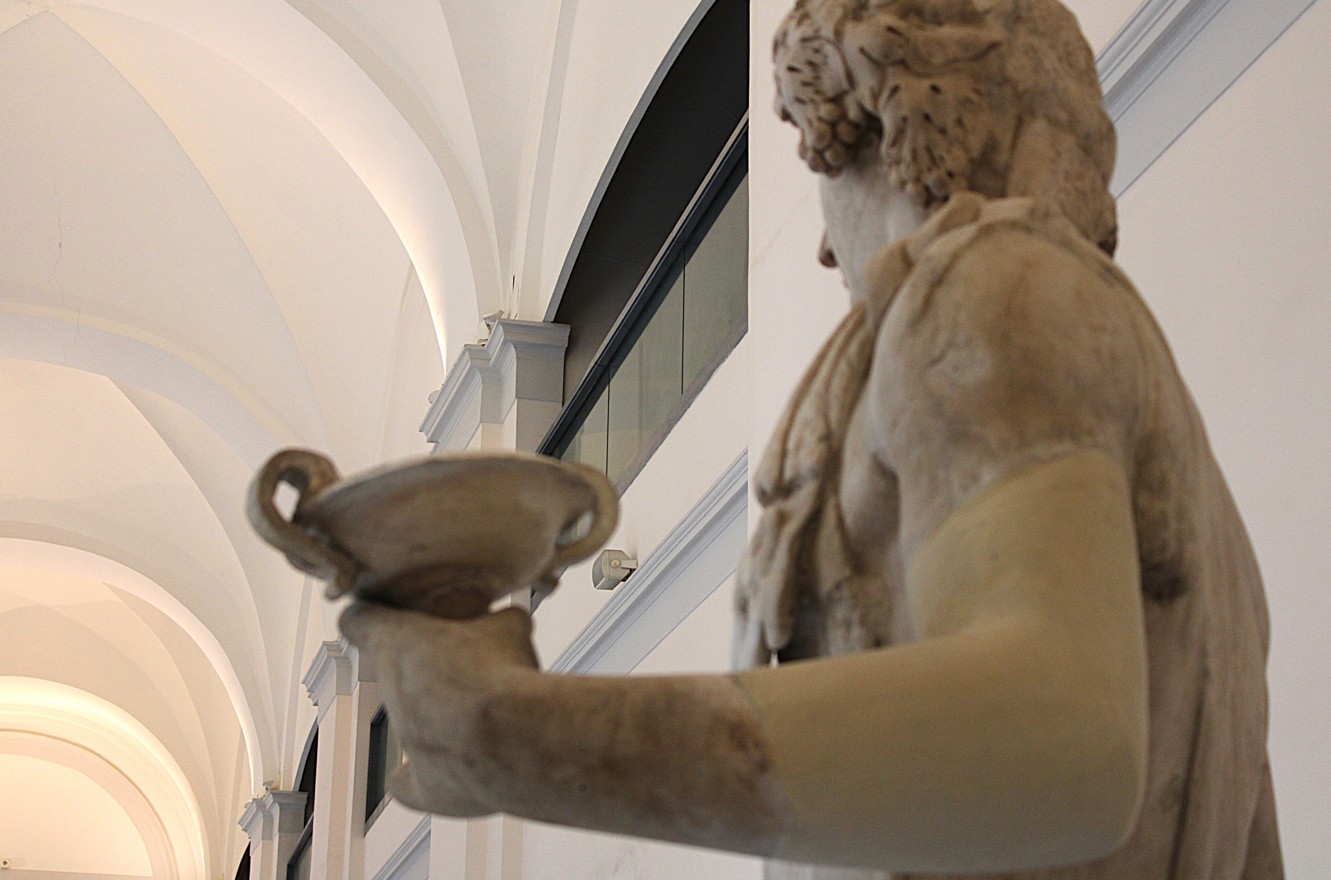
Con i suoi quasi tre metri di altezza, l’opera ha tutta la solennità di una divinità classica con quel volto caratterizzato da tratti idealizzati che riescono a raccontare una bellezza fuori dal tempo. Doveva essere così il ragazzo amato dall’imperatore Adriano, in questa versione trasfigurata nel Bacco.
La corona d’edera gli cinge il capo mentre la pelle di pantera gli s’avvolge sul corpo. Bacco leva la coppa al cielo con un gesto che pare lento e misurato. E’ come se Antinoo, morto prematuramente nel 130 d.C., conquistasse l’immortalità nelle sembianze del dio dell’ebrezza e delle feste.
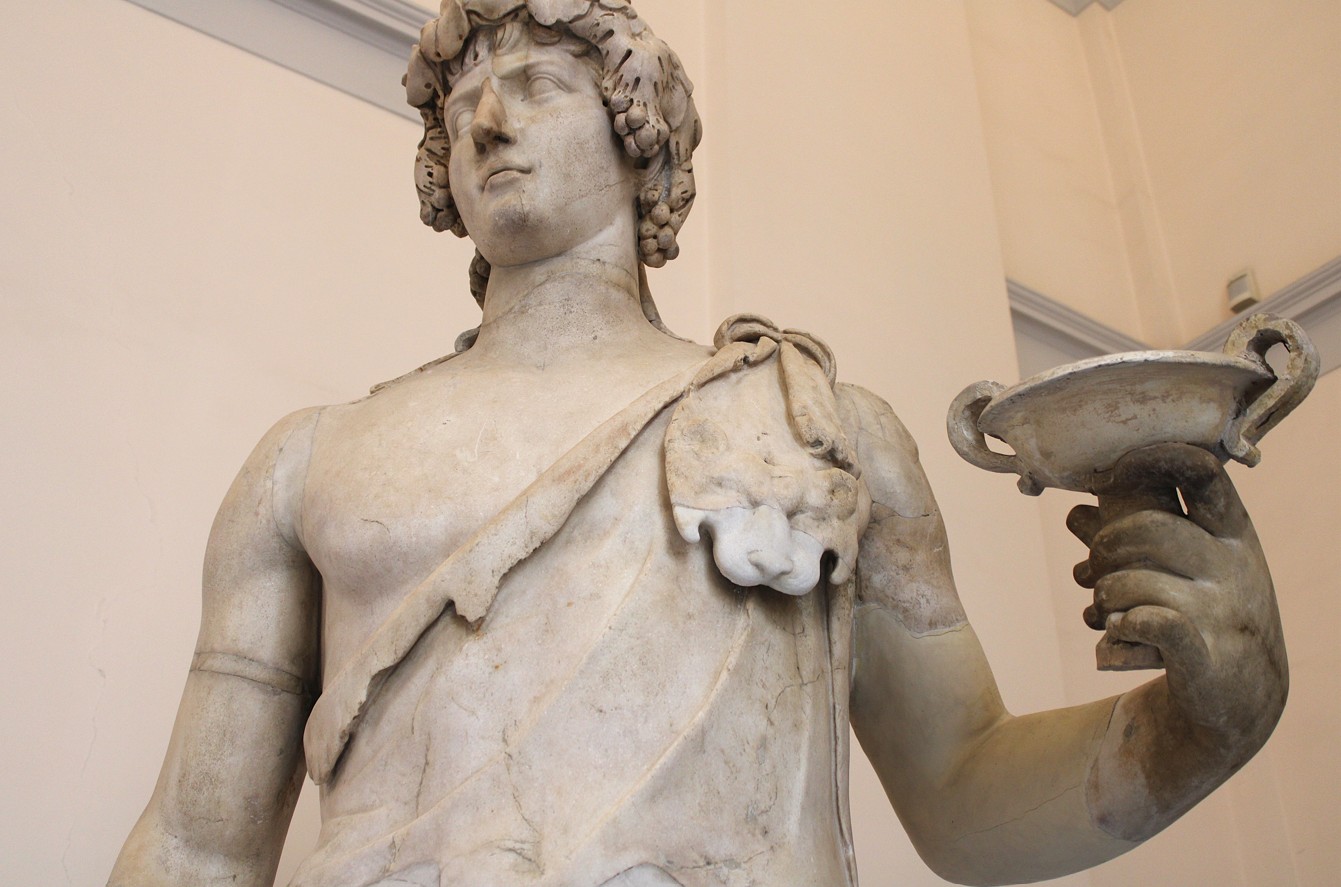
Dovete sapere che dopo la scomparsa del giovane, secondo l’Historia Augusta di Cassio Dione, Adriano era devastato dal dolore. L’imperatore fece realizzare centinaia di sculture, ritratti e busti di Antinoo che si diffusero rapidamente in tutto l’Impero tanto che divenne uno dei giovani più raffigurati nell’arte romana.
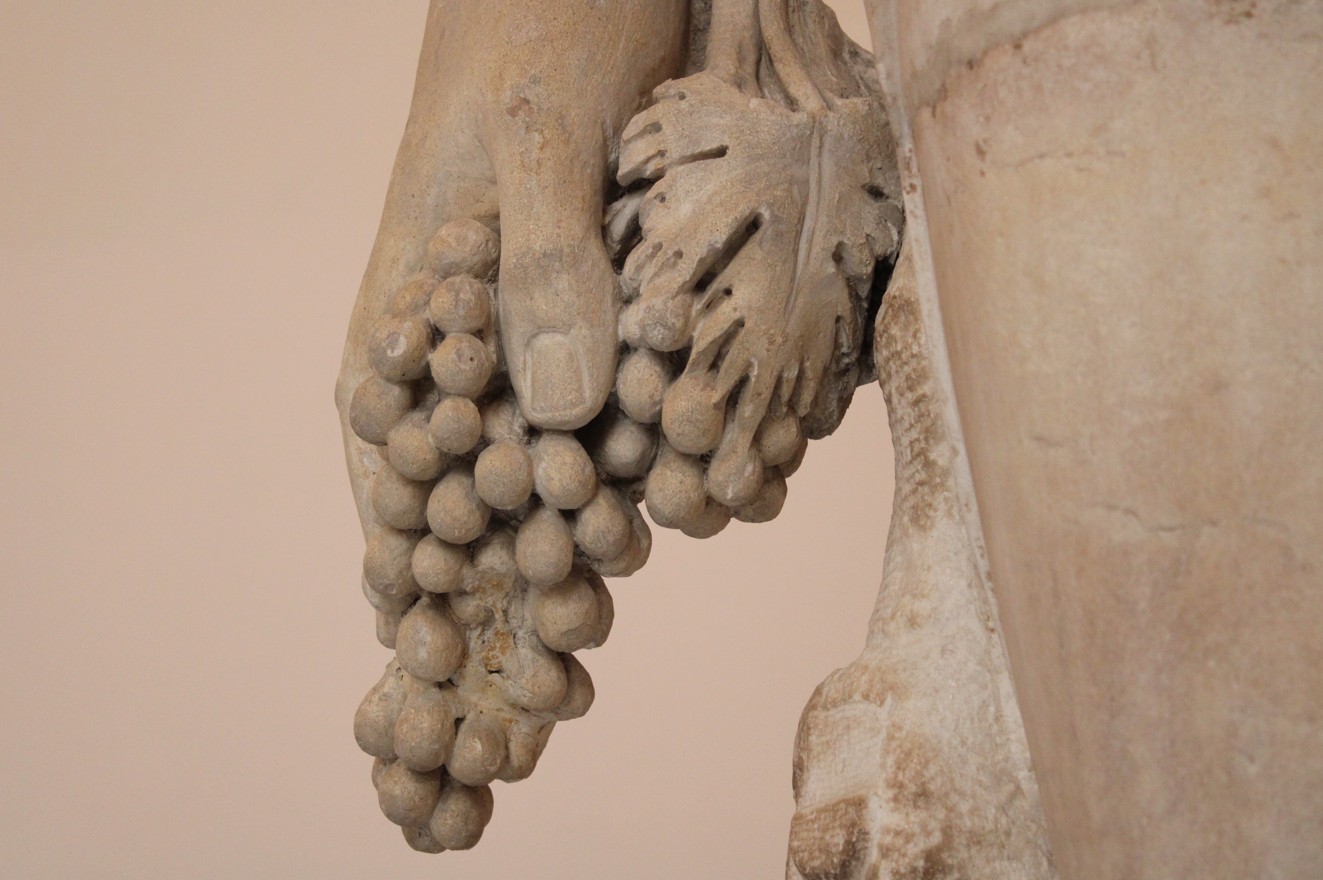
L’opera, quando venne acquisita dai Farnese, fu sottoposta a diversi restauri integrativi come l’aggiunta delle mani che aveva perduto chissà quando e chissà come e altri attributi che rispettano l’opera originaria senza intaccarne la potenza espressiva e sensuale.

L’Antinoo-Bacco della Collezione Farnese al Mann è sì il ritratto del giovane amato dall’imperatore a è anche un’icona di bellezza ideale.
Per il momento il sempre vostro Michelangelo Buonarroti vi saluta dandovi appuntamento ai prossimi post e sui social.
Antinous-Bacchus: Beauty Eternalized by Emperor Hadrian
Today’s featured work is the colossal sculpture of Antinous-Bacchus, carved in white marble by an unknown artist. It depicts Antinous, the young favorite of Emperor Hadrian, deified in the likeness of Bacchus.
The sculpture was created between 130 and 138 AD and belongs to the Farnese Collection of the Archaeological Museum of Naples.
Standing nearly three meters tall, the work has all the solemnity of a classical deity, its face characterized by idealized features that convey a timeless beauty. This is what the boy beloved of Emperor Hadrian must have looked like, in this version transfigured into Bacchus.
An ivy wreath encircles his head while a panther pelt wraps around his body. Bacchus raises the cup to the sky with a gesture that seems slow and measured. It is as if Antinous, who died prematurely in 130 AD, achieved immortality in the guise of the god of revelry and revelry.
You should know that after the young man’s death, according to Cassius Dio’s Historia Augusta, Hadrian was devastated by grief. The emperor commissioned hundreds of sculptures, portraits, and busts of Antinous, which quickly spread throughout the Empire, so much so that he became one of the most depicted young men in Roman art.
When the work was acquired by the Farnese family, it underwent several restorations, including the addition of the hands it had lost who knows when and how, and other features that respect the original work without diminishing its expressive and sensual power.
The Antinous-Bacchus from the Farnese Collection at the Mann is both a portrait of the young man beloved by the emperor and an icon of ideal beauty.
For now, yours truly, Michelangelo Buonarroti, bids farewell and invites you to join him in future posts and on social media.

Sostienici – Support Us
Se questo blog ti piace e ti appassiona, puoi aiutarci a farlo crescere sempre più sostenendoci in modo concreto condividendo i post, seguendo le pagine social e con un contributo che ci aiuta ad andare avanti con il nostro lavoro di divulgazione. . ENGLISH: If you like and are passionate about this blog, you can help us make it grow more and more by supporting us in a concrete way by sharing posts, following social pages and with a contribution that helps us to move forward with our dissemination work.
10,00 €
Condividi:


Questo sono io





sostienici

Sostienici – Support Us
Se questo blog ti piace e ti appassiona, puoi aiutarci a farlo crescere sempre più sostenendoci in modo concreto condividendo i post, seguendo le pagine social e con un contributo che ci aiuta ad andare avanti con il nostro lavoro di divulgazione. . ENGLISH: If you like and are passionate about this blog, you can help us make it grow more and more by supporting us in a concrete way by sharing posts, following social pages and with a contribution that helps us to move forward with our dissemination work.
€10,00


