
La Scultura del giorno: il Neonato Addormentato di Joules Dalou
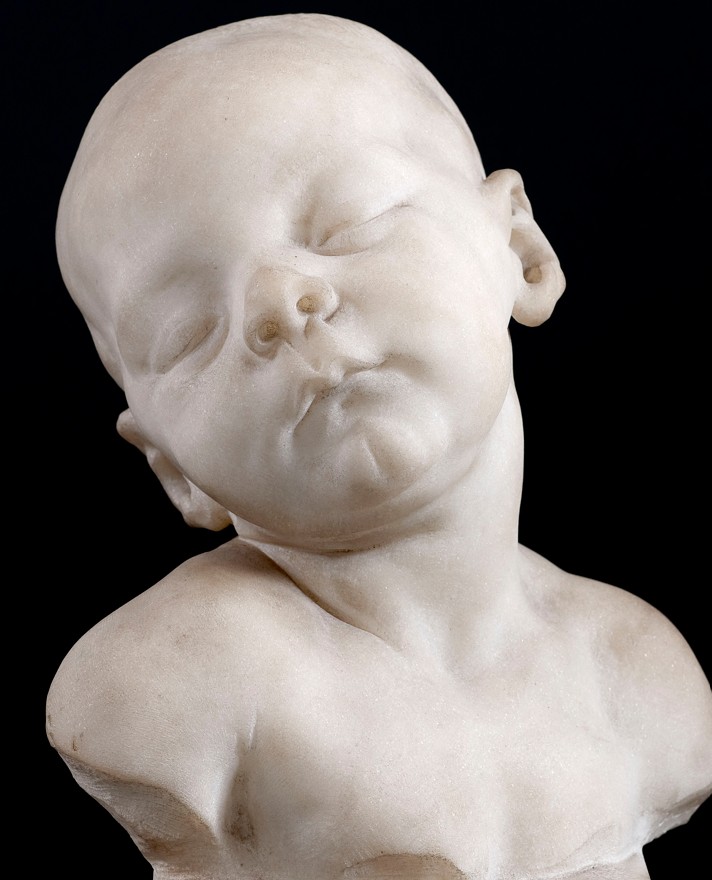
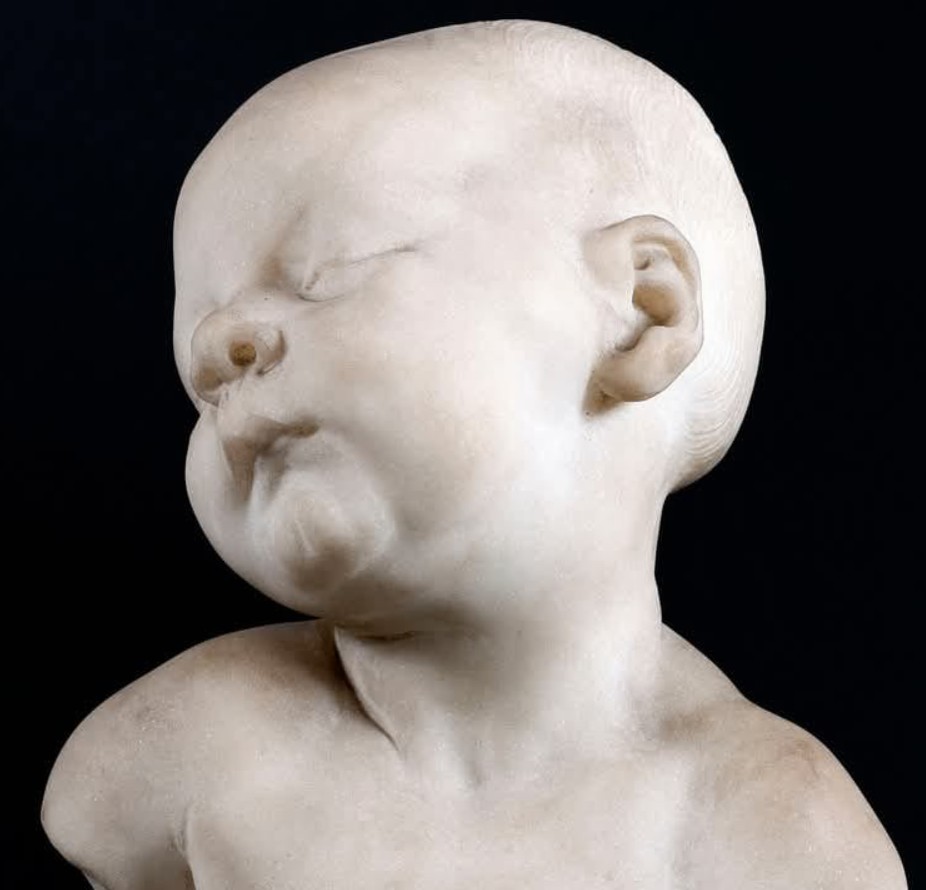
La scultura del giorno che vi propongo oggi è il busto di un Bambino Addormentato, scolpito in modo magistrale dall’artista francese Aimé-Jules Dalou.
Dalou mise mano all’opera sicuramente prima del 1905, come studio per un memoriale dedicato ai figli della regina Vittoria.

Jules Dalou era nato a nato a Parigi il 31 dicembre 1838 e viene annoverato come uno dei più importanti scultori francesi della fine del XIX secolo.
Era figlio di un operaio e fin dalla più tenera età mostrò un particolare talento per il disegno e la modellazione. Fu allievo di Jean-Baptiste Carpeaux presso la Scuola di Belle Arti di Parigi. Le sue prime opere, come Il Nuotatore del 1867 e La Ricamatrice del 1870, già mostravano un forte carattere naturalistico e un’attenzione alla vita quotidiana quasi ossessiva. Fu proprio quest’ultima scultura venne acquistata dallo stato, segnando un primo successo per l’artista.
La sua carriera subì però brusca interruzione a causa del suo coinvolgimento nella Comune di Parigi nel 1871. Essendo un convinto repubblicano, Dalou aderì al movimento e fu nominato amministratore provvisorio aggiunto del Museo del Louvre, con il compito di proteggere le collezioni. A seguito della caduta della Comune, venne condannato ai lavori forzati. Per evitare la prigionia, fuggì in Inghilterra con la sua famiglia.
Dalou visse in esilio a Londra fino al 1879 ma quel periodo fu cruciale per la sua maturazione artistica. Nonostante le difficoltà, continuò a lavorare e a ricevere importanti commissioni, come la fontana pubblica Charity e un monumento commemorativo per la regina Vittoria.
Grazie a un’amnistia, Dalou poté fare ritorno in Francia nel 1879 e, lo stesso anno, vinse il concorso per la realizzazione di un’opera monumentale che sarebbe diventata uno dei suoi capolavori più celebri: Il Trionfo della Repubblica.
Inaugurato nel 1899 in Place de la Nation, allora Place du Trône, il grandioso gruppo scultoreo in bronzo celebra gli ideali repubblicani con un’energia e un dinamismo imponenti.
Dalou realizzò opere prettamente realistiche e naturalistiche, mostrando una grande padronanza della materia.
Il busto del Neonato che Dorme, con quell’espressione tipica dei neonati assopiti e sognanti, oggi è custodito al Petit Palais di Parigi. Quando ci si trova dinanzi al busto viene naturale abbassare la voce mentre si parla per evitare di svegliare quel neonato che sembra dormire beatamente.
Per il momento il sempre vostro Michelangelo Buonarroti vi saluta dandovi appuntamento ai prossimi post e sui social.
Sculpture of the Day: Sleeping Infant by Joules Dalou
Today’s sculpture of the day is the bust of a Sleeping Child, masterfully sculpted by French artist Aimé-Jules Dalou.
Dalou certainly began work before 1905, as a study for a memorial dedicated to Queen Victoria’s children.
Jules Dalou was born in Paris on December 31, 1838, and is considered one of the most important French sculptors of the late 19th century.
He was the son of a laborer and from an early age showed a particular talent for drawing and modeling. He studied under Jean-Baptiste Carpeaux at the École des Beaux-Arts in Paris. His early works, such as The Swimmer from 1867 and The Embroiderer from 1870, already revealed a strong naturalistic character and an almost obsessive attention to everyday life. It was this last sculpture that was purchased by the state, marking the artist’s first success.
His career, however, was abruptly interrupted by his involvement in the Paris Commune of 1871. A staunch republican, Dalou joined the movement and was appointed provisional deputy administrator of the Louvre Museum, tasked with protecting the collections. Following the fall of the Commune, he was sentenced to forced labor. To avoid imprisonment, he fled to England with his family.
Dalou lived in exile in London until 1879, but that period was crucial to his artistic development. Despite the difficulties, he continued to work and received important commissions, such as the Charity public fountain and a memorial to Queen Victoria.
Thanks to an amnesty, Dalou was able to return to France in 1879 and, that same year, won the competition to create a monumental work that would become one of his most famous masterpieces: The Triumph of the Republic.
Inaugurated in 1899 on the Place de la Nation (then Place du Trône), this grandiose bronze sculpture celebrates republican ideals with impressive energy and dynamism.
Dalou created purely realistic and naturalistic works, demonstrating a mastery of the material.
The bust of the Sleeping Child, with that typical expression of a sleepy, dreamy newborn, is now housed at the Petit Palais in Paris. When standing before the bust, it’s natural to lower your voice when speaking to avoid waking the seemingly blissfully sleeping infant.
For now, yours truly, Michelangelo Buonarroti bids you farewell and says he’ll see you in future posts and on social media.
Condividi:


Questo sono io





sostienici

Sostienici – Support Us
Se questo blog ti piace e ti appassiona, puoi aiutarci a farlo crescere sempre più sostenendoci in modo concreto condividendo i post, seguendo le pagine social e con un contributo che ci aiuta ad andare avanti con il nostro lavoro di divulgazione. . ENGLISH: If you like and are passionate about this blog, you can help us make it grow more and more by supporting us in a concrete way by sharing posts, following social pages and with a contribution that helps us to move forward with our dissemination work.
€10,00


