
I Musici di Caravaggio: un Capolavoro in Mostra a Roma
Il dipinto del giorno di cui voglio parlarvi oggi è l’olio su tela dipinto da Caravaggio noto come ‘I Musici’, appartenente alle collezioni del Metropolitan Museum of Art di New York.
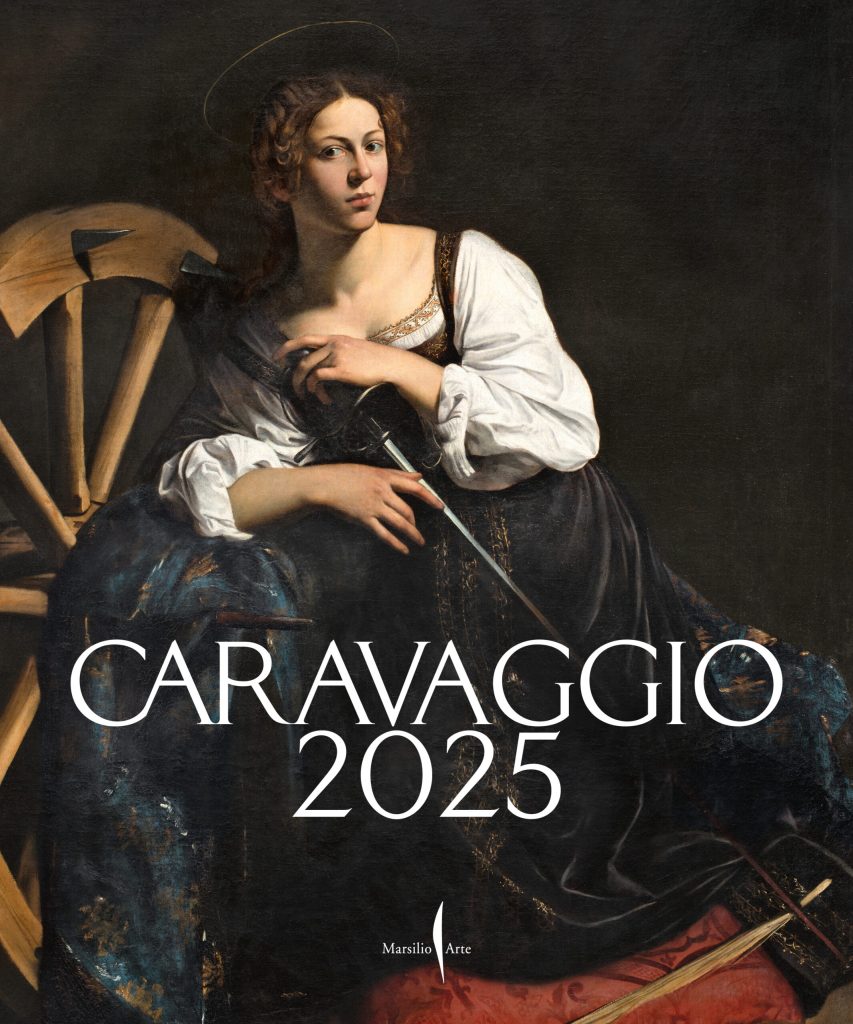
Al momento è possibile ammirare questo straordinario capolavoro in Italia. Fa parte infatti del percorso espositivo Caravaggio 2025, allestito a Palazzo Barberini.

“I Musici”, opera nota anche come “Il Concerto”, fu commissionato a Caravaggio dal cardinale Francesco Maria del Monte per Palazzo Madama, nel 1597.
L’artista era solito frequentare la zona attigua a San Luigi dei Francesi, poco distante da Palazzo Madama. Era lì infatti che il rivenditore di quadri maestro Valentino, al secolo Costantino Spada, rivendeva opere. Proprio grazie a quest’uomo il cardinale ebbe modo di conoscere Caravaggio.
“E con questa occasione fu conosciuto dal Cardinale del Monte, il quale per dilettarsi assai della pittura, se lo prese in casa e havendo parte, e provisione pigliò animo, e credito, e dipinse per il Cardinale una musica di alcuni giovani ritratti dal naturale, assai bene…“. Il cardinale intese imprimere su tela il clima culturale della sua corte: l’opera infatti ritrae tre giovani in procinto di eseguire un concerto“.
Scrisse Giovanni Baglione
Il cardinale era molto colto. Appassionato di arte e scienze, custodiva una ricca biblioteca e una preziosa collezione di strumenti musicali e dipinti.
Organizzava spesso concerti assieme al musicista Emilio de’ Cavalieri e lui steso suonava la chitarriglia e cantava alla maniera spagnola.
Le simbologie presenti nel dipinto dei Musici di Caravaggio
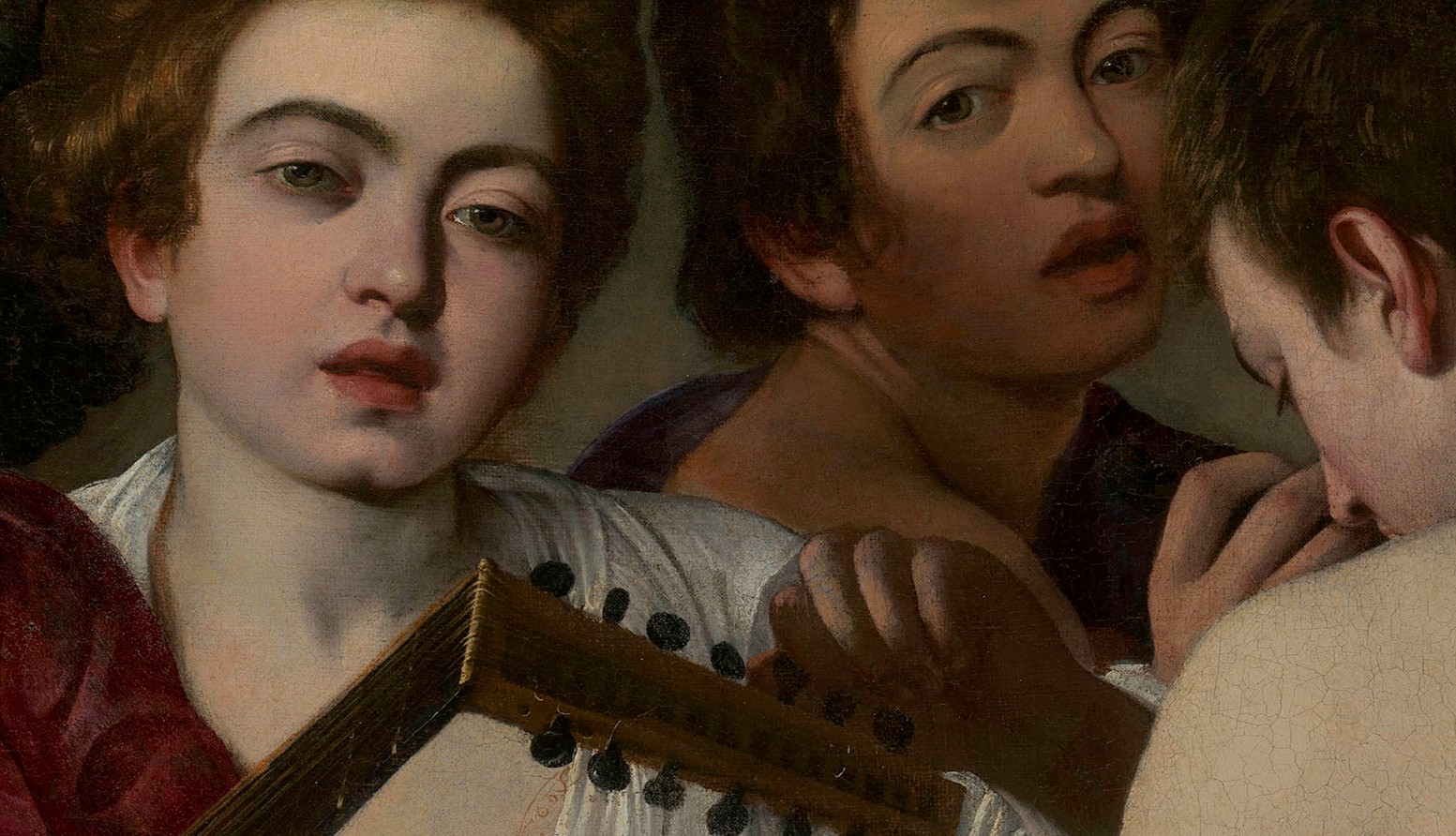
I Musici rappresentano una complessa allegoria pagana. I tre giovani sono vestiti all’antica e stanno per iniziare a suonare.
Alle spalle dei musici si vede un amorino, o meglio Eros con tanto di ali e faretra, che sta staccando un grappolo d’uva. Un gesto che è stato letto in chiave erotica e che suggella l’unione amorosa dei tre amici.
Come ebbe modo di notare Moir, nell’opera in questione non c’è un racconto autobiografico dell’artista ma piuttosto una fantasia in cui l’artista raffigura tre figure idealizzate in un contesto astratto che accordano gli strumenti e ripassano i pezzi che stanno per eseguire.
Il giovane alla destra di spalle probabilmente è il cantore.

Il ragazzo che suona il cornetto al centro dell’opera è un probabilissimo autoritratto di Caravaggio. La somiglianza è molto evidente con altri dipinti di quel periodo in cui Caravaggio si autoritrae mentre guarda dritto negli occhi lo spettatore.
La partitura
La grande precisione con la quale Caravaggio dipinse i fogli pentagrammati ha consentito agli storici di capire quali brani stessero per eseguire i musici dipinti per il cardinale Del Monte.
Si tratta infatti di un madrigale di Jacques Arcadelt (1505-1568), compositore fiammingo che dal 1539 fu attivo a Roma, prima presso la Cappella Giulia, poi come maestro della Cappella Sistina.

Caravaggio che viveva e operava nella dimora del cardinale, aveva avuto modo di consultare i libri pieni di partiture presenti nella stanza della musica di Del Monte.
Anche la precisione con la quale dipinse il violino e il liuto fa supporre che l’artista li avesse a disposizione.
Per il momento il sempre vostro Michelangelo Buonarroti vi saluta dandovi appuntamento ai prossimi post e sui social.
The Musicians by Caravaggio: a Masterpiece on Display in Rome
The painting of the day that I want to talk to you about today is the oil on canvas painted by Caravaggio known as ‘The Musicians’, belonging to the collections of the Metropolitan Museum of Art in New York.
At the moment it is possible to admire this extraordinary masterpiece in Italy. In fact, it is part of the Caravaggio 2025 exhibition itinerary, set up at Palazzo Barberini.
“The Musicians”, a work also known as “The Concert”, was commissioned to Caravaggio by Cardinal Francesco Maria del Monte for Palazzo Madama in 1597.
The artist used to frequent the area adjacent to San Luigi dei Francesi, not far from Palazzo Madama. It was there, in fact, that the painting dealer Maestro Valentino, born Costantino Spada, resold works. It was thanks to this man that the cardinal had the opportunity to meet Caravaggio.
“And on this occasion he became known to Cardinal del Monte, who, taking great delight in painting, took him into his house and, having a share and a salary, took courage and credit, and painted for the Cardinal a piece of music of some young men portrayed from life, very well…“. The cardinal intended to capture the cultural climate of his court on canvas: the work in fact portrays three young people about to perform a concert.” Giovanni Baglione wrote.
The cardinal was very cultured. Passionate about art and science, he kept a rich library and a precious collection of musical instruments and paintings.
He often organized concerts together with the musician Emilio de’ Cavalieri and he himself played the guitar and sang in the Spanish style.
The symbols present in the painting of the Musicians by Caravaggio
The Musicians represent a complex pagan allegory. The three young people are dressed in the ancient style and are about to start playing.
Behind the musicians you can see a cupid, or rather Eros with wings and a quiver, who is picking a bunch of grapes. A gesture that has been interpreted in an erotic key and that seals the loving union of the three friends. As Moir noted, in the work in question there is no autobiographical story of the artist but rather a fantasy in which the artist depicts three idealized figures in an abstract context who tune their instruments and review the pieces they are about to perform.
The young man on the right with his back turned is probably the singer.
The boy playing the cornetto in the center of the work is very likely a self-portrait of Caravaggio. The similarity is very evident with other paintings of that period in which Caravaggio portrays himself while looking straight into the viewer’s eyes.
The score
The great precision with which Caravaggio painted the stave sheets has allowed historians to understand which pieces the musicians painted for Cardinal Del Monte were about to perform.
It is in fact a madrigal by Jacques Arcadelt (1505-1568), a Flemish composer who was active in Rome from 1539, first at the Cappella Giulia, then as maestro of the Sistine Chapel.
Caravaggio, who lived and worked in the cardinal’s residence, had the opportunity to consult the books full of scores present in Del Monte’s music room.
The precision with which he painted the violin and the lute also suggests that the artist had them available.
For the moment, yours truly Michelangelo Buonarroti bids you farewell, making an appointment to see you in the next posts and on social media.

Sostienici – Support Us
Se questo blog ti piace e ti appassiona, puoi aiutarci a farlo crescere sempre più sostenendoci in modo concreto condividendo i post, seguendo le pagine social e con un contributo che ci aiuta ad andare avanti con il nostro lavoro di divulgazione. . ENGLISH: If you like and are passionate about this blog, you can help us make it grow more and more by supporting us in a concrete way by sharing posts, following social pages and with a contribution that helps us to move forward with our dissemination work.
10,00 €
Condividi:


Questo sono io





sostienici

Sostienici – Support Us
Se questo blog ti piace e ti appassiona, puoi aiutarci a farlo crescere sempre più sostenendoci in modo concreto condividendo i post, seguendo le pagine social e con un contributo che ci aiuta ad andare avanti con il nostro lavoro di divulgazione. . ENGLISH: If you like and are passionate about this blog, you can help us make it grow more and more by supporting us in a concrete way by sharing posts, following social pages and with a contribution that helps us to move forward with our dissemination work.
€10,00


1 commento »