
Il dipinto del giorno: I due ragazzi con una vescica, l’opera più riuscita di Joseph Wright
Il dipinto del giorno che vi propongo oggi è l’opera più riuscita di Joseph Wright che raffigura I due Ragazzi con una Vescica.
Il dipinto realizzato dall’artista fra il 1768 e il 1770 sorprende per l’eccezionale trattamento degli effetti di luce, con quella vescica di maiale gonfiata che copre il lume della candela che rischiara la scena notturna, rendendo ben visibili i volti dei due bambini.

Oggi può sembrare strano ma all’epoca le vesciche degli animali erano usate dai bambini come giocattoli. Gonfiate a bocca con aria diventavano dei palloncini con i quali divertirsi. A volte invece venivano riempite con qualche pisello secco o con dei sassolini per trasformarle in divertenti sonagli.
Nell’arte europea le vesciche gonfiate riprodotte nei dipinti erano delle varianti simboliche delle bolle di sapone: giochi effimeri che simboleggiavano la precarietà della vita e il quanto fossero effimere le conquiste terrene.
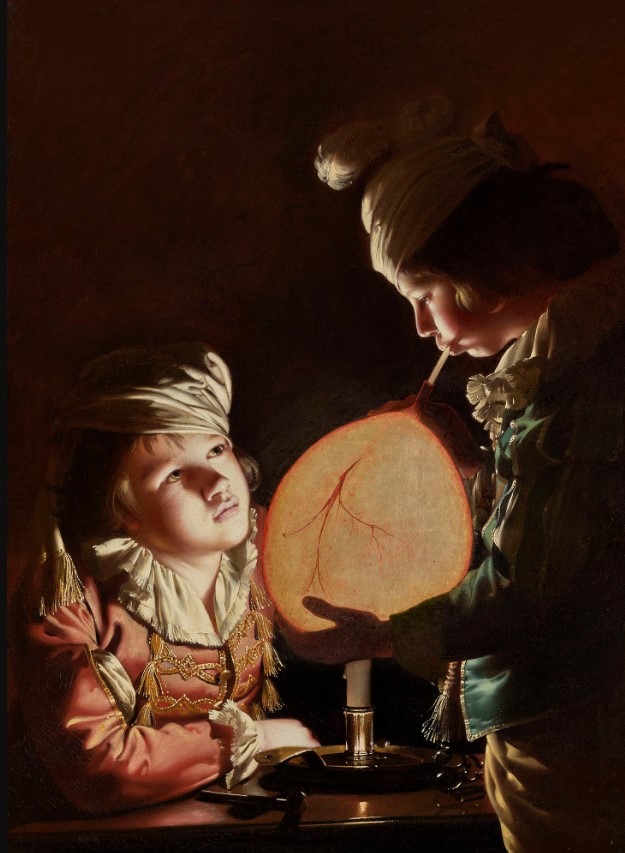
La raffigurazione delle vesciche era cosa comune nell’arte olandese del Seicento ma assai più insolita nell’arte britannica del secolo successivo. Wright invece scelse proprio di raffigurare questi due ragazzi che giocano con la vescica in una rivisitazione del tutto personale.
Gli elaborati abiti dei protagonisti dell’opera, con tanto di polsini e colletti arricciati, più che un’espressione dei costumi in voga all’epoca sono una rielaborazione fantasiosa dell’artista.

Fino a non molti anni fa questo capolavoro apparteneva a un collezionista privato britannico che volle metterla sul mercato. Il Jean Paul Getty Museum si fece avanti nel giugno del 2019 per comprarlo e affiancarlo alle altre due opere di Joseph Wright che già possedeva.
Il governo inglese però, su consiglio dell’Arts Council England, impose il divieto di esportazione fino al 16 gennaio dell’anno successivo sperando che nel frattempo si facesse avanti un acquirente britannico disposto a comprare l’opera per 3,5 milioni di sterline.

La Joseph Wright Gallery di Derby, che già custodiva nelle proprie collezioni 27 dipinti di Wright, subito precisò che non poteva permettersi di acquistare il capolavoro dell’artista sul mercato.
Terminato il periodo di veto imposto dal governo, il Jean Paul Getty Museum acquistò l’opera che entrò a far parte delle proprie collezioni.
Per il momento il vostro Michelangelo Buonarroti vi saluta dandovi appuntamento ai prossimi post e sui social.

Painting of the day: Two Boys with a Bladder, Joseph Wright’s most successful work
The painting of the day that I propose to you today is Joseph Wright’s most successful work which depicts The Two Boys with a Bladder.
The painting created by the artist between 1768 and 1770 is surprising for its exceptional treatment of light effects, with that inflated pig’s bladder covering the candlelight which illuminates the night scene, making the faces of the two children clearly visible.
It may seem strange today but at the time animal bladders were used by children as toys. Inflated by mouth with air they became balloons to have fun with. Sometimes they were filled with a few dried peas or pebbles to transform them into fun rattles.
In European art, the inflated bladders reproduced in paintings were symbolic variations of soap bubbles: ephemeral games that symbolized the precariousness of life and how ephemeral earthly conquests were.
The depiction of blisters was common in seventeenth-century Dutch art but much more unusual in British art of the following century. Wright instead chose to depict these two boys playing with their bladder in a completely personal reinterpretation.
The elaborate clothes of the protagonists of the work, complete with gathered cuffs and collars, are an imaginative reworking by the artist rather than an expression of the costumes in vogue at the time.
Until a few years ago this masterpiece belonged to a private British collector who wanted to put it on the market. The Jean Paul Getty Museum stepped forward in June 2019 to buy it and place it alongside the other two works by Joseph Wright it already owned.
However, the English government, on the advice of Arts Council England, imposed an export ban until 16 January of the following year, hoping that in the meantime a British buyer would come forward willing to buy the work for 3.5 million pounds.
The Joseph Wright Gallery in Derby, which already held 27 of Wright’s paintings in its collections, immediately stated that it could not afford to purchase the artist’s masterpiece on the market.
Once the veto period imposed by the government ended, the Jean Paul Getty Museum purchased the work which became part of its collections.
For the moment, your Michelangelo Buonarroti greets you and will meet you in future posts and on social media.

Sostienici – Support Us
Se questo blog ti piace e ti appassiona, puoi aiutarci a farlo crescere sempre più sostenendoci in modo concreto condividendo i post, seguendo le pagine social e con un contributo che ci aiuta ad andare avanti con il nostro lavoro di divulgazione. . ENGLISH: If you like and are passionate about this blog, you can help us make it grow more and more by supporting us in a concrete way by sharing posts, following social pages and with a contribution that helps us to move forward with our dissemination work.
8,00 €
-
La Deposizione del Pontormo: il capolavoro dell’artista
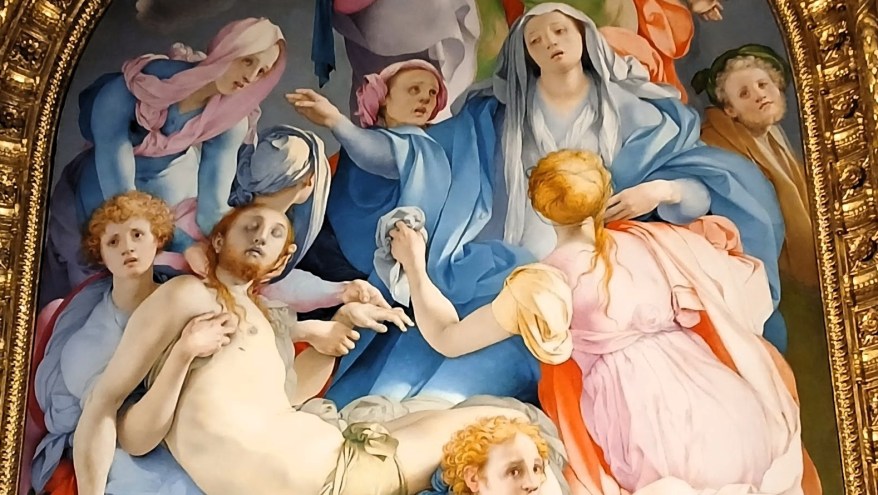
🇮🇹Ti coinvolge. Ti mette a disagio. Ti costringe a sentire. E’ la Deposizione dalla Croce, dipinta da Jacopo Pontormo tra il 1525 e il 1528 per la Cappella Capponi… 🇬🇧It draws you in. It makes you uncomfortable. It forces you to feel. It’s the Deposition from the Cross, painted by Jacopo Pontormo between 1525 and…
-
Non chiamatelo Braghettone: il 4 aprile del 1566 muore Daniele da Volterra, l’artista che salvò il Giudizio Universale
🇮🇹Braghettone? No, molto di più. Il 4 aprile 1566 moriva Daniele da Volterra, il mio allievo più fedele, l’uomo che mi rimase accanto fino all’ultimo respiro e che salvò il mio Giudizio Universale dalla distruzione… 🇬🇧Braghettone? No, much more. On April 4, 1566, Daniele da Volterra died, my most faithful student, the man who remained…
-
Venerdì Santo: gli “Ecce Homo” più intensi della storia dell’arte
🇮🇹Ecce Homo. Da Antonello da Messina a Tintoretto, fino al sorprendente capolavoro di Antonio Ciseri, questo soggetto ha attraversato i secoli raccontando dolore, umanità e coscienza… 🇬🇧Ecce Homo. From Antonello da Messina to Tintoretto, to Antonio Ciseri’s astonishing masterpiece, this subject has spanned the centuries, recounting pain, humanity, and conscience…
Condividi:


Questo sono io





sostienici

Sostienici – Support Us
Se questo blog ti piace e ti appassiona, puoi aiutarci a farlo crescere sempre più sostenendoci in modo concreto condividendo i post, seguendo le pagine social e con un contributo che ci aiuta ad andare avanti con il nostro lavoro di divulgazione. . ENGLISH: If you like and are passionate about this blog, you can help us make it grow more and more by supporting us in a concrete way by sharing posts, following social pages and with a contribution that helps us to move forward with our dissemination work.
€10,00


💌
"Mi piace"Piace a 1 persona