

La Scultura del giorno: la Ninfa dormiente di Canova
La Scultura del giorno che vi propongo oggi è la Ninfa dormiente scolpita da Antonio Canova fra il 1821 e il 1824.
Se osservate bene questo capolavoro, non vi sarà difficile notare che l‘artista per realizzarlo prese a modello la posa dell’Ermafrodito Borghese, la celebre scultura ellenistica del II secolo d.C, integrata successivamente con il materasso scolpito dal Bernini.
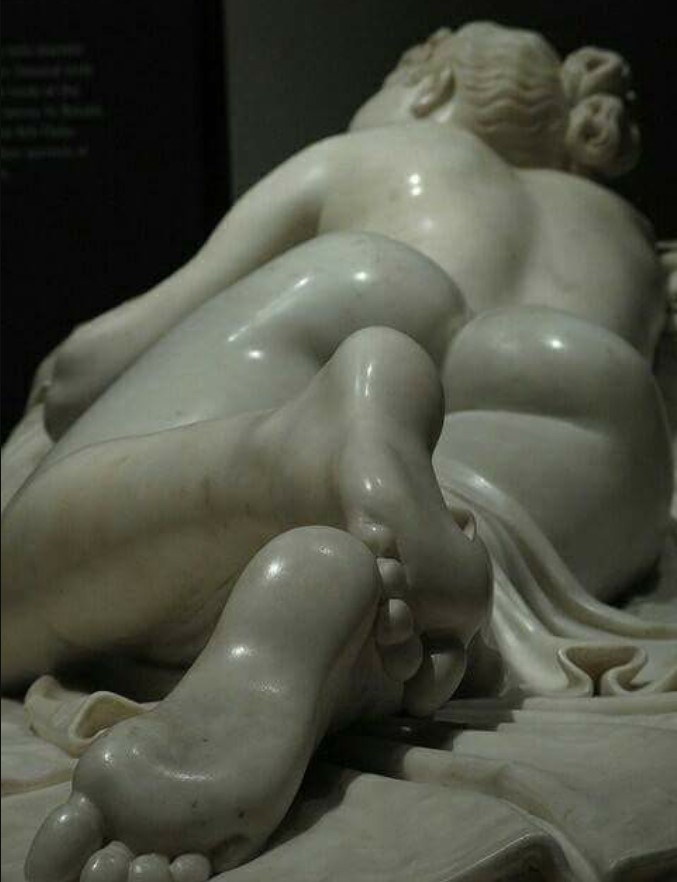
Il modello in gesso fu ultimato già nel maggio del 1820 tanto che l’originale con le repere, oggi conservato al Museo Gypsotheca di Possagno, reca la dicitura in graffito “Terminata il 3 maggio 1820”.
Appena ultimato il gesso, Canova ebbe modo di percepire quanto fosse ammirata la composizione della sua Naiade dormiente tanto che scrisse in una lettera all’amico Quatremère de Quincy: “Dopo il modello de l’Endimione, della Maddalenae della Ninfa nutrice di Bacco, ho eseguito quello d’una Ninfa che dorme e che viene tanto lodata, che si vorrebbe crederla migliore delle altre opere mie”.
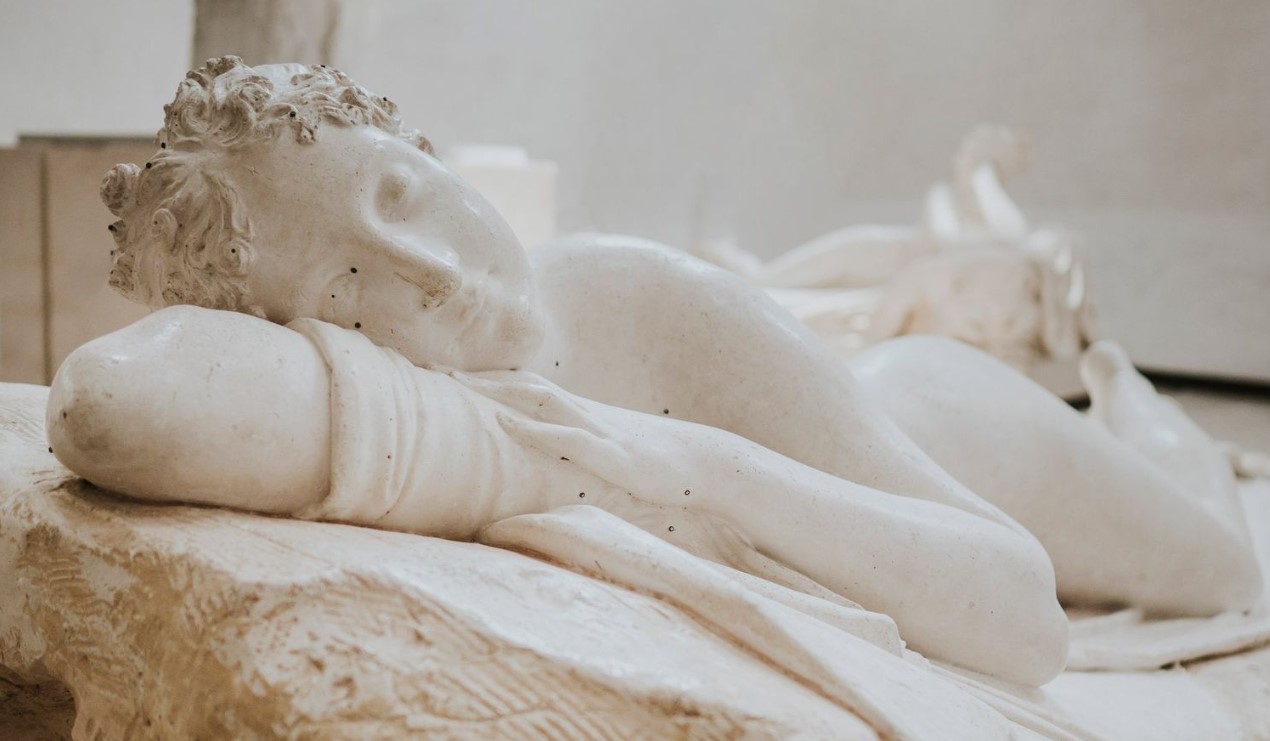
Fu Henry of Lansdowne a richiederne ufficialmente a Canova la prima traduzione in marmo il 29 gennaio del 1821 anche se la trattativa ufficiosa era cominciata un anno prima.
Lansdowne pagò 500 sterline per avere la Naiade da collocare nella sua villa privata. La scultura fu custodita dai suoi successori fino al 1930, quando decisero di venderla all’asta assieme al carteggio di Serristori e Canova e all’intera collezione d’arte posseduta dai Landsowne.
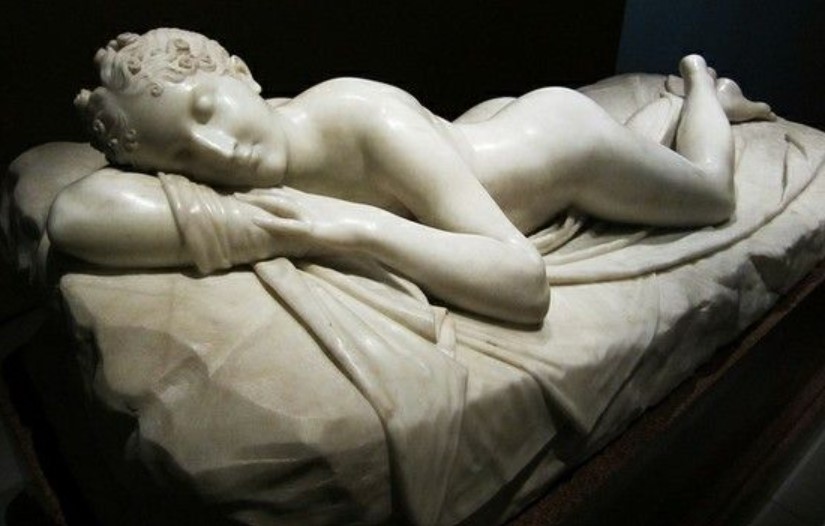
L’opera fu comprata dal Victoria and Albert Museum grazie a un cospicuo sostegno statale e ancora oggi è possibile ammirarla fra le sue sale.
Esiste anche una seconda versione dell’opera, scolpita sempre sul modello in gesso originale. Probabilmente fu richiesta dal principe ungherese Nikolaus II Esterhazy che già aveva commissionato a Canova la scultura della figlia Leopoldina.
Dopo varie vicissitudini, questa seconda versione fu battuta all’asta da Sotherby’s per 820 sterline nel 1962. Da allora se ne sono perse le tracce e non è dato sapere dove si trovi.

Per il momento il vostro Michelangelo Buonarroti vi saluta dandovi appuntamento ai prossimi post e sui social

Sculpture of the day: Canova’s Sleeping Nymph
The Sculpture of the day that I propose to you today is the Sleeping Nymph sculpted by Antonio Canova between 1821 and 1824.
If you look carefully at this masterpiece, it will not be difficult for you to notice that the artist used the pose of the Borghese Hermaphrodite as a model, the famous Hellenistic sculpture of the 2nd century AD, later integrated with the mattress sculpted by Bernini.
The plaster model was already completed in May 1820, so much so that the original with the findings, now kept in the Gypsotheca Museum in Possagno, bears the wording in graffiti “Finished on May 3, 1820”.
As soon as the plaster was completed, Canova was able to perceive how much the composition of his sleeping Naiad was admired, so much so that he wrote in a letter to his friend Quatremère de Quincy: “After the model of the Endymion, of the Magdalene and of the Nymph nurse of Bacchus, I performed that of a Nymph who sleeps and who is praised so much, that one would like to believe it better than my other works”.
It was Henry of Lansdowne who officially requested from Canova the first marble translation of the Sleeping Nymph, on January 29, 1821, even though the unofficial negotiation had begun a year earlier.
Lansdowne paid £500 to have that wonderful work placed in his private villa. The Naiad was kept by his successors until 1930, when they decided to auction it together with the correspondence of Serristori and Canova and the entire art collection owned by the Landsowne.
The work was bought by the Victoria and Albert Museum thanks to substantial state support and it is still possible to admire it in its rooms today.
There is also a second version of the work, still sculpted on the original plaster model. It was probably requested by the Hungarian prince Nikolaus II Esterhazy who had already commissioned Canova to sculpture his daughter Leopoldina.
After various vicissitudes, this second version was auctioned by Sotherby’s for 820 pounds in 1962. Since then, traces of it have been lost and it is not known where it is.
For the moment, your Michelangelo Buonarroti greets you by making an appointment for the next posts and on social media

Sostienici – Support Us
Se questo blog ti piace e ti appassiona, puoi aiutarci a farlo crescere sempre più sostenendoci in modo concreto condividendo i post, seguendo le pagine social e con un contributo che ci aiuta ad andare avanti con il nostro lavoro di divulgazione. . ENGLISH: If you like and are passionate about this blog, you can help us make it grow more and more by supporting us in a concrete way by sharing posts, following social pages and with a contribution that helps us to move forward with our dissemination work.
8,00 €
-
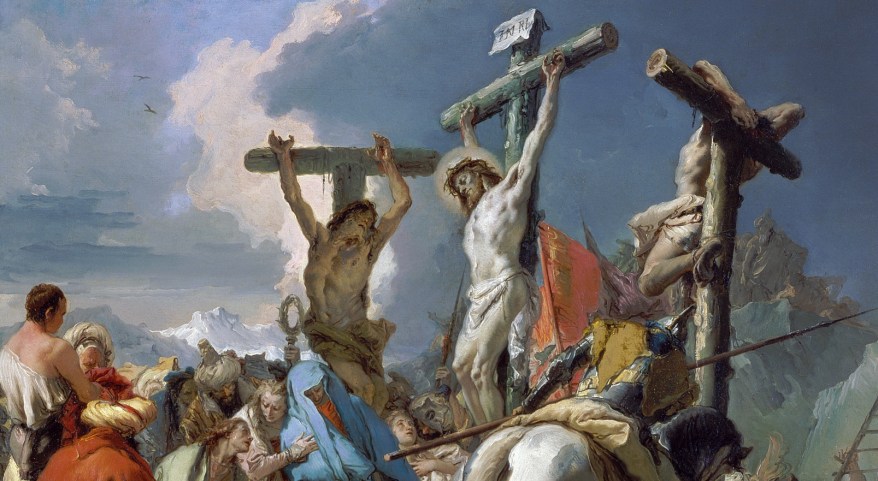
Venerdì Santo: la Crocifissione secondo Tiepolo
🇮🇹Nel giorno del Venerdì Santo, c’è un’opera che riesce ancora a scuotere lo sguardo. La Crocifissione di Giambattista Tiepolo non è come le altre: niente simmetrie perfette, niente distanza. Qui si entra dentro la scena, da un punto di vista obliquo, tra movimento, tensione e umanità… 🇬🇧On Good Friday, there’s a work that still manages…
-
Festival La Versiliana 2026: tra musica, teatro e grandi narrazioni
Dal 17 luglio al 23 agosto 2026, la pineta di Marina di Pietrasanta ospiterà la 47ª edizione del Festival La Versiliana. Una kermesse aperta a tutti nella quale linguaggi diversi dialogano tra loro in un equilibrio tra tradizione e contemporaneità.
-
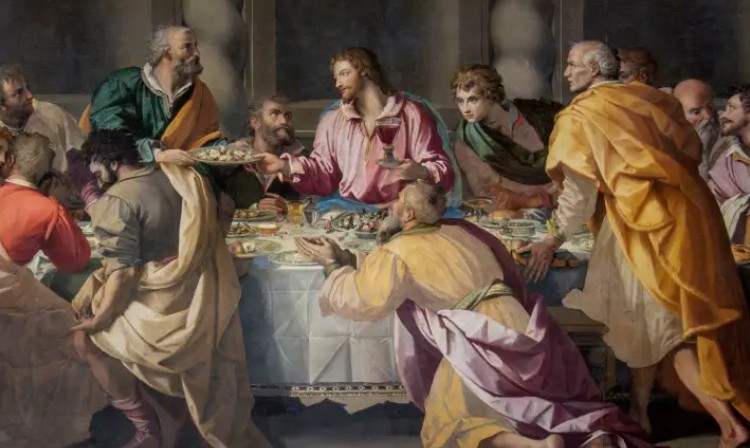
Giovedì Santo: l’Ultima Cena di Allori che pochi conoscono a Firenze
🇮🇹Nel cuore di Museo di Santa Maria Novella, a Firenze, si conserva una delle interpretazioni più affascinanti e meno note dell’Ultima Cena: quella realizzata da Alessandro Allori nel 1584… 🇬🇧In the heart of the Santa Maria Novella Museum in Florence, one of the most fascinating and least-known interpretations of the Last Supper is preserved: the…
Condividi:


Questo sono io





sostienici

Sostienici – Support Us
Se questo blog ti piace e ti appassiona, puoi aiutarci a farlo crescere sempre più sostenendoci in modo concreto condividendo i post, seguendo le pagine social e con un contributo che ci aiuta ad andare avanti con il nostro lavoro di divulgazione. . ENGLISH: If you like and are passionate about this blog, you can help us make it grow more and more by supporting us in a concrete way by sharing posts, following social pages and with a contribution that helps us to move forward with our dissemination work.
€10,00


1 commento »