

Battistello Caracciolo e il suo San Giovannino: il capolavoro che rivela l’eredità di Caravaggio
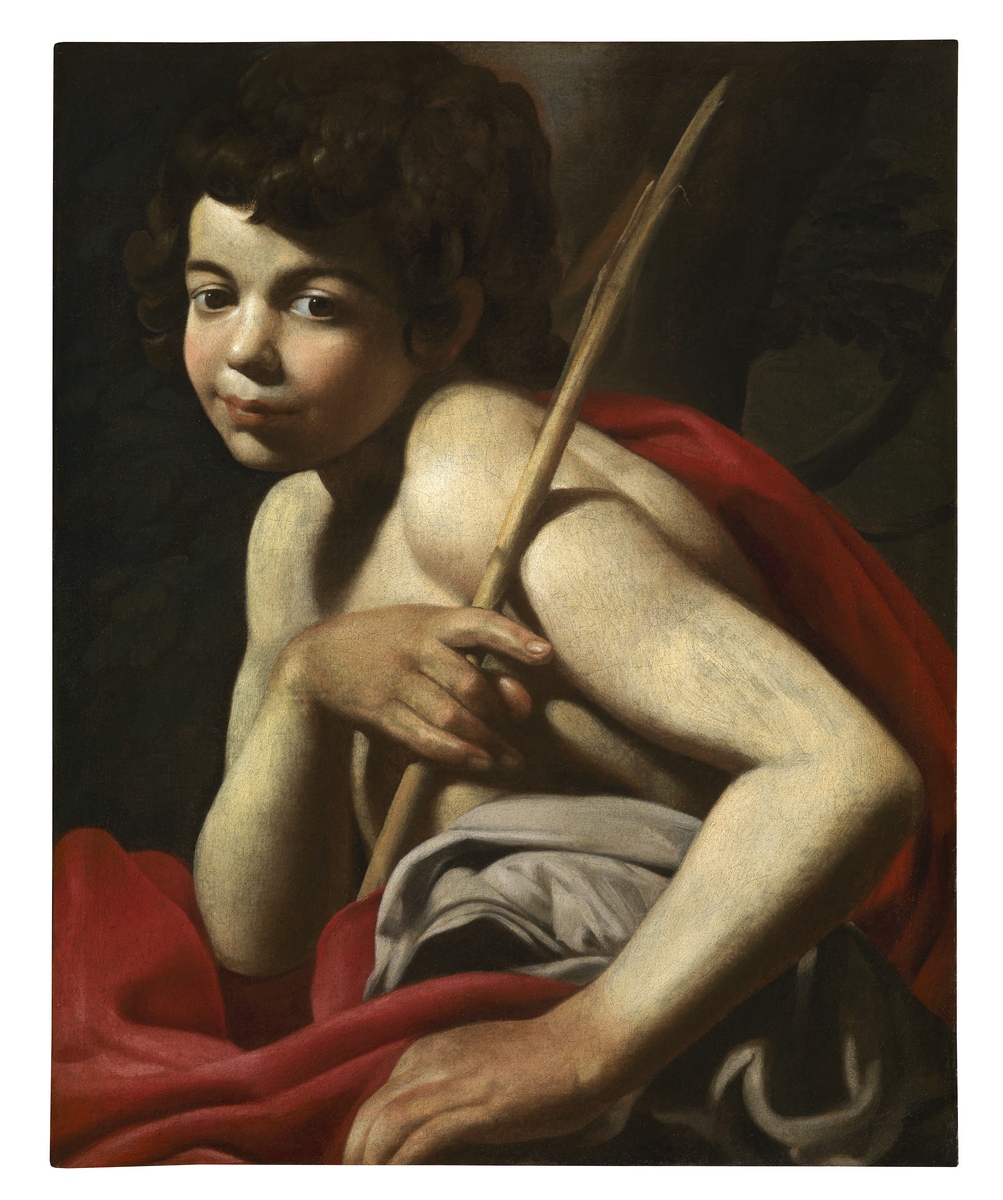
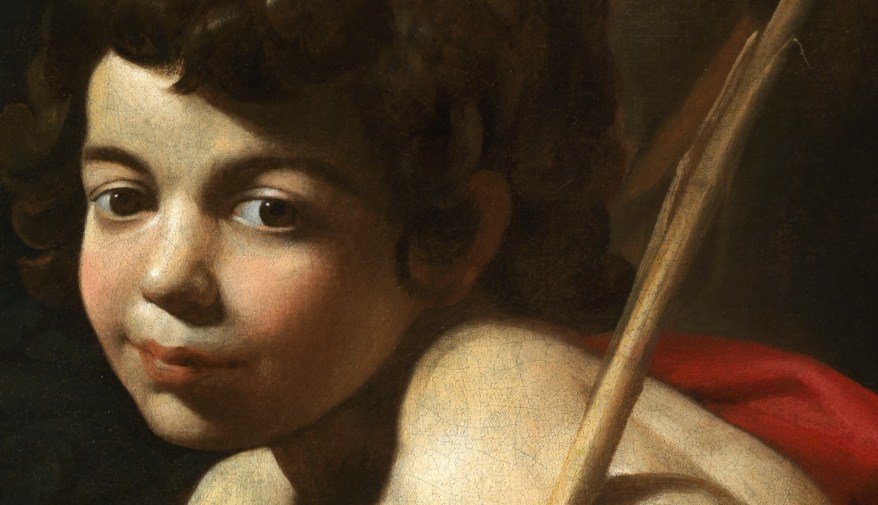
Il San Giovanni Battista fanciullo di Giovan Battista Caracciolo, realizzato intorno al 1625, è una delle opere più affascinanti del primo naturalismo napoletano. Conservato presso la Fondazione De Vito e al momento esposto a Forte dei Marmi nel percorso espositivo ‘Pittura a Napoli dopo Caravaggio’, il dipinto testimonia il profondo legame tra l’artista e la rivoluzione pittorica introdotta da Caravaggio durante i suoi soggiorni a Napoli.
Battistello fu infatti tra i primi interpreti locali della lezione caravaggesca, distinguendosi per la capacità di rielaborarla in maniera personale.
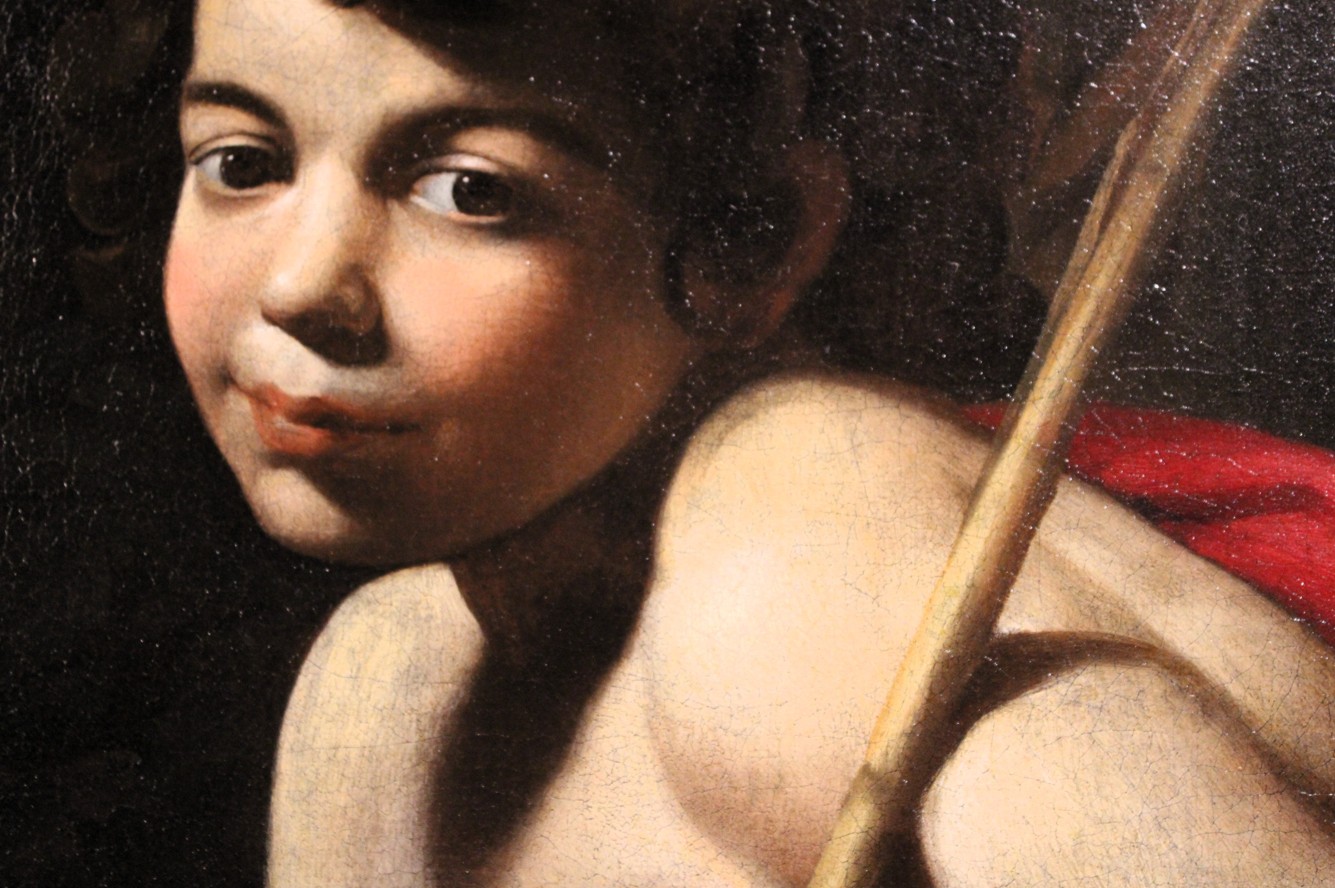
In questa tela, il giovane San Giovanni emerge da uno sfondo scuro grazie a un uso magistrale della luce, che modella il corpo e ne accentua la presenza fisica.
L’influenza di Caravaggio e la reinterpretazione di Battistello
Per lungo tempo l’opera fu addirittura attribuita a Caravaggio, prima che lo storico dell’arte Roberto Longhi ne riconoscesse la paternità a Battistello. Questo equivoco rivela quanto fosse stretto il legame stilistico tra i due artisti.
Il naturalismo è evidente nella resa delle ombre e nella verità anatomica, ma Battistello introduce elementi di maggiore morbidezza e grazia. Il volto del santo, delicato e luminoso, tradisce un’influenza emiliana e rimanda anche alla pittura di Giovanni Lanfranco e di Simon Vouet, segnando una svolta verso un linguaggio più elegante e meno drammatico.
Un San Giovannino intimo e sorprendentemente umano
Diversamente dalle interpretazioni più austere del soggetto, Battistello propone qui un san Giovanni giovane, quasi quotidiano. Il ragazzo, seminudo e avvolto in un panno bianco e un mantello rosso, guarda direttamente lo spettatore con uno sguardo coinvolgente e complice.
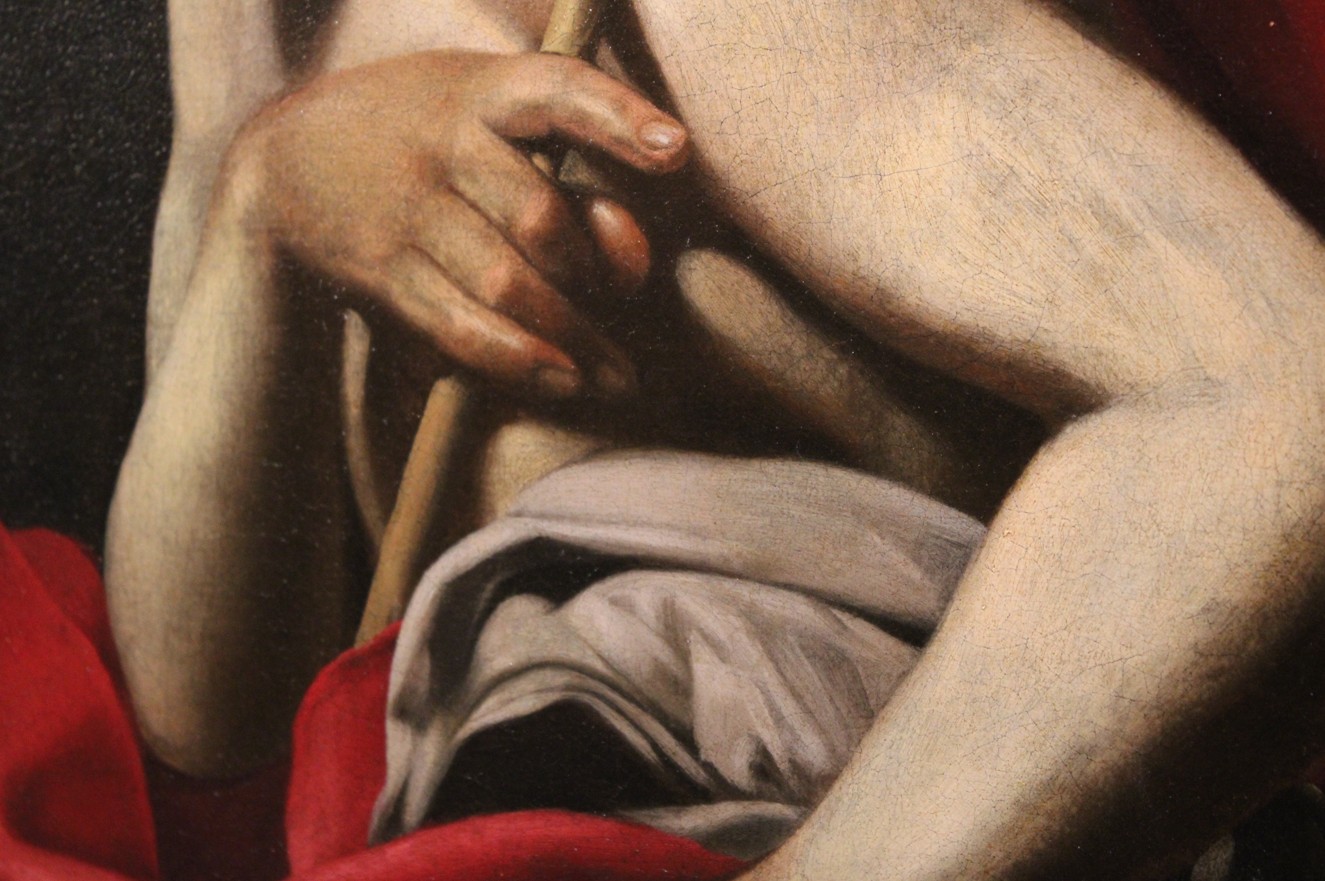
L’assenza dell’agnello, simbolo tradizionale di Cristo, è compensata dal gesto della mano che sembra alluderne la presenza fuori campo. Questo dettaglio crea un dialogo silenzioso tra figura e osservatore, tipico della pittura caravaggesca.
L’espressione del volto, serena ma leggermente ambigua, riflette quella tensione emotiva che caratterizza molte opere di Battistello, sospese tra innocenza e inquietudine.
Luce, materia e restauro: la riscoperta del dipinto
Nonostante alcune perdite pittoriche, soprattutto nelle velature delle braccia, il dipinto conserva una straordinaria qualità luminosa. Il recente restauro del 2019 ha restituito leggibilità alle penombre e ai riflessi, evidenziando dettagli preziosi come il bianco azzurrato degli occhi, tecnica tipica di Caravaggio.
È riemerso anche un fondo naturale con alberi e fronde, che suggerisce un ambiente boschivo e arricchisce la composizione rispetto alle versioni più antiche del tema, caratterizzate da sfondi neutri.
Datazione e contesto artistico: un’opera chiave degli anni Venti
La critica contemporanea colloca oggi il dipinto nei primi anni Venti del Seicento, periodo cruciale per la pittura napoletana. In questi anni Battistello partecipa a un vivace scambio artistico, soprattutto nell’ambito della Certosa di San Martino, dove si confronta con artisti di diversa provenienza.
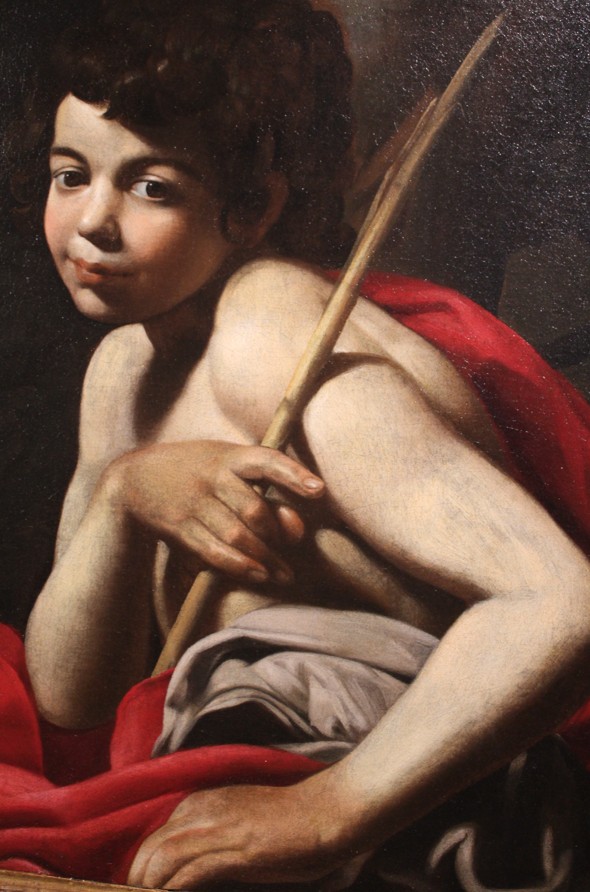
L’opera rappresenta quindi un momento di equilibrio tra fedeltà al naturalismo caravaggesco e apertura a nuove influenze, segnando una maturazione stilistica decisiva.
In un formato raccolto, pensato probabilmente per la devozione privata, l’artista riesce a concentrare tutta la forza della rivoluzione caravaggesca, reinterpretandola con sensibilità personale e aprendo la strada agli sviluppi del Barocco napoletano.
Per il momento il sempre vostro Michelangelo Buonarroti vi saluta dandovi appuntamento ai prossimi post e sui social.
Battistello Caracciolo and his Young Saint John the Baptist: the masterpiece that reveals Caravaggio’s legacy
Giovan Battista Caracciolo’s Young Saint John the Baptist, painted around 1625, is one of the most fascinating works of early Neapolitan naturalism. Conserved at the De Vito Foundation and currently on display in Forte dei Marmi as part of the exhibition “Painting in Naples after Caravaggio,” the painting demonstrates the artist’s profound connection with the pictorial revolution introduced by Caravaggio during his stays in Naples.
Battistello was, in fact, among the first local interpreters of Caravaggio’s teachings, distinguishing himself for his ability to reinterpret them in a personal manner.
In this canvas, the young Saint John emerges from a dark background thanks to a masterful use of light, which models the body and accentuates its physical presence.
The Influence of Caravaggio and Battistello’s Reinterpretation
For a long time, the work was even attributed to Caravaggio, before art historian Roberto Longhi recognized Battistello as the author. This misunderstanding reveals the close stylistic connection between the two artists.
The naturalism is evident in the rendering of shadows and anatomical accuracy, but Battistello introduces elements of greater softness and grace. The saint’s delicate and luminous face betrays an Emilian influence and also harks back to the painting of Giovanni Lanfranco and Simon Vouet, marking a shift toward a more elegant and less dramatic language.
An Intimate and Surprisingly Human Saint John
Unlike more austere interpretations of the subject, Battistello here presents a young, almost everyday Saint John. The boy, half-naked and wrapped in a white cloth and a red cloak, gazes directly at the viewer with an engaging and complicit gaze.
The absence of the lamb, a traditional symbol of Christ, is compensated for by the gesture of the hand that seems to hint at its presence off-screen. This detail creates a silent dialogue between figure and viewer, typical of Caravaggio’s painting.
The facial expression, serene yet slightly ambiguous, reflects the emotional tension that characterizes many of Battistello’s works, suspended between innocence and anxiety.
Light, matter, and restoration: the rediscovery of the painting
Despite some pictorial losses, especially in the glazes on the arms, the painting retains an extraordinary luminous quality. The recent restoration of 2019 restored clarity to the shadows and reflections, highlighting precious details such as the bluish whites of the eyes, a typical Caravaggio technique.
A natural background with trees and foliage has also been rediscovered, suggesting a woodland setting and enriching the composition compared to older versions of the theme, characterized by neutral backgrounds.
Dating and Artistic Context: A Key Work of the 1620s
Contemporary critics now place the painting in the early 1620s, a crucial period for Neapolitan painting. During these years, Battistello participated in a lively artistic exchange, especially within the Certosa di San Martino, where he interacted with artists from various backgrounds.
The work thus represents a moment of balance between fidelity to Caravaggio’s naturalism and openness to new influences, marking a decisive stylistic maturation.
In a compact format, likely intended for private devotion, the artist manages to concentrate the full force of Caravaggio’s revolution, reinterpreting it with personal sensitivity and paving the way for the developments of the Neapolitan Baroque.
For now, yours truly, Michelangelo Buonarroti bids you farewell and invites you to join him in future posts and on social media.

Sostienici – Support Us
Se questo blog ti piace e ti appassiona, puoi aiutarci a farlo crescere sempre più sostenendoci in modo concreto condividendo i post, seguendo le pagine social e con un contributo che ci aiuta ad andare avanti con il nostro lavoro di divulgazione. . ENGLISH: If you like and are passionate about this blog, you can help us make it grow more and more by supporting us in a concrete way by sharing posts, following social pages and with a contribution that helps us to move forward with our dissemination work.
10,00 €
Articoli
Condividi:


Questo sono io





sostienici

Sostienici – Support Us
Se questo blog ti piace e ti appassiona, puoi aiutarci a farlo crescere sempre più sostenendoci in modo concreto condividendo i post, seguendo le pagine social e con un contributo che ci aiuta ad andare avanti con il nostro lavoro di divulgazione. . ENGLISH: If you like and are passionate about this blog, you can help us make it grow more and more by supporting us in a concrete way by sharing posts, following social pages and with a contribution that helps us to move forward with our dissemination work.
€10,00


