

Quel sorriso del violinista felice di Gerrit van Honthorst
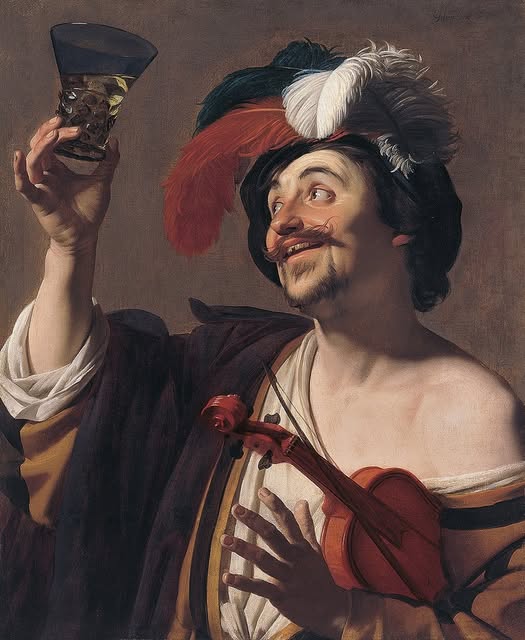
Il violinista felice con un bicchiere di vino, realizzato nel 1624 da Gerrit van Honthorst, detto anche Gherardo delle Notti, è un dipinto a olio su tela che incarna perfettamente lo spirito della pittura di genere del Seicento.
L’opera ritrae un uomo sorridente, con un cappello piumato e un violino appoggiato sotto il braccio, mentre solleva un bicchiere di vino in un gesto spontaneo e coinvolgente. La scena cattura un attimo vivo e autentico, come se il musicista avesse appena terminato di suonare, immerso in un’atmosfera conviviale e festosa.
Gerrit van Honthorst e il fascino del caravaggismo olandese
Per comprendere appieno il dipinto, è fondamentale guardare alla figura di Gerrit van Honthorst. Nato nel 1592, l’artista fu tra i principali interpreti del caravaggismo nei Paesi Bassi, dopo un periodo di formazione a Roma dove studiò da vicino l’opera di Caravaggio. Proprio dall’influenza del maestro italiano derivano l’uso drammatico della luce e l’attenzione per i soggetti realistici.
Soprannominato in Italia “Gherardo delle Notti” per la sua abilità nel rappresentare scene illuminate artificialmente, Honthorst sviluppò uno stile capace di unire teatralità e quotidianità, conquistando importanti committenti europei, tra cui il principe Maurizio di Nassau.
L’espressività del volto e il realismo della scena
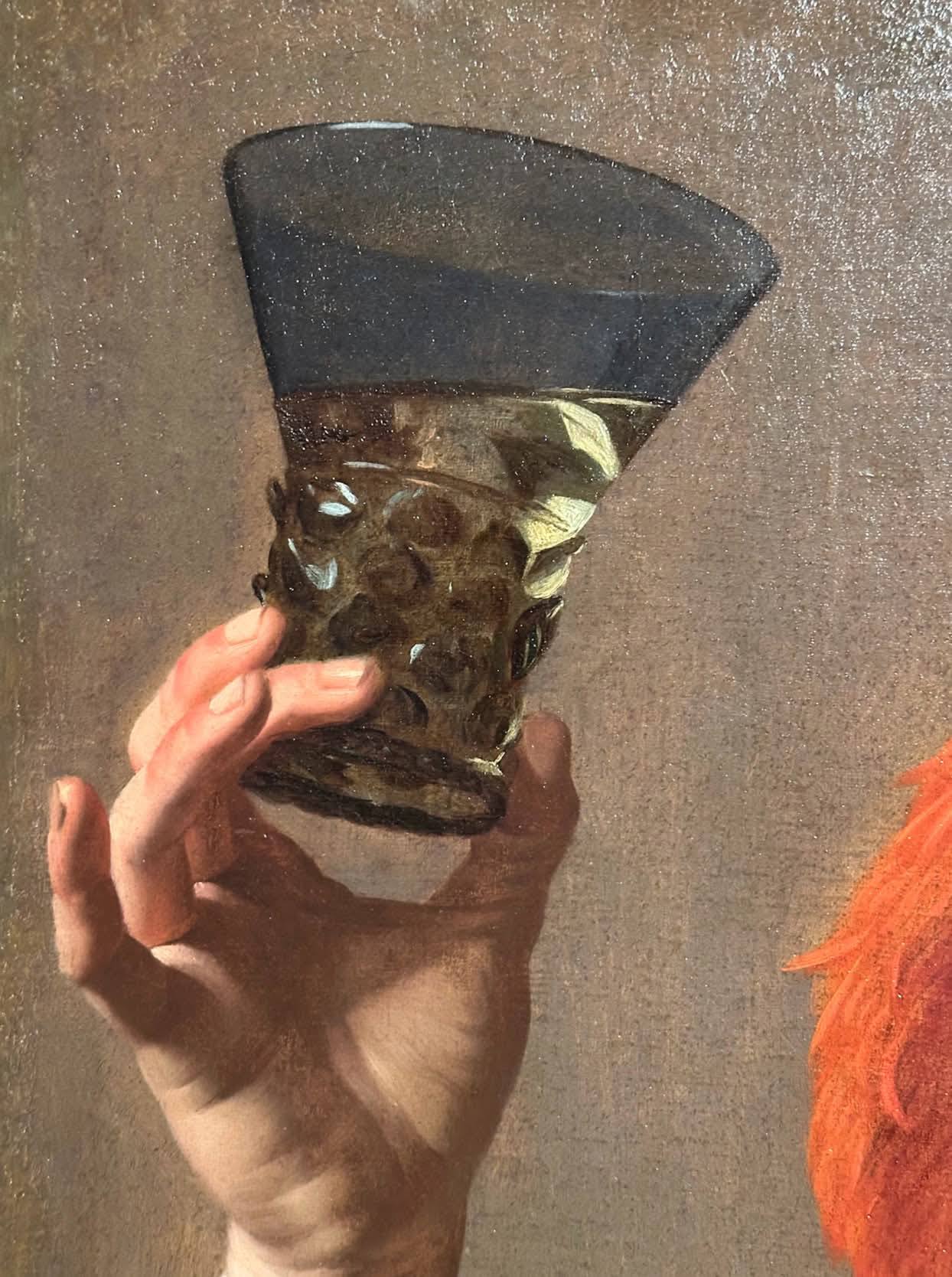
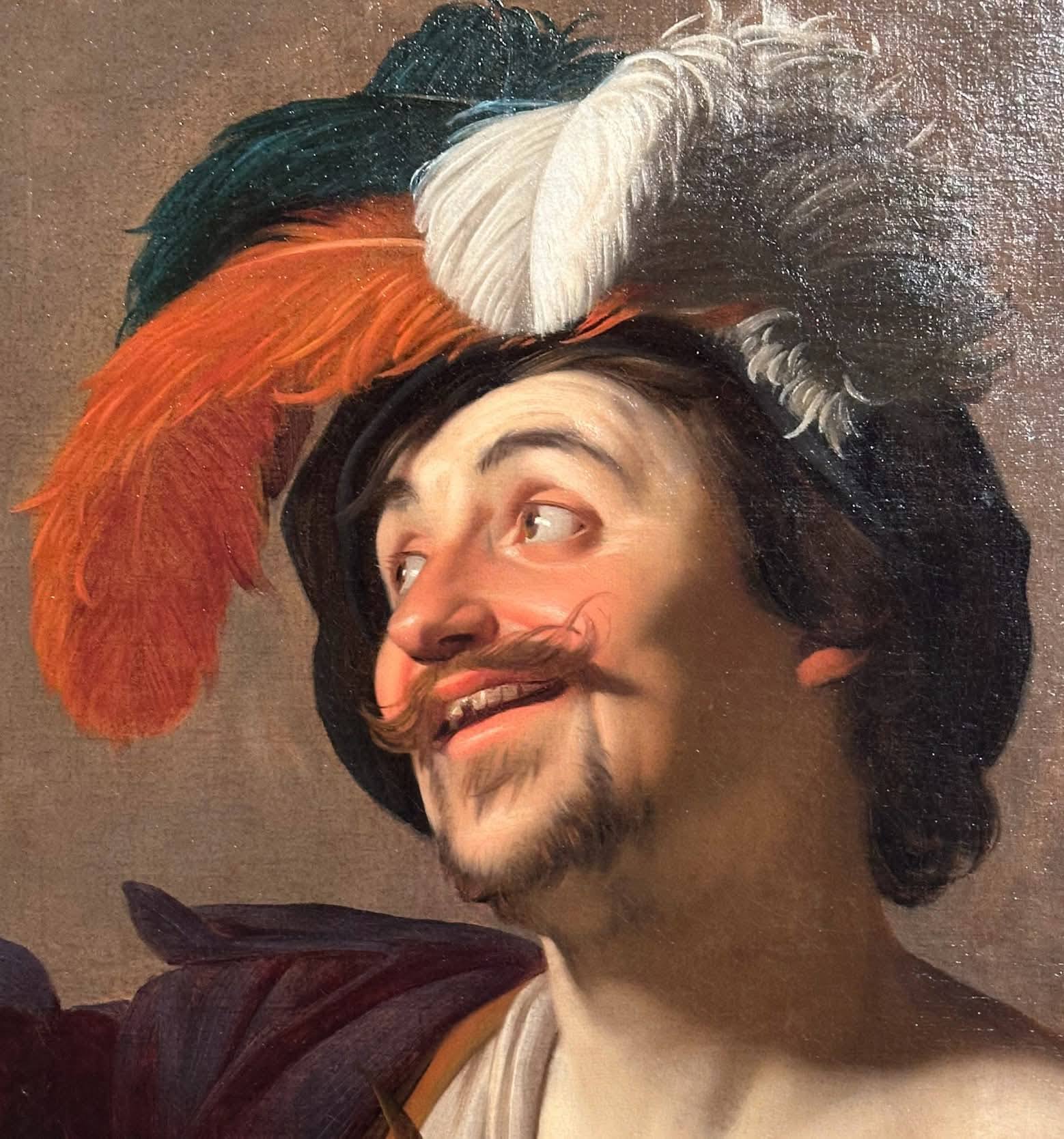
Ciò che colpisce immediatamente nell’opera è la forza espressiva del protagonista. Il volto non è idealizzato, ma caratterizzato da tratti semplici e popolari che ne accentuano l’umanità. Il sorriso aperto e il gesto del brindisi suggeriscono un momento di piacere immediato, probabilmente influenzato dal vino, rendendo la scena estremamente naturale e vicina allo spettatore.
Questa scelta stilistica riflette una nuova sensibilità artistica, lontana dalla rigidità dei ritratti ufficiali e più vicina alla rappresentazione della vita quotidiana.
La luce come protagonista della composizione
L’eredità di Caravaggio emerge con forza nell’uso della luce, che diventa elemento centrale della composizione. Il volto del musicista e il bicchiere di vino sono illuminati con intensità, mentre il resto della scena rimane immerso nell’ombra.
La luce non è solo un mezzo tecnico, ma uno strumento narrativo che sottolinea la gioia e l’energia del momento rappresentato.
Composizione dinamica e senso di anticipazione
La disposizione degli elementi contribuisce a rendere la scena viva e dinamica. Il gesto del brindisi e la direzione dello sguardo creano un dialogo implicito con chi osserva, trasformando il dipinto in una sorta di palcoscenico.
Questa capacità di coinvolgere lo spettatore è uno degli aspetti più moderni e affascinanti dell’opera.
Il colore e la costruzione dell’atmosfera
I toni scuri dominano lo sfondo e l’abbigliamento del musicista, mentre il volto e il bicchiere emergono grazie a una luminosità calibrata. Il colore del vino aggiunge una nota vibrante, contribuendo a costruire un’atmosfera intima e coinvolgente. Il contrasto cromatico rafforza la tridimensionalità e dona al dipinto una presenza quasi tangibile.
La storia dell’opera e le sue versioni
Si ritiene che il dipinto sia stato commissionato dal principe Maurizio di Nassau, grande estimatore dell’arte di Honthorst. L’opera divenne presto una delle più apprezzate della sua collezione. Il successo del soggetto portò l’artista a realizzarne diverse versioni, segno della sua popolarità nel contesto artistico europeo. Una di queste è oggi conservata al Museo del Prado di Madrid.
Gerrit van Honthorst riesce a trasformare una scena semplice in un’immagine carica di vitalità, dove luce, musica e convivialità si fondono in un racconto visivo immediato e universale.
Per il momento il sempre vostro Michelangelo Buonarroti vi saluta dandovi appuntamento ai prossimi post e sui social.
The Happy Violinist’s Smile by Gerrit van Honthorst
The Happy Violinist with a Glass of Wine, painted in 1624 by Gerrit van Honthorst, also known as Gherardo delle Notti, is an oil on canvas painting that perfectly embodies the spirit of 17th-century genre painting.
The work depicts a smiling man, wearing a plumed hat and a violin perched under his arm, raising a glass of wine in a spontaneous and engaging gesture. The scene captures a lively and authentic moment, as if the musician had just finished playing, immersed in a convivial and festive atmosphere.
Gerrit van Honthorst and the Charm of Dutch Caravaggism
To fully understand the painting, it is essential to look at the figure of Gerrit van Honthorst. Born in 1592, the artist was among the leading exponents of Caravaggism in the Netherlands, following a period of training in Rome where he closely studied the work of Caravaggio. The dramatic use of light and attention to realistic subjects derive from the influence of the Italian master.
Known in Italy as “Gherardo delle Notti” for his skill in depicting artificially lit scenes, Honthorst developed a style capable of combining theatricality and everyday life, winning over important European patrons, including Prince Maurice of Nassau.
The Expressiveness of the Face and the Realism of the Scene
What is immediately striking in the work is the expressive power of the subject. The face is not idealized, but characterized by simple, everyday features that accentuate its humanity. The open smile and toasting gesture suggest a moment of immediate pleasure, likely influenced by the wine, making the scene extremely natural and close to the viewer.
This stylistic choice reflects a new artistic sensibility, far from the rigidity of official portraits and closer to the depiction of everyday life.
Light as the Protagonist of the Composition
Caravaggio’s legacy emerges forcefully in the use of light, which becomes the central element of the composition. The musician’s face and the glass of wine are intensely illuminated, while the rest of the scene remains immersed in shadow.
Light is not merely a technical tool, but a narrative tool that emphasizes the joy and energy of the moment depicted.
Dynamic Composition and a Sense of Anticipation
The arrangement of the elements contributes to making the scene lively and dynamic. The toasting gesture and the direction of the gaze create an implicit dialogue with the viewer, transforming the painting into a sort of stage.
This ability to engage the viewer is one of the most modern and fascinating aspects of the work.
Color and Atmosphere
Dark tones dominate the background and the musician’s clothing, while the face and the glass emerge thanks to a balanced luminosity. The color of the wine adds a vibrant note, helping to create an intimate and engaging atmosphere. The color contrast enhances the three-dimensionality and gives the painting an almost tangible presence.
The history of the work and its versions
It is believed that the painting was commissioned by Prince Maurice of Nassau, a great admirer of Honthorst’s art. The work quickly became one of the most prized in his collection. The subject’s success led the artist to create several versions, a sign of its popularity in the European art world. One of these is now housed at the Prado Museum in Madrid.
Gerrit van Honthorst manages to transform a simple scene into an image full of vitality, where light, music, and conviviality blend into an immediate and universal visual narrative.
For now, yours truly, Michelangelo Buonarroti bids farewell and invites you to join him in future posts and on social media.

Sostienici – Support Us
Se questo blog ti piace e ti appassiona, puoi aiutarci a farlo crescere sempre più sostenendoci in modo concreto condividendo i post, seguendo le pagine social e con un contributo che ci aiuta ad andare avanti con il nostro lavoro di divulgazione. . ENGLISH: If you like and are passionate about this blog, you can help us make it grow more and more by supporting us in a concrete way by sharing posts, following social pages and with a contribution that helps us to move forward with our dissemination work.
10,00 €
Articoli
Condividi:


Questo sono io





sostienici

Sostienici – Support Us
Se questo blog ti piace e ti appassiona, puoi aiutarci a farlo crescere sempre più sostenendoci in modo concreto condividendo i post, seguendo le pagine social e con un contributo che ci aiuta ad andare avanti con il nostro lavoro di divulgazione. . ENGLISH: If you like and are passionate about this blog, you can help us make it grow more and more by supporting us in a concrete way by sharing posts, following social pages and with a contribution that helps us to move forward with our dissemination work.
€10,00


