
Giovanni Segantini, L’Angelo della Vita: la maternità come visione sospesa tra simbolo e luce
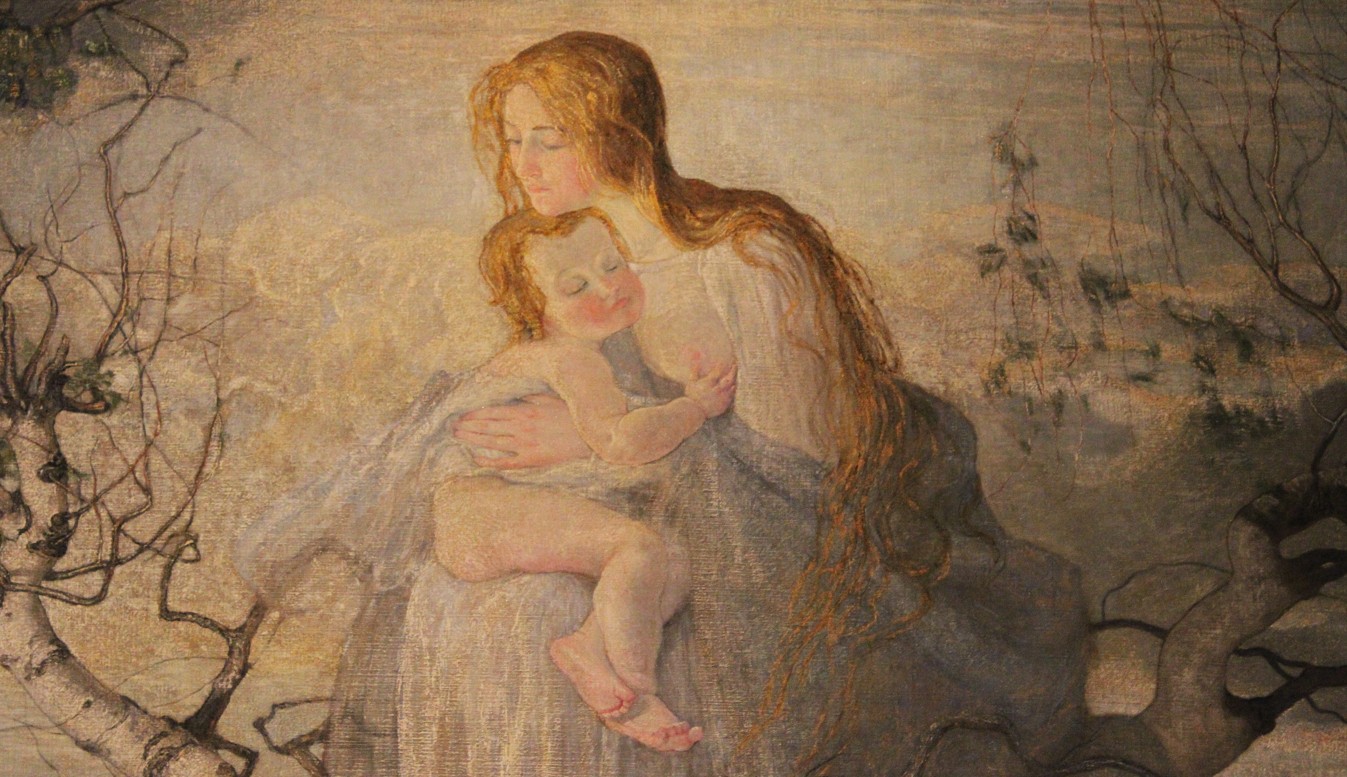
Nel 1894 Giovanni Segantini realizza L’Angelo della Vita, uno dei dipinti più intensi e poetici della sua maturità artistica. Un’opera che non si limita a raccontare la maternità, ma la trasfigura in un’apparizione mistica, sospesa tra terra e cielo, natura e spiritualità.
Oggi il dipinto è conservato alla Galleria d’Arte Moderna di Milano, dove continua a esercitare un fascino silenzioso e magnetico.
Un dittico sulla donna: sacro e profano
L’Angelo della Vita nasce da una commissione del banchiere Leopoldo Albini, avvenuta nel 1891 o poco prima. Albini chiese a Segantini due tele concepite come un dittico sul tema della donna: da un lato la madre mistica, dall’altro la visione mondana e lussuriosa, incarnata nella Dea pagana, oggi esposta accanto all’Angelo.
Due poli opposti e complementari, che riflettono una visione simbolista e profondamente moderna del femminile: origine della vita e forza primordiale, ma anche corpo, desiderio e materia.
Baba e Gottardo: ritratti intimi, universali
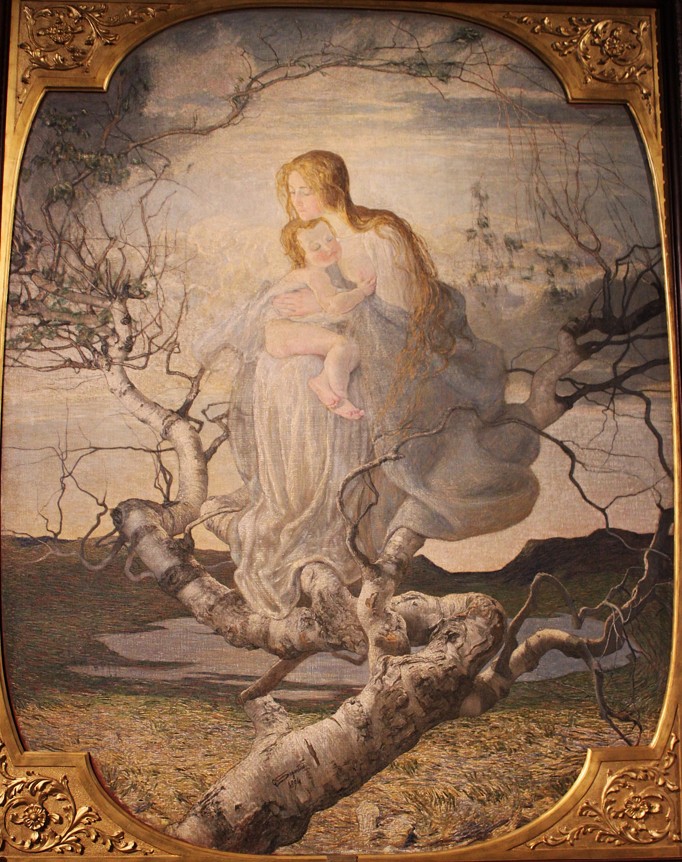
Le figure rappresentate hanno un’origine sorprendentemente intima. La donna è Baba, la tata di famiglia, mentre il bambino è Gottardo, il figlio di Segantini, ritratto però a memoria: nel 1894 aveva già circa dodici anni. Questo scarto temporale contribuisce alla dimensione ideale dell’opera, dove il ricordo personale diventa immagine universale della maternità.
Una Madonna moderna tra Medioevo e Preraffaelliti
La posa della donna è uno degli elementi più potenti del dipinto. Appena poggiata sui rami, come se non avesse peso, la figura appare immateriale, quasi una visione. Il riferimento è chiaro: le Madonne in trono medievali e quattrocentesche, reinterpretate attraverso quegli stilemi che i Preraffaelliti avevano riportato in auge e che Segantini conosceva e ammirava.
Non c’è trono, però, ma un albero: la natura stessa diventa sede del sacro.
Un paesaggio simbolista, tra Giappone e sogno
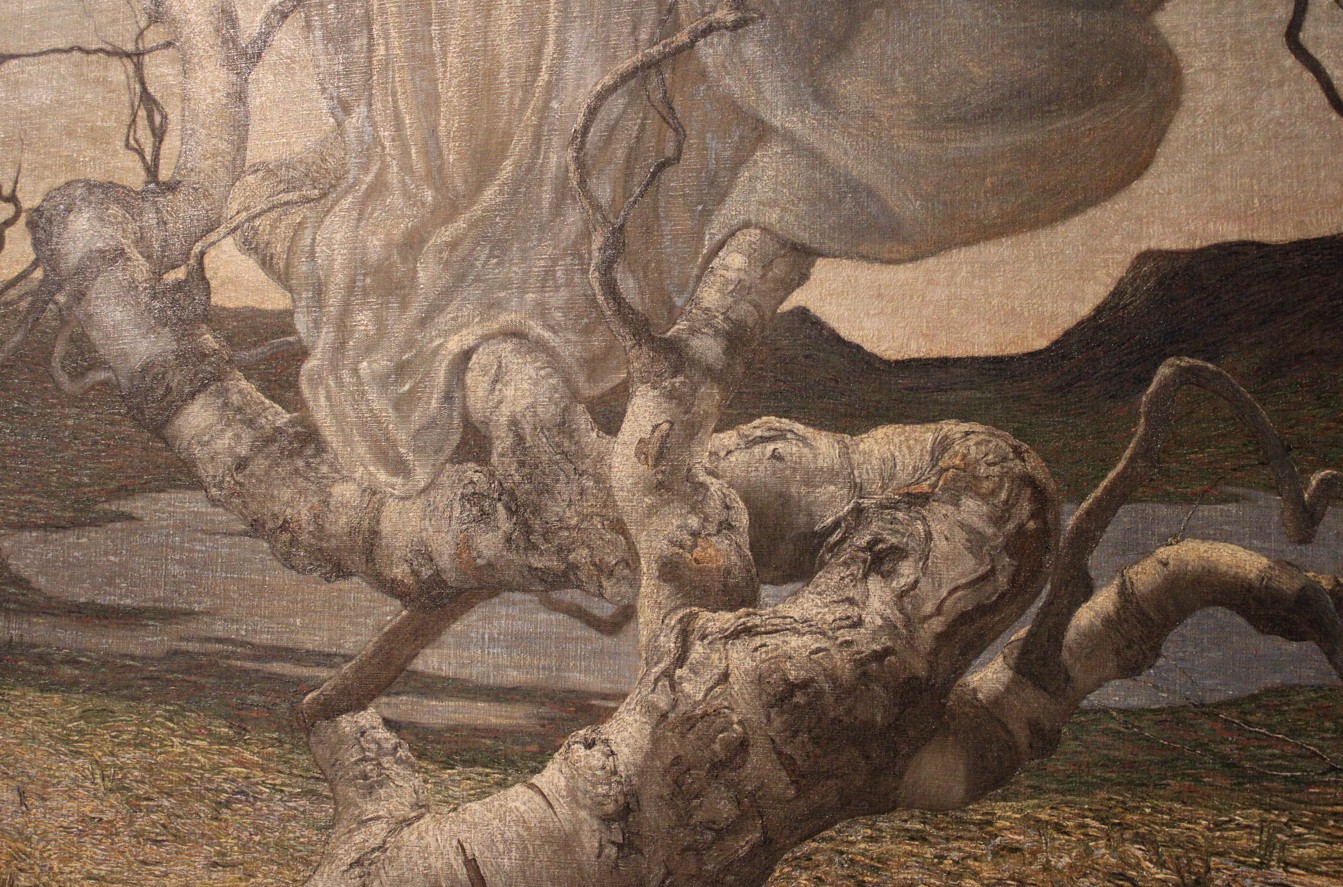
Del tutto simbolista è il paesaggio che avvolge la scena. La betulla dagli eleganti rami stilizzati, la prospettiva a volo d’uccello, la rarefazione spaziale rimandano chiaramente alle stampe giapponesi, che a fine Ottocento influenzavano profondamente l’arte europea.
Non siamo in un luogo reale, ma in uno spazio mentale, dove la natura non descrive, bensì allude.
Oro, luce e cornice
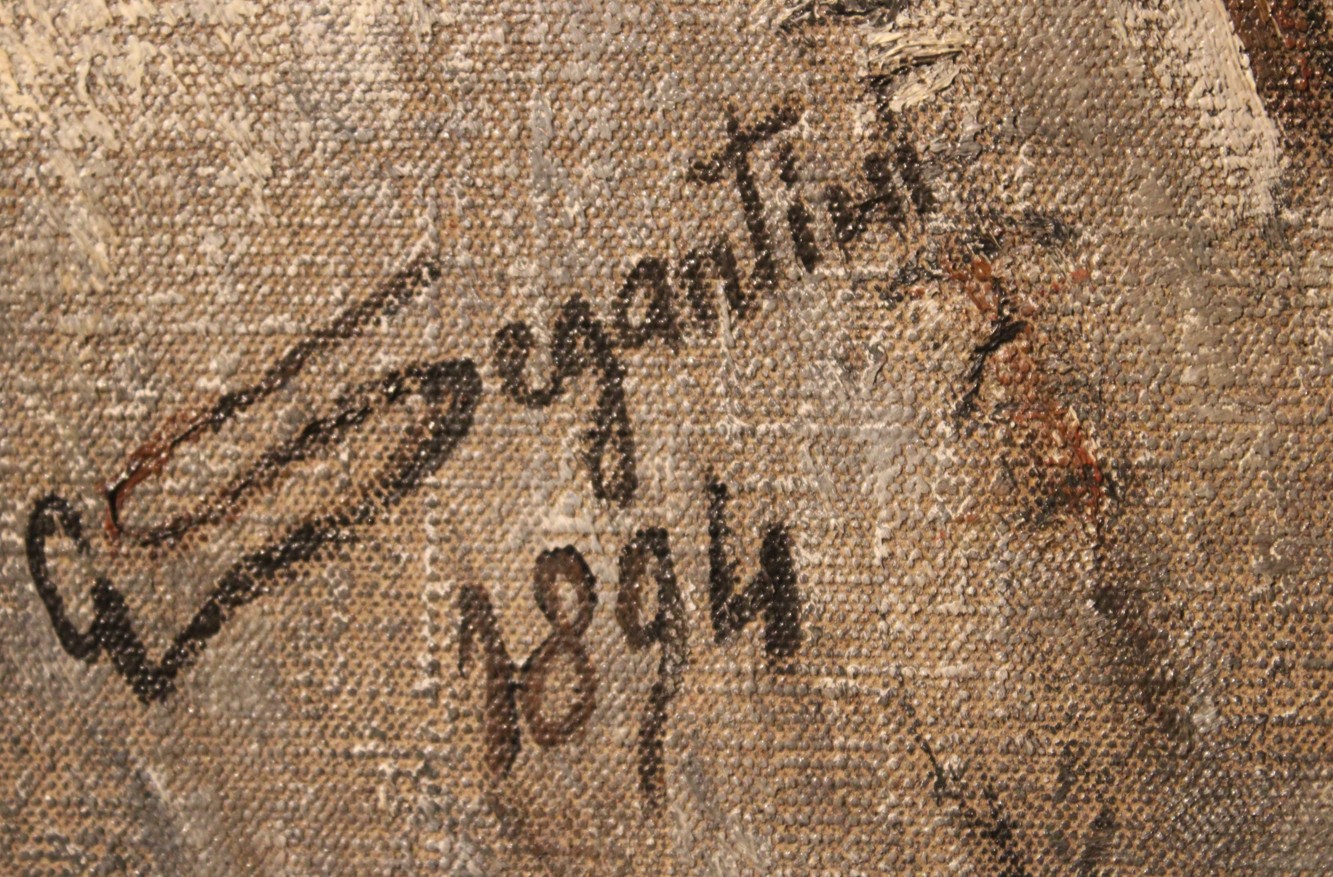
Segantini utilizza olio su tela e oro in polvere, facendo vibrare la superficie pittorica di riflessi luminosi che accentuano la dimensione spirituale dell’opera. Anche la cornice dorata, probabilmente disegnata dallo stesso artista, fa parte integrante del progetto: decorata con motivi ornamentali stilizzati, trasforma il dipinto in un oggetto quasi sacro, un’icona laica della vita.
Un lascito prezioso
Alla morte di Leopoldo Albini, l’opera entra nelle collezioni pubbliche grazie al Legato Albini del 1918. Oggi L’Angelo della Vita è uno dei capolavori simbolisti più significativi conservati alla Galleria di Arte Moderna di Milano, testimonianza della ricerca di Segantini, nato ad Arco (Trento) nel 1858 e morto a Schafberg, in Engadina, nel 1899, nel cuore di quella natura alpina che fu sempre il suo orizzonte spirituale.
L’Angelo della Vita è un incontro silenzioso tra madre e figlio, ma anche tra arte, memoria e simbolo. Un dipinto che racconta l’origine stessa della vita, colta nell’istante fragile e eterno della sua apparizione.
Per il momento il sempre vostro Michelangelo Buonarroti vi saluta dandovi appuntamento ai prossimi post e sui social.
Giovanni Segantini, The Angel of Life: Motherhood as a Vision Suspended Between Symbol and Light
In 1894, Giovanni Segantini created The Angel of Life, one of the most intense and poetic paintings of his artistic maturity. A work that not only recounts motherhood, but transfigures it into a mystical apparition, suspended between earth and sky, nature and spirituality. Today, the painting is housed at the Galleria d’Arte Moderna in Milan, where it continues to exert a silent and magnetic fascination.
A Diptych on Woman: Sacred and Profane
The Angel of Life was born from a commission from the banker Leopoldo Albini, made in 1891 or shortly before. Albini asked Segantini to create two canvases conceived as a diptych on the theme of woman: on one side, the mystical mother; on the other, the worldly and lustful vision embodied in the pagan Goddess, now displayed alongside the Angel.
Two opposite yet complementary poles, reflecting a Symbolist and profoundly modern vision of the feminine: the origin of life and primordial force, but also body, desire, and matter.
Baba and Gottardo: Intimate, Universal Portraits
The figures depicted have a surprisingly intimate origin. The woman is Baba, the family nanny, while the boy is Gottardo, Segantini’s son, painted from memory: in 1894, he was already about twelve years old. This temporal gap contributes to the work’s ideal dimension, where personal memory becomes a universal image of motherhood.
A Modern Madonna between the Middle Ages and the Pre-Raphaelites
The woman’s pose is one of the painting’s most powerful elements. Resting on the branches, as if weightless, the figure appears immaterial, almost a vision. The reference is clear: medieval and fifteenth-century Madonnas enthroned, reinterpreted through the stylistic elements that the Pre-Raphaelites had revived and that Segantini knew and admired.
There is no throne, however, but a tree: nature itself becomes the seat of the sacred.
A Symbolist Landscape, Between Japan and Dream
The landscape surrounding the scene is entirely Symbolist. The birch tree with its elegant, stylized branches, the bird’s-eye perspective, and the spatial rarefaction clearly recall Japanese prints, which profoundly influenced European art in the late 19th century.
We are not in a real place, but in a mental space, where nature does not describe, but alludes.
Gold, Light, and Frame
Segantini uses oil on canvas and powdered gold, making the painted surface vibrate with luminous reflections that accentuate the spiritual dimension of the work. The gilded frame, likely designed by the artist himself, is also an integral part of the project: decorated with stylized ornamental motifs, it transforms the painting into an almost sacred object, a secular icon of life.
A Precious Legacy
Upon Leopoldo Albini’s death, the work entered public collections thanks to the Albini Bequest of 1918. Today, The Angel of Life is one of the most significant Symbolist masterpieces held at the Galleria d’Arte Moderna in Milan, a testament to the research of Segantini, who was born in Arco (Trento) in 1858 and died in Schafberg, Engadine, in 1899, in the heart of the Alpine nature that was always his spiritual horizon.
The Angel of Life is a silent encounter between mother and son, but also between art, memory, and symbol. A painting that recounts the very origin of life, captured in the fragile and eternal moment of its appearance.
For now, yours truly, Michelangelo Buonarroti bids you farewell and invites you to join him in future posts and on social media.

Sostienici – Support Us
Se questo blog ti piace e ti appassiona, puoi aiutarci a farlo crescere sempre più sostenendoci in modo concreto condividendo i post, seguendo le pagine social e con un contributo che ci aiuta ad andare avanti con il nostro lavoro di divulgazione. . ENGLISH: If you like and are passionate about this blog, you can help us make it grow more and more by supporting us in a concrete way by sharing posts, following social pages and with a contribution that helps us to move forward with our dissemination work.
10,00 €
Condividi:


Questo sono io





sostienici

Sostienici – Support Us
Se questo blog ti piace e ti appassiona, puoi aiutarci a farlo crescere sempre più sostenendoci in modo concreto condividendo i post, seguendo le pagine social e con un contributo che ci aiuta ad andare avanti con il nostro lavoro di divulgazione. . ENGLISH: If you like and are passionate about this blog, you can help us make it grow more and more by supporting us in a concrete way by sharing posts, following social pages and with a contribution that helps us to move forward with our dissemination work.
€10,00


