
Le opere della Pasqua: il Tradimento di Giuda di Giotto
L’opera a tema pasquale che vi propongo oggi è l’affresco in cui Giotto raffigurò il Tradimento di Giuda tra il 25 marzo 1303 e il 25 marzo del 1305.
Giotto non lavorò da solo al complesso progetto iconografico della Cappella degli Scrovegni di Padova ma fu ispirato da ispirato da un teologo agostiniano che in tempo recenti è stato identificato in Alberto da Padova.
Al suo fianco ebbe poi una squadra di circa quaranta collaboratori per poter riuscire portare a termine l’affresco in 625 giornate di lavoro.

L’artista prese pennelli e pigmenti per dipingere il momento narrato nei Vangeli in cui “Satana entro in lui” e quel lui è proprio Giuda, abbigliato con una veste gialla, simbolo della gelosia che provava nei confronti degli altri Apostoli ma anche allegoria del degrado morale.
Caifa avvolto nel mantello rosso ha appena consegnato a Giuda il sacchetto con i 30 sicli d’argento e pare coglia fargli qualche raccomandazione.
L’affresco fa parte del ciclo delle “Storie di Gesù” e si trova nel registro centrale superiore dell’arcone prima dell’altare della Cappella degli Scrovegni.
Giotto seppe rinnovare profondamente il contenuto della scena, infondendovi una straordinaria tensione psicologica e drammatica. Come di consueto, l’artista pone particolare attenzione nella resa delle emozioni attraverso l’espressività dei volti e la gestualità dei protagonisti dell’affresco.
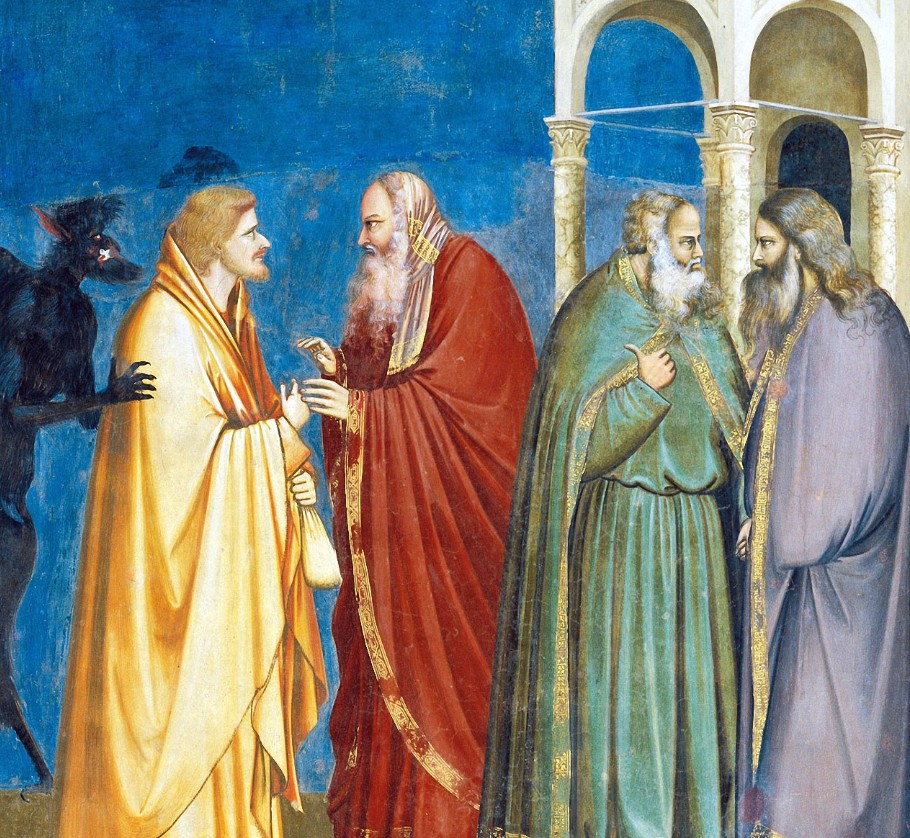
Mentre si svolge la scena, i due sacerdoti sulla destra commentano fra di loro quello che è appena accaduto con fare soddisfatto.
Come accennato prima, la porzione d’affresco del Tradimento di Giuda fa parte del ciclo pittorico della Cappella degli Scrovegni a Padova, realizzato da Giotto fra il 1304 e il 1306.
Per il momento il sempre vostro Michelangelo Buonarroti vi saluta dandovi appuntamento ai prossimi post e sui social.
Easter works: The Betrayal of Judas by Giotto
The Easter-themed work that I propose to you today is the fresco in which Giotto depicted the Betrayal of Judas between March 25, 1303 and March 25, 1305.
Giotto did not work alone on the complex iconographic project of the Scrovegni Chapel in Padua but was inspired by an Augustinian theologian who in recent times has been identified as Alberto da Padova.
He then had a team of about forty collaborators at his side to be able to complete the fresco in 625 days of work.
The artist took brushes and pigments to paint the moment narrated in the Gospels in which “Satan entered him” and that he is precisely Judas, dressed in a yellow robe, a symbol of the jealousy he felt towards the other Apostles but also an allegory of moral degradation.
Caiaphas wrapped in the red cloak has just handed Judas the bag with the 30 silver shekels and seems to be making some recommendations.
The fresco is part of the cycle of the “Stories of Jesus” and is located in the upper central register of the arch before the altar of the Scrovegni Chapel.
Giotto was able to profoundly renew the content of the scene, infusing it with an extraordinary psychological and dramatic tension. As usual, the artist pays particular attention to the rendering of emotions through the expressiveness of the faces and the gestures of the protagonists of the fresco.
While the scene unfolds, the two priests on the right comment among themselves on what has just happened with satisfaction.
As mentioned before, the portion of the fresco of the Betrayal of Judas is part of the pictorial cycle of the Scrovegni Chapel in Padua, created by Giotto between 1304 and 1306.
For the moment, yours ever Michelangelo Buonarroti bids you farewell, making an appointment with you in the next posts and on social media.

Sostienici – Support Us
Se questo blog ti piace e ti appassiona, puoi aiutarci a farlo crescere sempre più sostenendoci in modo concreto condividendo i post, seguendo le pagine social e con un contributo che ci aiuta ad andare avanti con il nostro lavoro di divulgazione. . ENGLISH: If you like and are passionate about this blog, you can help us make it grow more and more by supporting us in a concrete way by sharing posts, following social pages and with a contribution that helps us to move forward with our dissemination work.
10,00 €
Condividi:


Questo sono io





sostienici

Sostienici – Support Us
Se questo blog ti piace e ti appassiona, puoi aiutarci a farlo crescere sempre più sostenendoci in modo concreto condividendo i post, seguendo le pagine social e con un contributo che ci aiuta ad andare avanti con il nostro lavoro di divulgazione. . ENGLISH: If you like and are passionate about this blog, you can help us make it grow more and more by supporting us in a concrete way by sharing posts, following social pages and with a contribution that helps us to move forward with our dissemination work.
€10,00


