
Duomo di Pisa: Piovani ferma il tempo sotto la cupola e commuove 600 spettatori
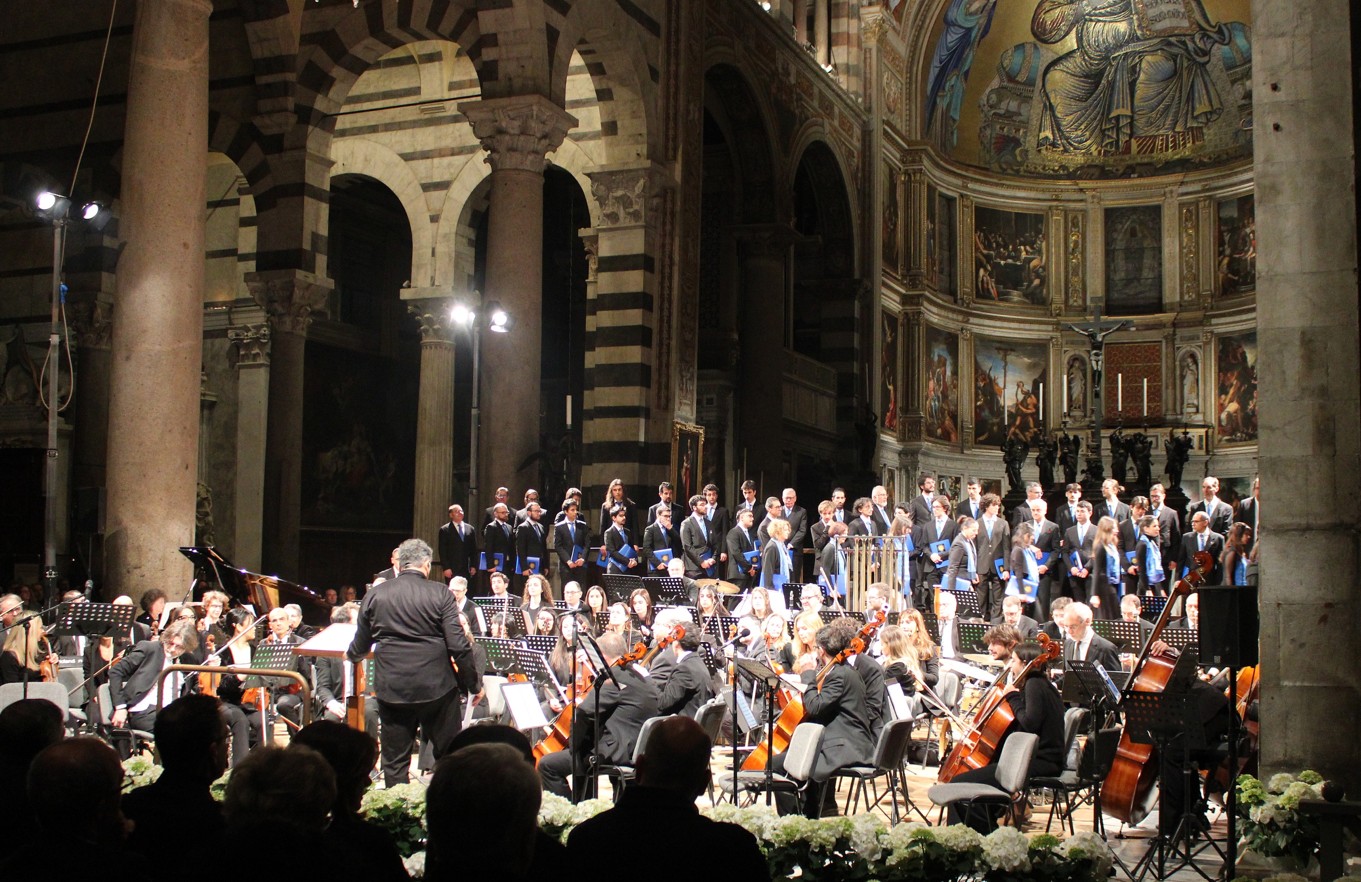
C’è stato un momento, ieri sera, in cui il tempo si è fermato per davvero. Sotto la maestosa cupola del Duomo di Pisa, 600 persone in silenzio assoluto hanno condiviso qualcosa di raro e irripetibile: un’emozione collettiva, intensa, quasi sacra.
Il protagonista è stato Nicola Piovani, capace ancora una volta di trasformare la musica in racconto. Ma quello andato in scena non è stato solo un concerto: è stato un attraversamento emotivo, un’esperienza che ha toccato le corde più profonde.
La magia della cupola: arte, storia e musica si fondono
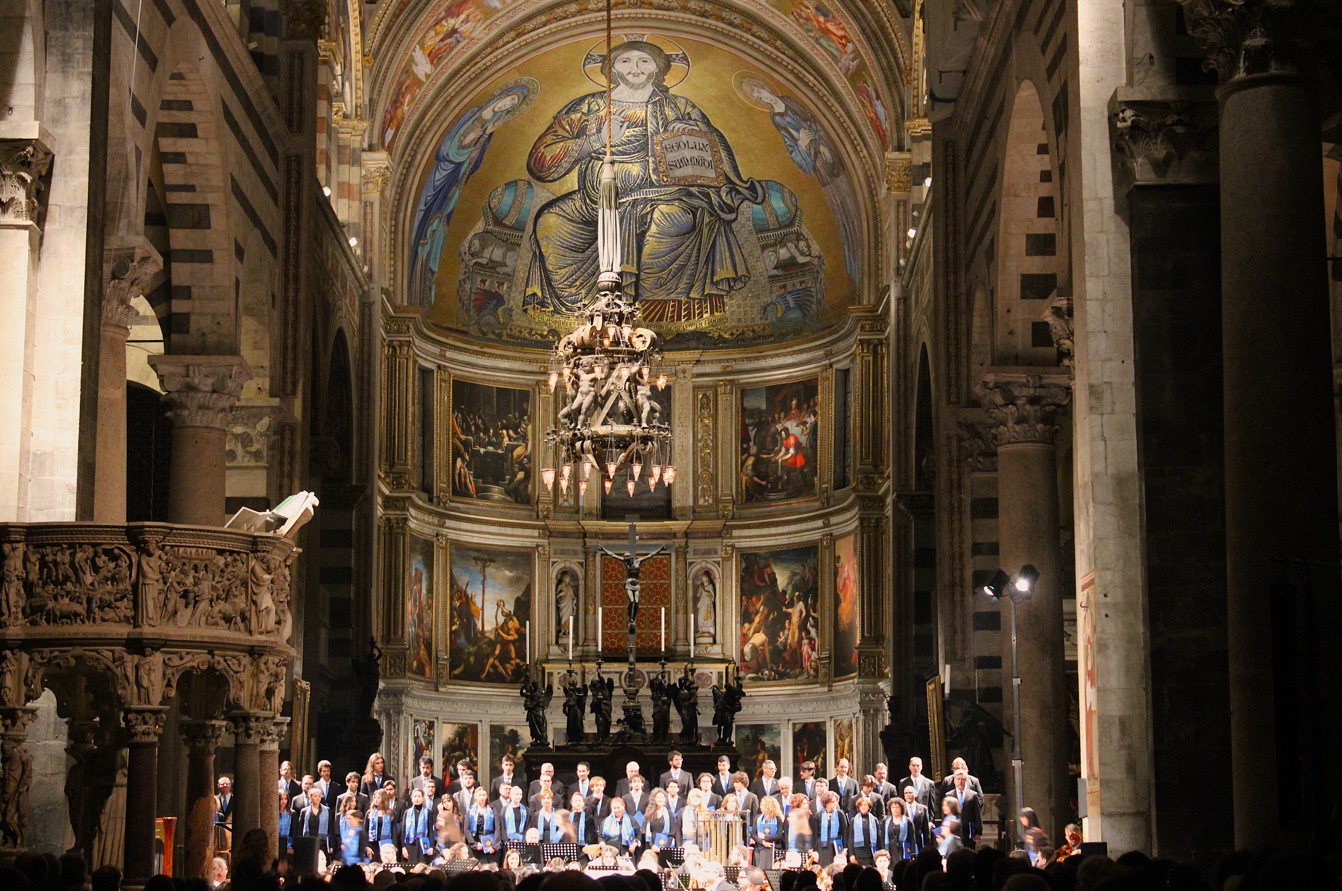
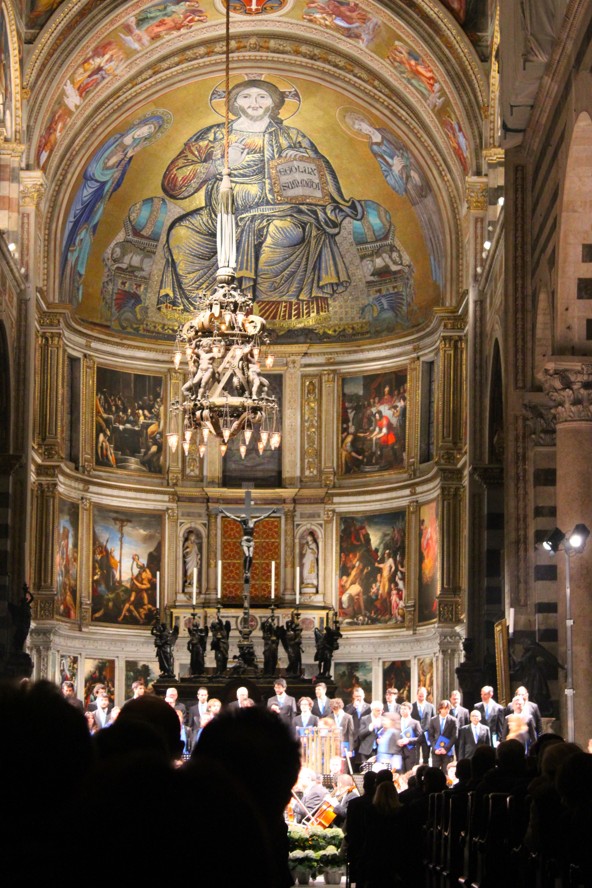
Alzare lo sguardo ascoltando quelle musiche significava entrare in un dialogo silenzioso con i secoli. La cupola ellittica, decorata con l’Assunzione della Vergine tra i Santi, realizzata tra il 1627 e il 1630 da Orazio Riminaldi e completata dal fratello Girolamo, sembrava vibrare all’unisono con le note.
Poco più avanti, lo sguardo severo del Cristo Pantocratore, il mosaico di Cimabue, unica opera documentata dell’artista nel Duomo, osservava immobile. In quel momento, arte e musica si sono fuse in un’unica dimensione, sospesa tra il sacro e l’umano.
“La Pietà”: quando il dolore diventa universale
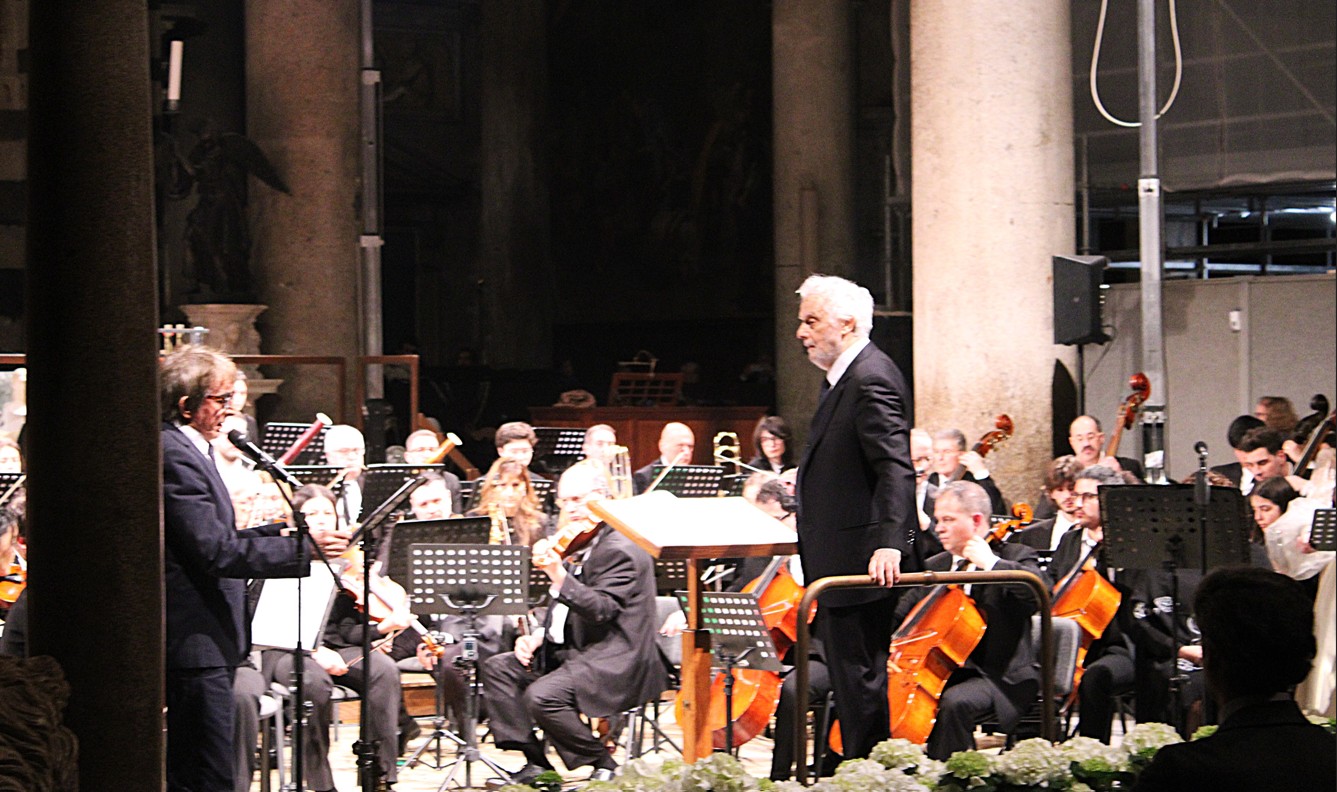
Al centro della serata, “La Pietà”, su versi di Vincenzo Cerami, ha attraversato il pubblico con una forza capace di squarciare il petto.
Piovani rilegge lo Stabat Mater in chiave contemporanea, dando voce a due madri lontane ma unite dallo stesso destino. Una vive in un contesto agiato e perde il figlio a causa della droga, l’altra in un Paese segnato dalla fame assiste impotente alla morte del proprio bambino. Due storie che si intrecciano e diventano simbolo delle contraddizioni del presente.
Il testo dialoga anche con la tradizione, richiamando Jacopone da Todi, e costruendo un ponte potente tra passato e contemporaneità, capace di amplificare ogni emozione.
Un cast d’eccezione che amplifica l’emozione
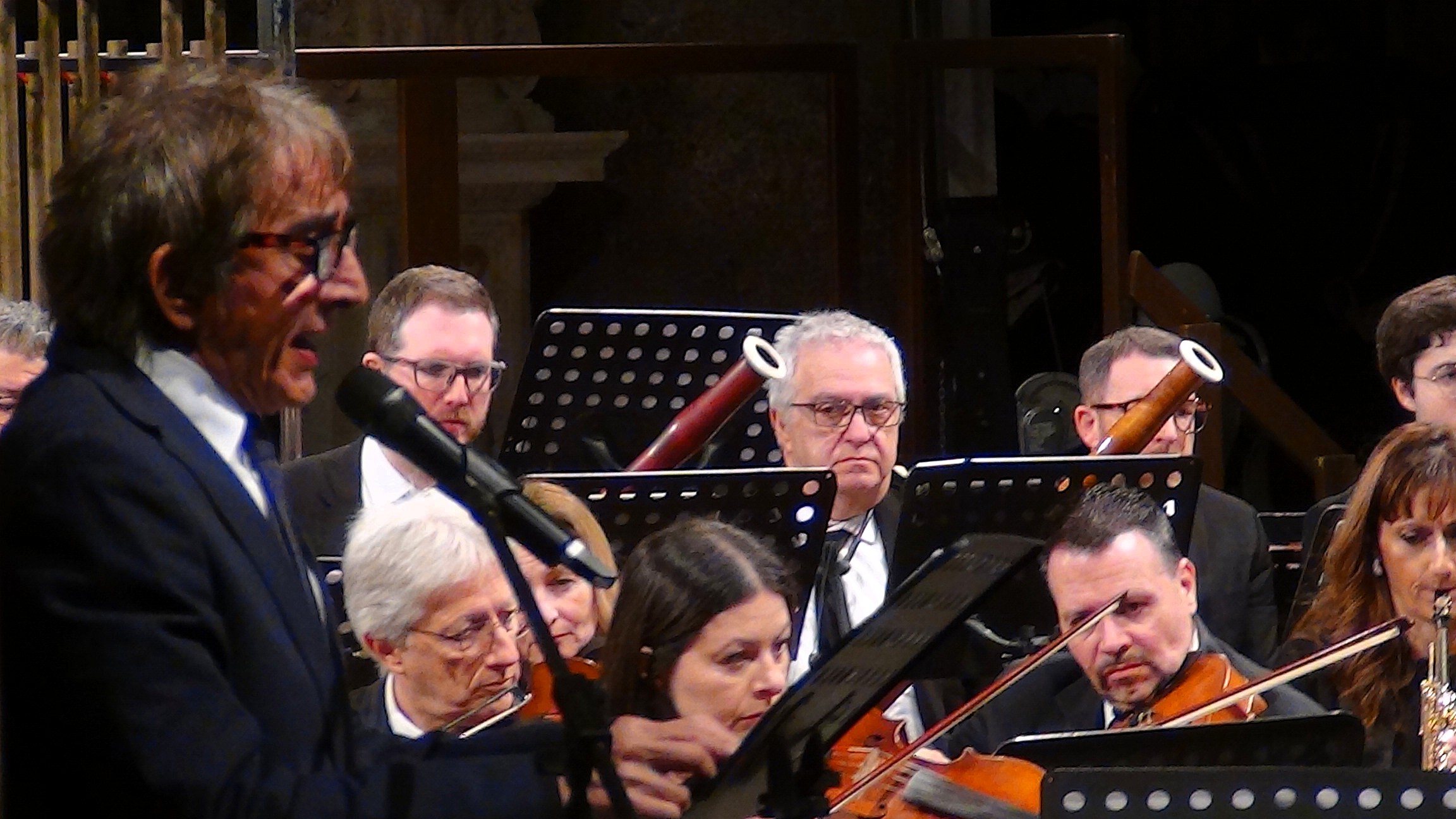
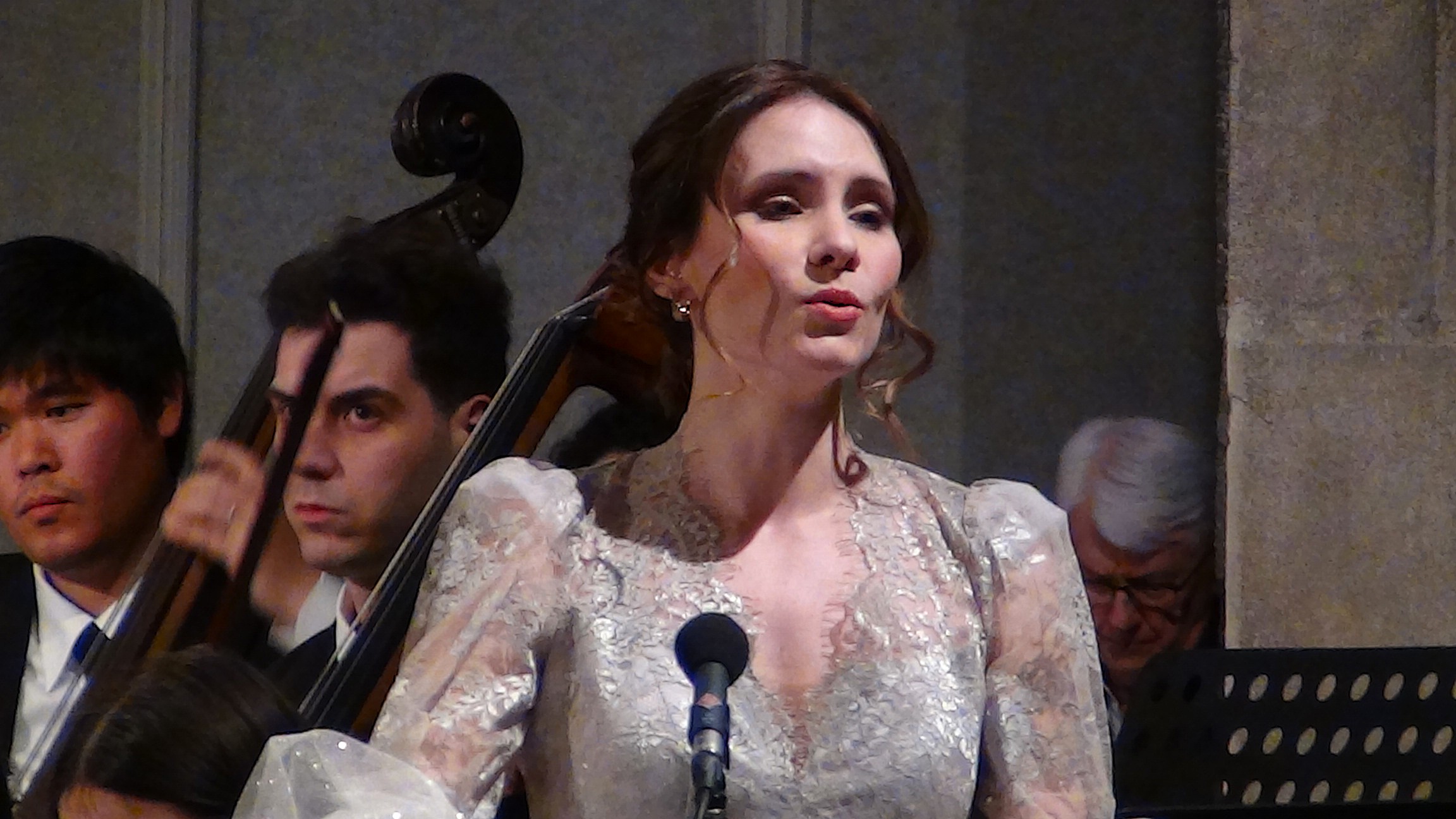
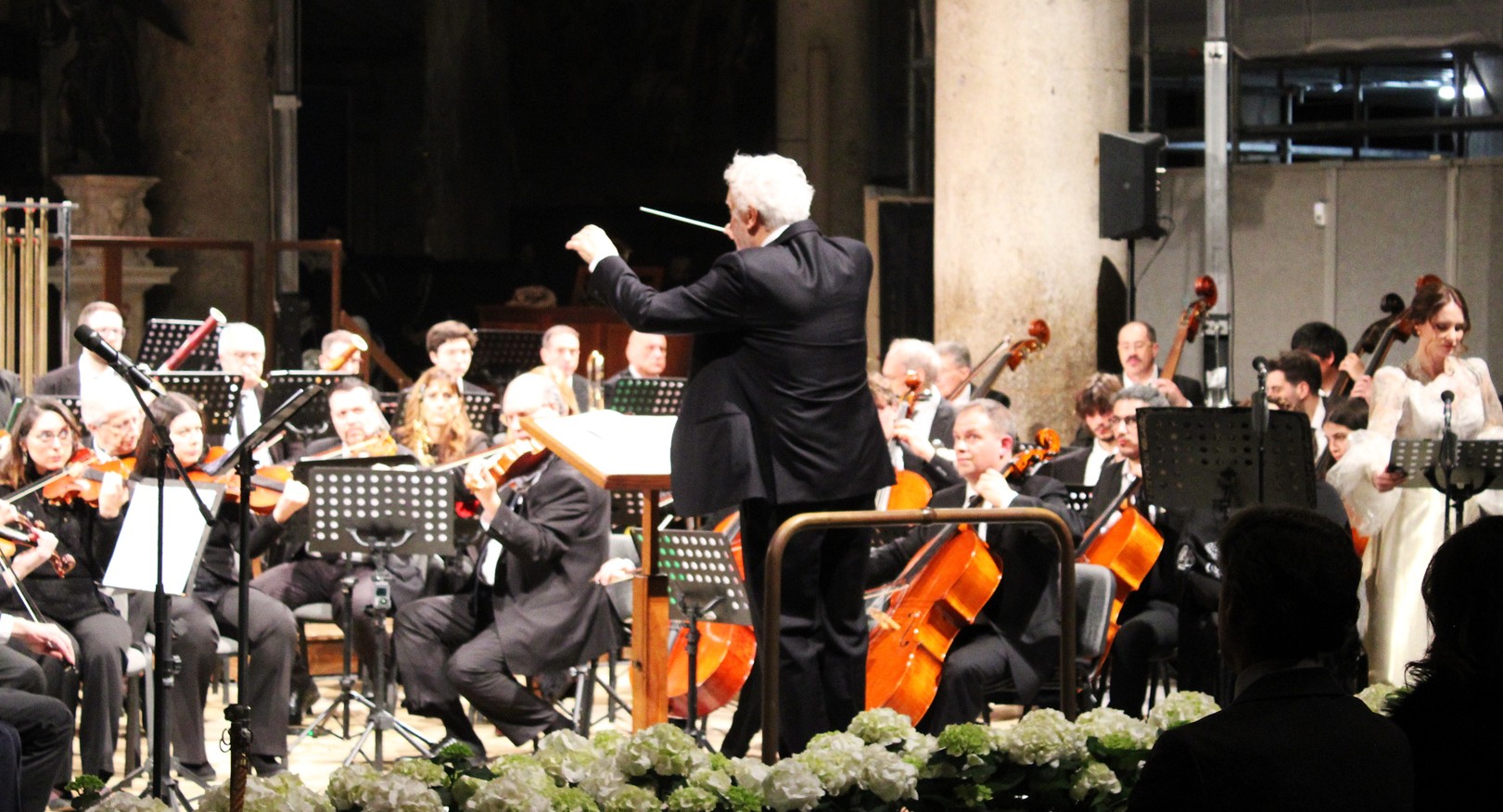
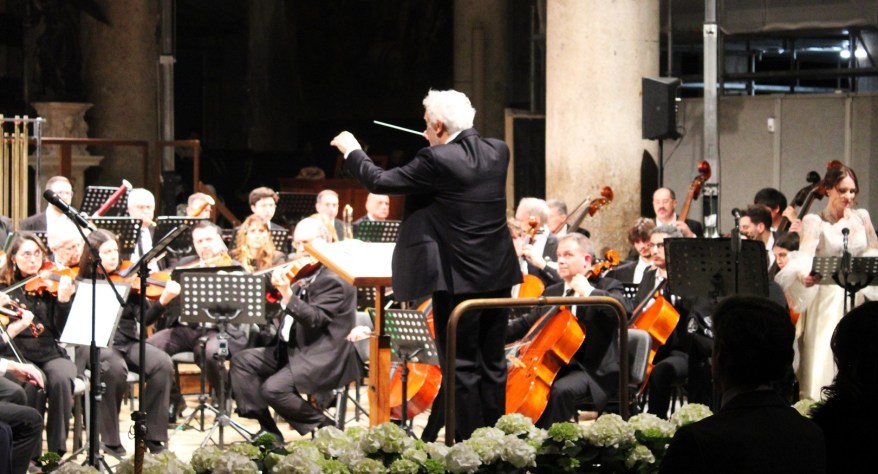
Accanto a Piovani, la scena si è arricchita della voce soul di Tia Architto e del soprano Maria Rita Combattelli, accompagnate dal Coro e dall’Orchestra dell’Università di Pisa insieme alla storica Società Filarmonica Pisana.
A rendere ancora più intensa l’esperienza è stata la presenza di Sergio Rubini, la cui voce recitante ha guidato il pubblico dentro un racconto in cui parola e musica si sono fuse, dando forma a un percorso profondamente coinvolgente.
Oltre la musica
Il concerto si inserisce nella rassegna “San Francesco 1226–2026. Spiritualità, Dialogo e Fratellanza nel mondo globale”, promossa dall’Università di Pisa e realizzata in collaborazione con l’Opera della Primaziale Pisana.
L’ingresso gratuito su prenotazione, esaurito in soli 7 minuti, ha confermato quanto il bisogno di cultura e bellezza sia ancora forte e condiviso.
Una notte da brividi che Pisa non dimenticherà
Raccontare una serata così non è facile, significa trovare parole per descrivere emozioni che per loro natura diventano difficili da mettere nero su bianco, sfuggono alle parole. Eppure, ciò che è accaduto ieri nel cuore di Pisa, resterà impresso nella memoria di chi c’era.
Sotto quella cupola, la musica è diventata esperienza, incontro, riflessione. Un momento in cui arte, storia e umanità si sono intrecciate in modo perfetto. Al termine del concerto, Nicola Piovani ha salutato il pubblico con parole cariche di emozione, lasciando spazio a una riflessione profonda e attuale.
Ha ricordato Vincenzo Cerami, autore dei versi de “La Pietà”, immaginando che, se fosse ancora vivo, probabilmente insieme avrebbero riletto e trasformato alcuni passaggi del testo per renderlo ancora più aderente al nostro tempo.
Poi, con voce segnata dalla commozione, ha sottolineato una verità universale e struggente: il dolore di una madre che perde un figlio non conosce confini, né differenze. È lo stesso, identico, in ogni parte del mondo. È il dolore di chi perde un figlio per la fame, sotto le bombe, o tra le onde di un mare attraversato nella speranza, su un gommone. Un dolore che unisce tutte le madri, oltre ogni distanza, oltre ogni tempo.
E mentre l’ultima nota della ninna nanna proposta per la seconda volta durante la serata si dissolveva nell’aria, è rimasta una sensazione: alcune notti non finiscono davvero. Restano dentro, per sempre.
Per il momento il sempre vostro Michelangelo Buonarroti vi saluta dandovi appuntamento ai prossimi post e sui social.
Pisa Cathedral: Piovani Stops Time Under the Dome and Moves 600 Spectators
There was a moment last night when time truly stood still. Beneath the majestic dome of Pisa Cathedral, 600 people in absolute silence shared something rare and unrepeatable: a collective, intense, almost sacred emotion.
The star of the show was Nicola Piovani, once again capable of transforming music into a story. But what took place on stage wasn’t just a concert: it was an emotional journey, an experience that touched the deepest chords.
The Magic of the Dome: Art, History, and Music Merge
Looking up while listening to that music was like entering into a silent dialogue with the centuries. The elliptical dome, decorated with the Assumption of the Virgin among the Saints, created between 1627 and 1630 by Orazio Riminaldi and completed by his brother Girolamo, seemed to vibrate in unison with the music.
A little further on, the stern gaze of Christ Pantocrator, Cimabue’s mosaic, the artist’s only documented work in the Duomo, gazed motionless. In that moment, art and music merged into a single dimension, suspended between the sacred and the human.
“La Pietà”: When Pain Becomes Universal
At the center of the evening, “La Pietà,” set to verses by Vincenzo Cerami, swept through the audience with a force capable of tearing open their hearts.
Piovani reinterprets the Stabat Mater in a contemporary key, giving voice to two mothers distant from each other but united by the same fate. One lives in a wealthy household and loses her son to drugs; the other, in a country ravaged by hunger, watches helplessly as her child dies. Two stories that intertwine and become symbols of the contradictions of the present.
The text also engages with tradition, recalling Jacopone da Todi, and building a powerful bridge between past and present, capable of amplifying every emotion.
An exceptional cast that amplifies the emotion
Alongside Piovani, the stage was enriched by the soulful voices of Tia Architto and soprano Maria Rita Combattelli, accompanied by the Choir and Orchestra of the University of Pisa, along with the historic Società Filarmonica Pisana.
The experience was further intensified by the presence of Sergio Rubini, whose narrator guided the audience through a tale in which words and music merged, creating a deeply engaging journey.
Beyond Music
The concert is part of the series “Saint Francis 1226–2026. Spirituality, Dialogue, and Brotherhood in the Global World,” promoted by the University of Pisa and organized in collaboration with the Opera della Primaziale Pisana.
Free admission by reservation, which sold out in just 7 minutes, confirmed how strong and shared the need for culture and beauty remains.
A thrilling night Pisa will never forget
Describing an evening like this isn’t easy; it means finding the words to describe emotions that, by their very nature, are difficult to put down on paper, eluding words. Yet, what happened yesterday in the heart of Pisa will remain etched in the memories of those who were there.
Under that dome, music became an experience, an encounter, a reflection. A moment in which art, history, and humanity intertwined perfectly. At the end of the concert, Nicola Piovani bid farewell to the audience with words full of emotion, leaving room for a profound and timely reflection.
He remembered Vincenzo Cerami, author of the verses of “La Pietà,” imagining that, if he were still alive, they would probably have reread and transformed some passages of the text together to make it even more relevant to our times.
Then, with a voice marked by emotion, he emphasized a universal and poignant truth: the pain of a mother who loses a child knows no boundaries, nor differences. It is the same, identical, in every part of the world. It is the pain of those who lose a child to hunger, bombings, or the waves of a sea crossed in hope, on a rubber dinghy. A pain that unites all mothers, beyond all distance, beyond all time.
And as the last note of the lullaby, sung for the second time during the evening, faded into the air, a feeling remained: some nights never truly end. They stay with you forever.
For now, yours truly, Michelangelo Buonarroti bids you farewell, promising to see you in future posts and on social media.

Sostienici – Support Us
Se questo blog ti piace e ti appassiona, puoi aiutarci a farlo crescere sempre più sostenendoci in modo concreto condividendo i post, seguendo le pagine social e con un contributo che ci aiuta ad andare avanti con il nostro lavoro di divulgazione. . ENGLISH: If you like and are passionate about this blog, you can help us make it grow more and more by supporting us in a concrete way by sharing posts, following social pages and with a contribution that helps us to move forward with our dissemination work.
10,00 €
Articoli
Condividi:


Questo sono io





sostienici

Sostienici – Support Us
Se questo blog ti piace e ti appassiona, puoi aiutarci a farlo crescere sempre più sostenendoci in modo concreto condividendo i post, seguendo le pagine social e con un contributo che ci aiuta ad andare avanti con il nostro lavoro di divulgazione. . ENGLISH: If you like and are passionate about this blog, you can help us make it grow more and more by supporting us in a concrete way by sharing posts, following social pages and with a contribution that helps us to move forward with our dissemination work.
€10,00


