
La Scultura del giorno: l’Allegoria della Pittura e della Scultura di Tassaert
La scultura del giorno che vi propongo oggi è l’Allegoria della Pittura e della Scultura, realizzata da Jean-Pierre-Antoine Tassaert tra il 1774 e il 1778.
Lo scultore era nato ad Anversa nel 1727 ed ebbe modo di lavorare sia a Londra che a Parigi, dove conobbe l’artista Slodtz e avviò con lui una proficua collaborazione.
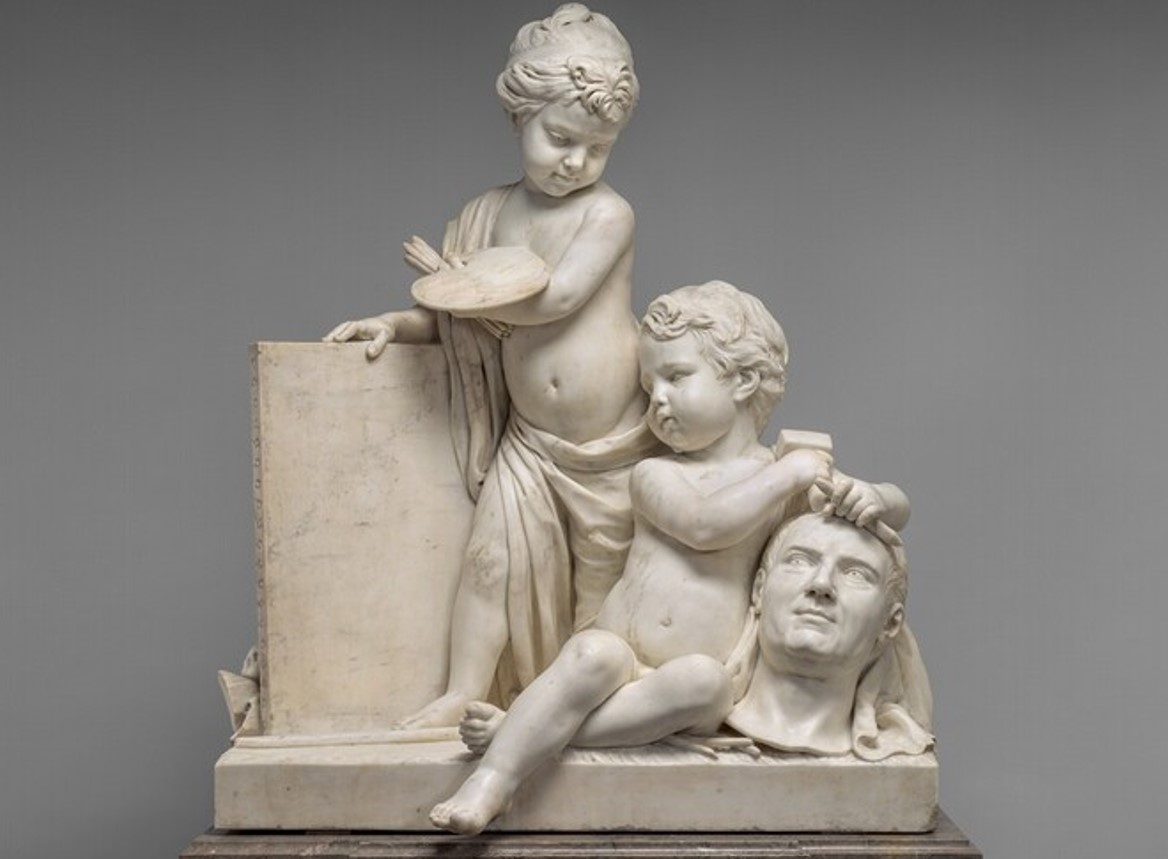
Tassaert divenne celebre a Berlino per i suoi gruppi scultorei di piccolo formato proprio come quello dei due bambini che simboleggiano l’arte della Pittura e della Scultura.
Quest’opera gli venne commissionata da Joseph-Marie Terray, abate e politico francese che per anni rivestì il ruolo di controllore generale delle finanze per re Luigi XV.
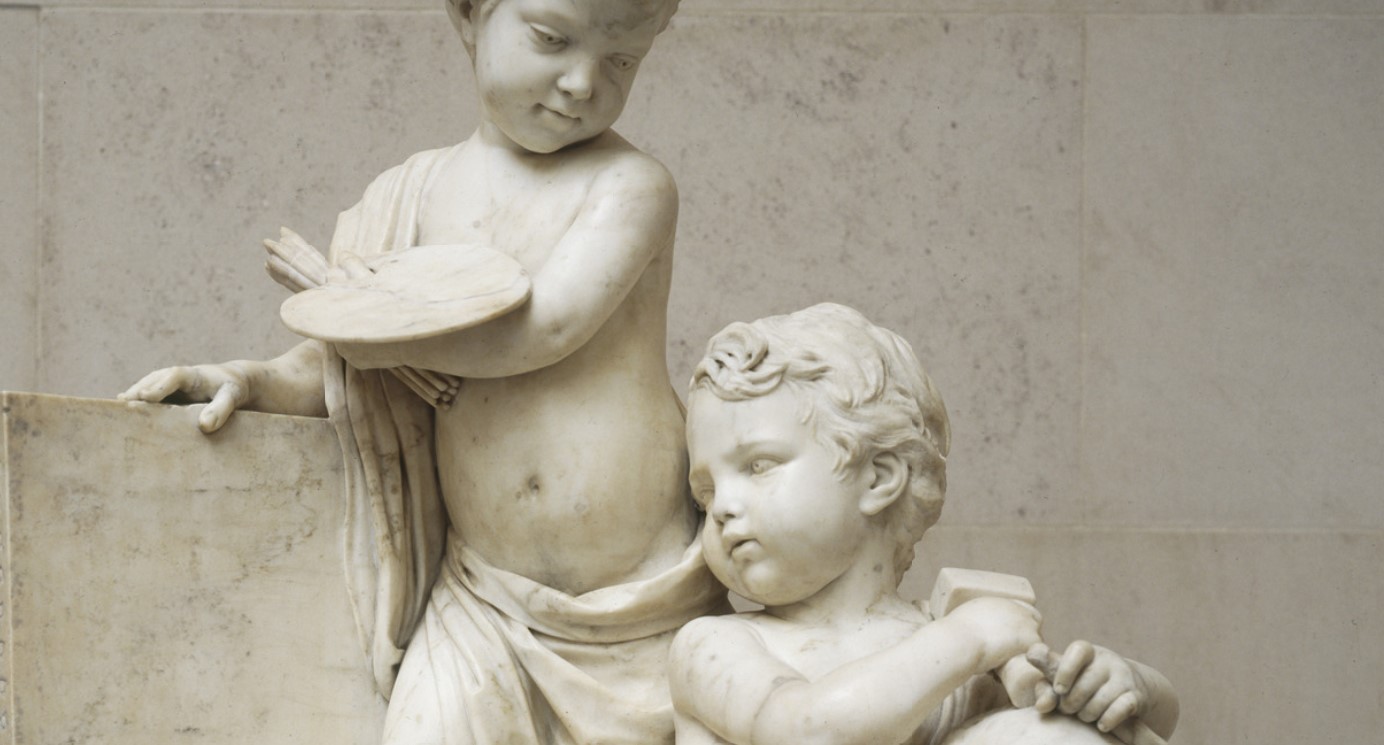
La scultura raffigura due putti che simboleggiano l’arte della pittura e della scultura. La Pittura è rappresentata con una tavolozza e un pennello in mano, mentre la Scultura tiene un martello e uno scalpello.
Entrambe le figure sono sostenute da un basamento su cui si intravedono appoggiati degli scalpelli e una testa di uomo adulto appena terminata di scolpire.
La composizione ben equilibrata ha reso quest’opera particolarmente apprezzata dal committente.

L’artista impiegò quattro anni per portarla a termine, anche perché nel frattempo si dedicò ad altri lavori che lo tennero occupato più del previsto.
Fu presentata al pubblico per la prima volta al Salon di Parigi nel 1777 e acquisita più di un centinaio di anni dopo, nel 1989, dalla National Gallery of Art di Washington.
Per il momento il sempre vostro Michelangelo Buonarroti vi saluta dandovi appuntamento ai prossimi post e sui social.
Sculpture of the day: Tassaert’s Allegory of Painting and Sculpture
The sculpture of the day that I propose to you today is the Allegory of Painting and Sculpture created by Jean-Pierre-Antoine Tassaert between 1774 and 1778.
The sculptor was born in Antwerp in 1727 and had the opportunity to work both in London and Paris, where he met the artist Slodtz and began a fruitful collaboration with him.
Tassaert became famous in Berlin for his small-format sculptural groups just like that of the two children who symbolize the art of Painting and Sculpture.
This work was commissioned by Joseph-Marie Terray, a French abbot and politician who for years held the role of controller general of finances for King Louis XV.
The sculpture depicts two putti who symbolize the art of painting and sculpture. Painting is represented with a palette and a brush in his hand, while Sculpture holds a hammer and chisel. Both figures are supported by a base on which some chisels and the head of an adult man who has just finished carving can be glimpsed.
The well-balanced composition made this work particularly appreciated by the client.
It took the artist four years to complete it, also because in the meantime he dedicated himself to other works that kept him busy longer than expected.
It was presented to the public for the first time at the Paris Salon in 1777 and was acquired more than a hundred years later, in 1989, by the National Gallery of Art in Washington.
For the moment, your always Michelangelo Buonarroti greets you and will meet you in the next posts and on social media.

Sostienici – Support Us
Se questo blog ti piace e ti appassiona, puoi aiutarci a farlo crescere sempre più sostenendoci in modo concreto condividendo i post, seguendo le pagine social e con un contributo che ci aiuta ad andare avanti con il nostro lavoro di divulgazione. . ENGLISH: If you like and are passionate about this blog, you can help us make it grow more and more by supporting us in a concrete way by sharing posts, following social pages and with a contribution that helps us to move forward with our dissemination work.
8,00 €
-
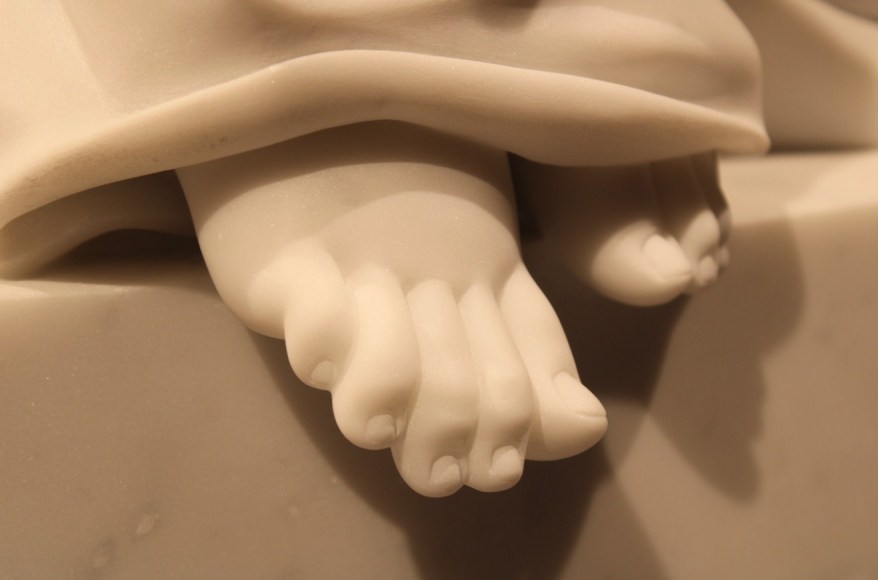
La Pietà di Tincolini: a Pontedera l’arte torna a fare domande scomode
🇮🇹“Pietà”, la scultura di Filippo Tincolini, insieme alle parole di Federico Quaranta e Andrea Pezzi, non è stato solo uno spettacolo. È stata una domanda lanciata in faccia al pubblico, impossibile da evitare: siamo ancora capaci di provare pietà? 🇬🇧 “Pietà,” Filippo Tincolini’s sculpture, along with the words of Federico Quaranta and Andrea Pezzi, wasn’t…
-
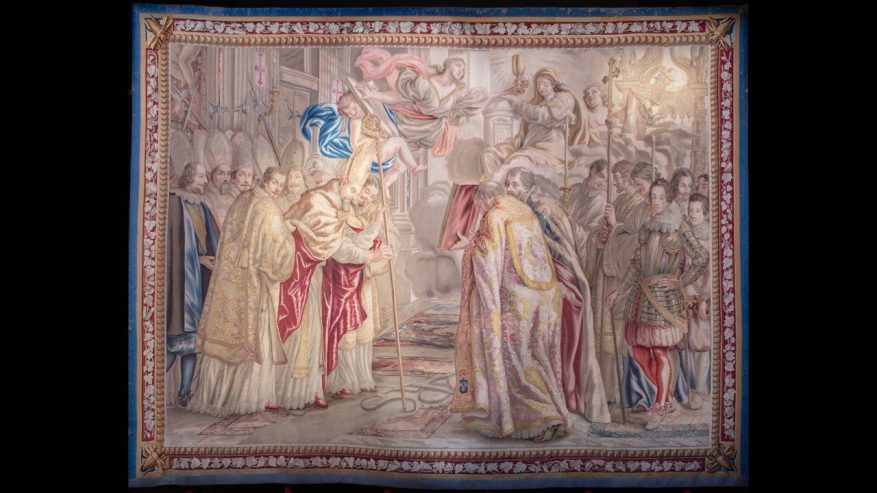
Ai Musei Vaticani i fasti barocchi di Urbano VIII: in mostra gli arazzi della manifattura Barberini
🇮🇹A quattro secoli dalla consacrazione della Basilica di San Pietro, i Musei Vaticani dedicano una mostra all’Arazzeria Barberini, simbolo di una cultura visiva capace di fondere magnificenza estetica e affermazione politica… 🇬🇧Four centuries after the consecration of St. Peter’s Basilica, the Vatican Museums are dedicating an exhibition to the Barberini Tapestry Factory, a symbol of…
-
Le Opere della Pasqua: come la Resurrezione ha ispirato Arte e Cultura
🇮🇹La Pasqua, oltre ad essere una ricorrenza religiosa è un momento in cui la storia, l’arte e la spiritualità si intrecciano per raccontare il fulcro della fede cristiana: la resurrezione di Cristo. .. 🇬🇧Easter, beyond being a religious holiday, is a moment when history, art, and spirituality intertwine to recount the core of the Christian…
Condividi:


Questo sono io





sostienici

Sostienici - Support Us
Se questo blog ti piace e ti appassiona, puoi aiutarci a farlo crescere sempre più sostenendoci in modo concreto condividendo i post, seguendo le pagine social e con un contributo che ci aiuta ad andare avanti con il nostro lavoro di divulgazione. . ENGLISH: If you like and are passionate about this blog, you can help us make it grow more and more by supporting us in a concrete way by sharing posts, following social pages and with a contribution that helps us to move forward with our dissemination work.
€10,00


