
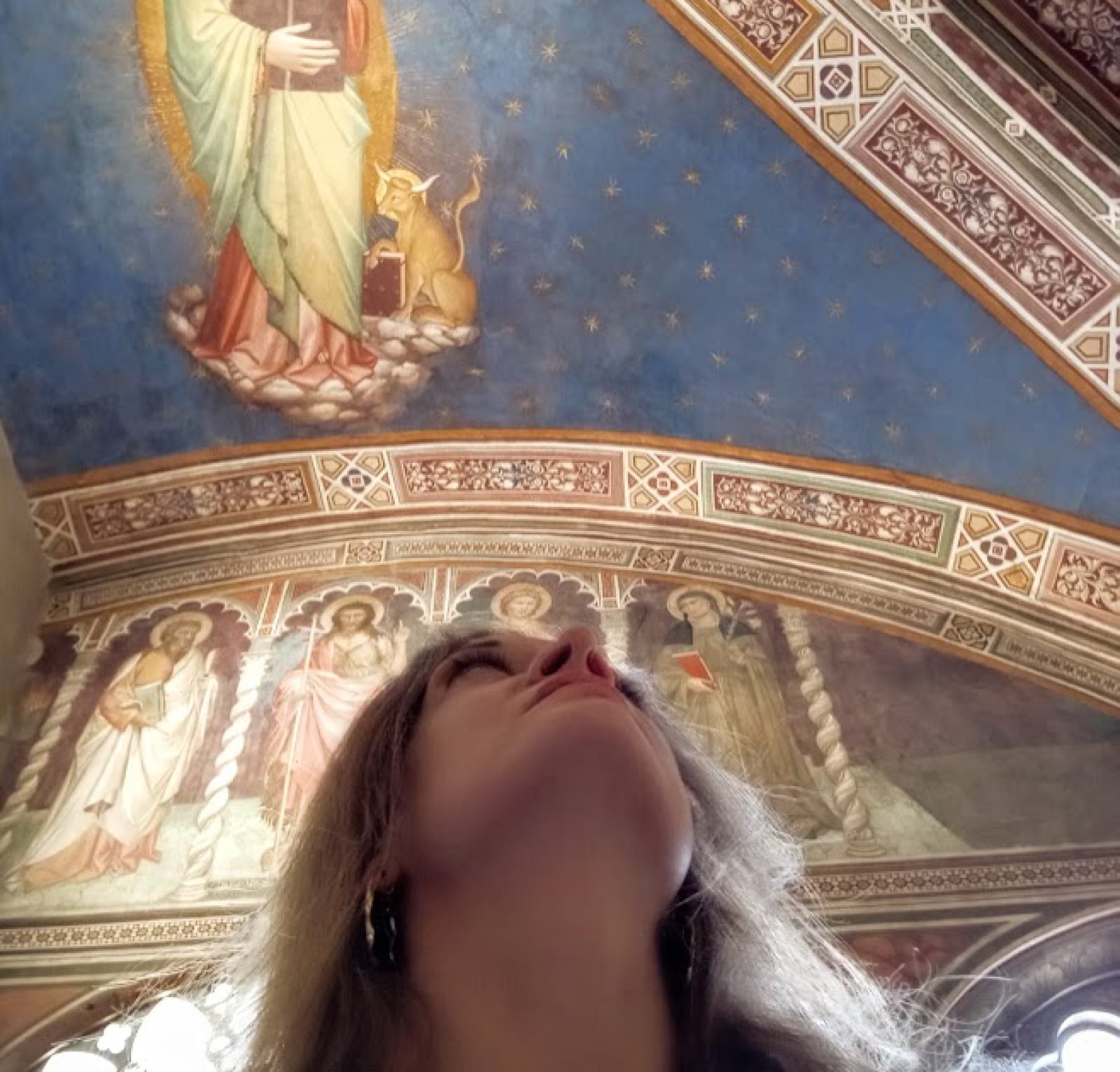
24 giugno: San Giovanni nel mondo dell’arte
Oggi 24 giugno si celebra la figura di San Giovanni Battista, precursore di Cristo e simbolo della purificazione. La sua vita e la sua triste fine per decapitazione hanno ispirato un gran numero di artisti nel corso dei secoli.
Tante sono le opere che hanno come soggetto il Santo figlio di Elisabetta e cugino di Cristo che battezzò Nostro Signore, soprattutto a Firenze. San Giovanni è in fatti il patrono della città e spesso compare nei dipinti o nelle sculture di fine Quattrocento e del Cinquecento realizzate in questa terra toscana.
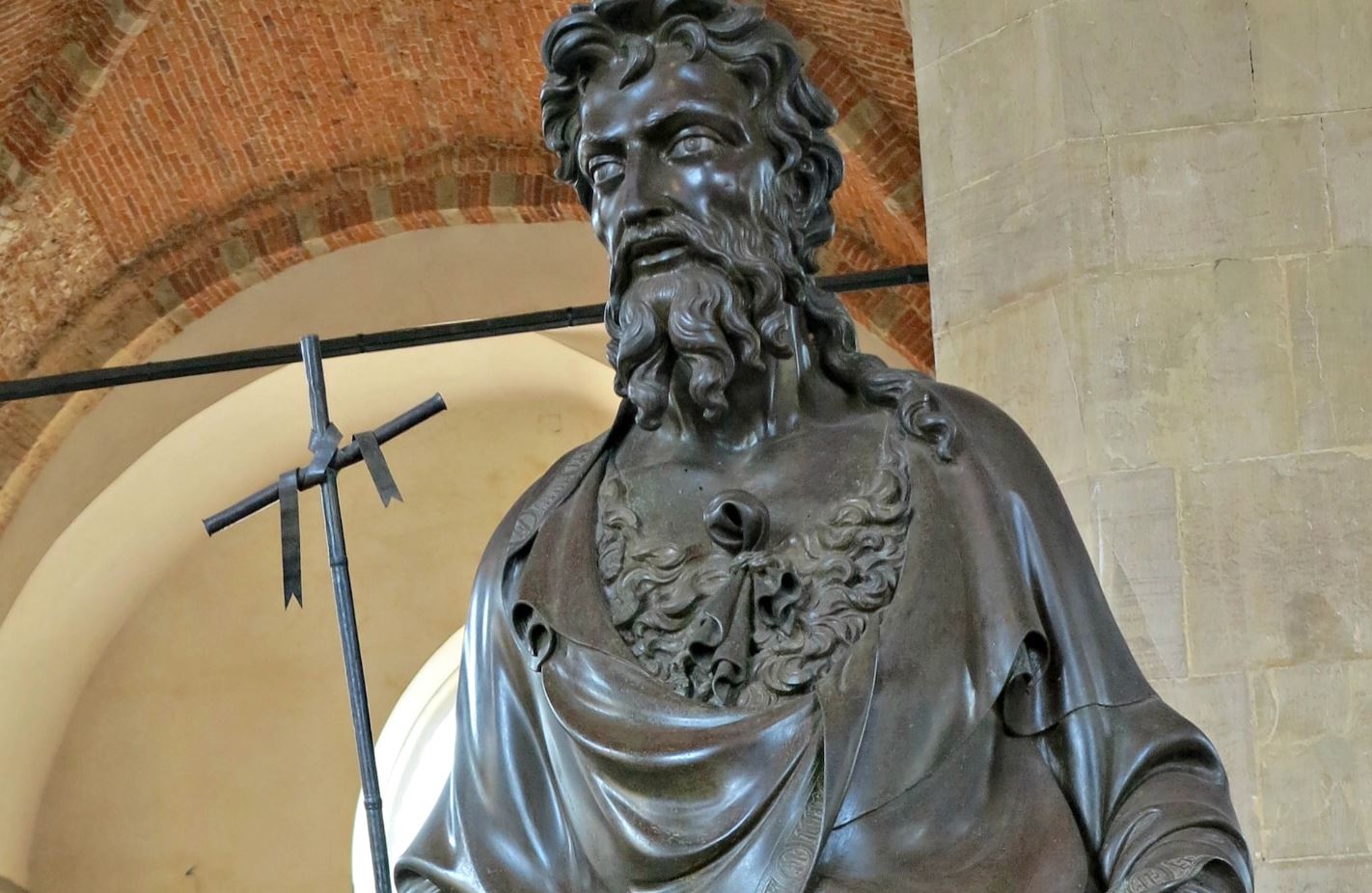
San Giovanni Battista del Ghiberti
Un tempo il San Giovanni Battista in bronzo realizzato da Lorenzo Ghiberti si trovava nelle nicchie esterne delle corporazioni fiorentine della chiesa di Orsamichele. Oggi, per motivi conservativi, l’originale è stato spostato nel Museo di Orsanmichele.
L’opera che ha un’altezza di poco superiore ai due metri e mezzo, è stata realizzata fra il 1412 e il 1416.
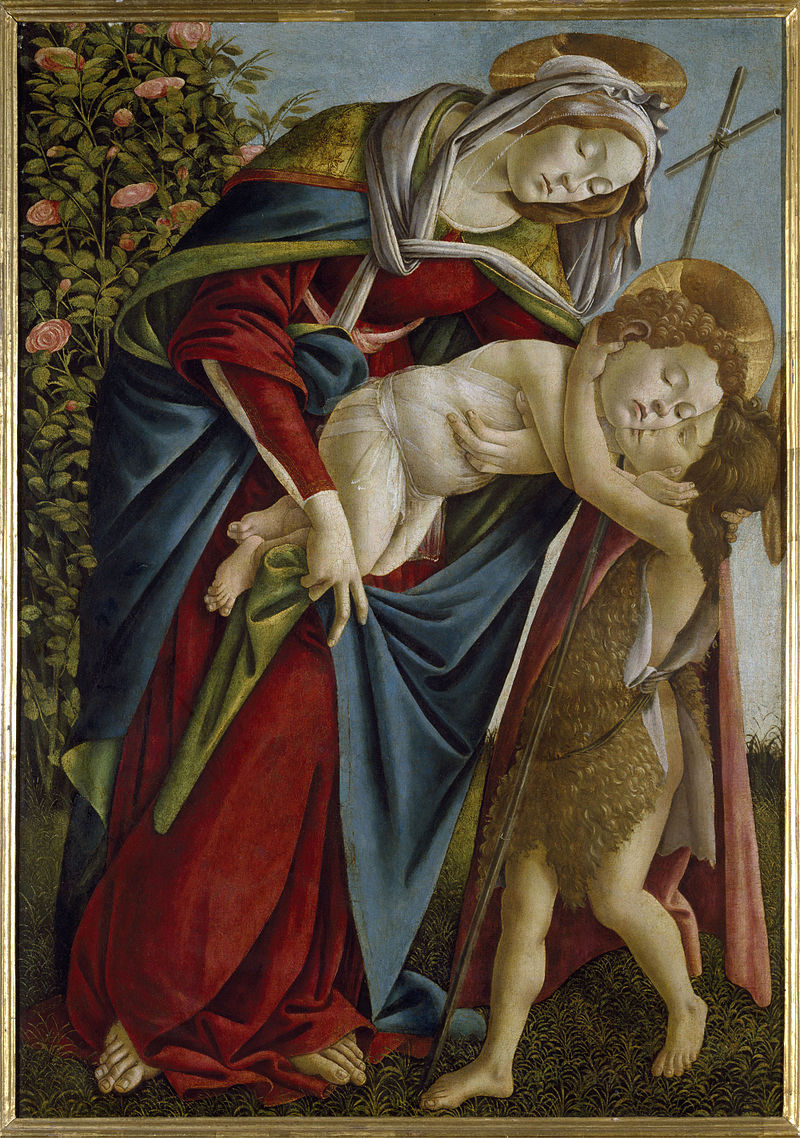
La Madonna col Bambino e San Giovannino del Botticelli
L’opera che segue invece appartiene a Sandro Botticelli. E’ la Madonna col Bambino e San Giovannino attualmente conservata nella Galleria Palatina.
La dipinse nel 1495 o almeno è quanto sembra perché non tutti sono concordi nell’attribuzione di questa opera all’artista.
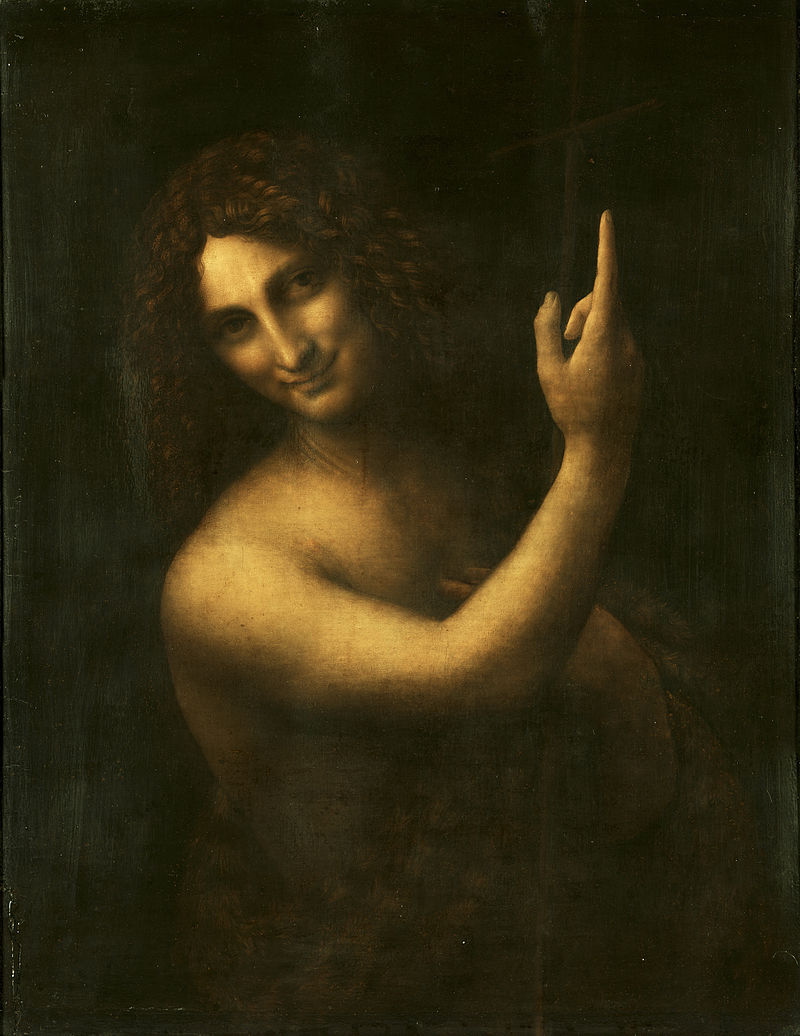
Il San Giovanni Battista di Leonardo da Vinci
Leonardo da Vinci dipinse il San Giovanni Battista che oggi appartiene alle collezioni del Louvre probabilmente tra il 1513 e il 1516.
San Gioivanni qua è raffigurato giovane e senza barba. La figura emerge dallo sfondo scuro e con un sorriso tipico delle figure di Leonardo (no, la Gioconda non è l’unica opera di Leonardo ad avere quell’espressione, anzi, è uno dei tratti distintivi dell’artista) guarda dritto negli occhi lo spettatore.
Il Santo è illuminato da una luce che proviene da sinistra e con la mano destra e l’indice levato pone l’accento sulla Croce che tiene con l’altra mano.
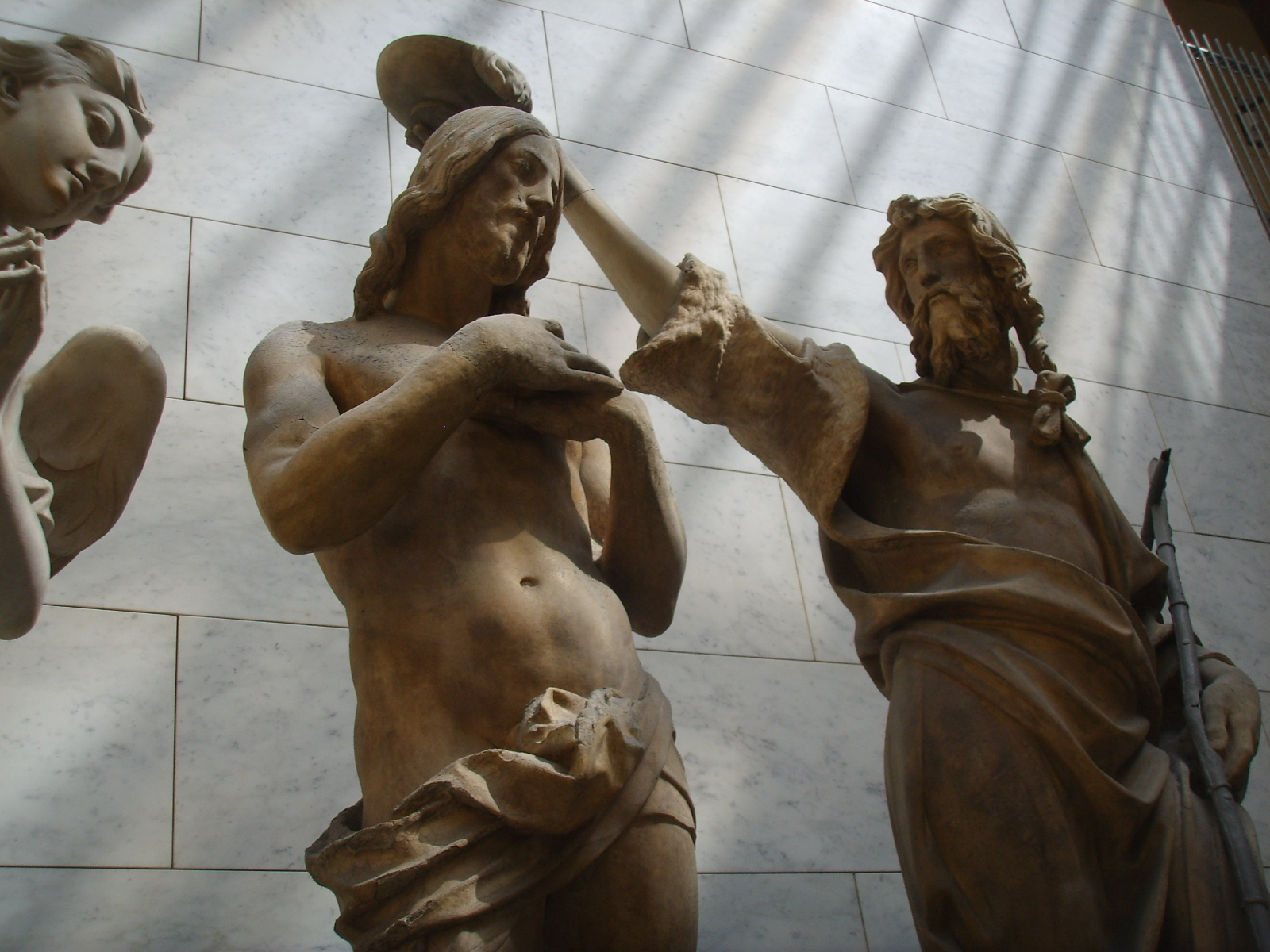
Il Battesimo di Cristo del Sansovino
Il gruppo scultoreo venne realizzato per essere collocato al di sopra la Porta del Paradiso del Ghiberti del Battistero di San Giovanni ma, per motivi conservativi, da qualche anno l’opera originale è stata portata all’interno del Museo dell’Opera del Duomo e sostituita da una copia.
Il Cristo e il San Giovanni Battista furono realizzate da Andrea Sansovino tra il 1502 e il 1505 ma vennero portate a termine da Vincenzo Danti.
L’angelo invece è un’opera un po’ più tarda, seicentesca per la precisione, realizzata da Innocenzo Spinazzi.
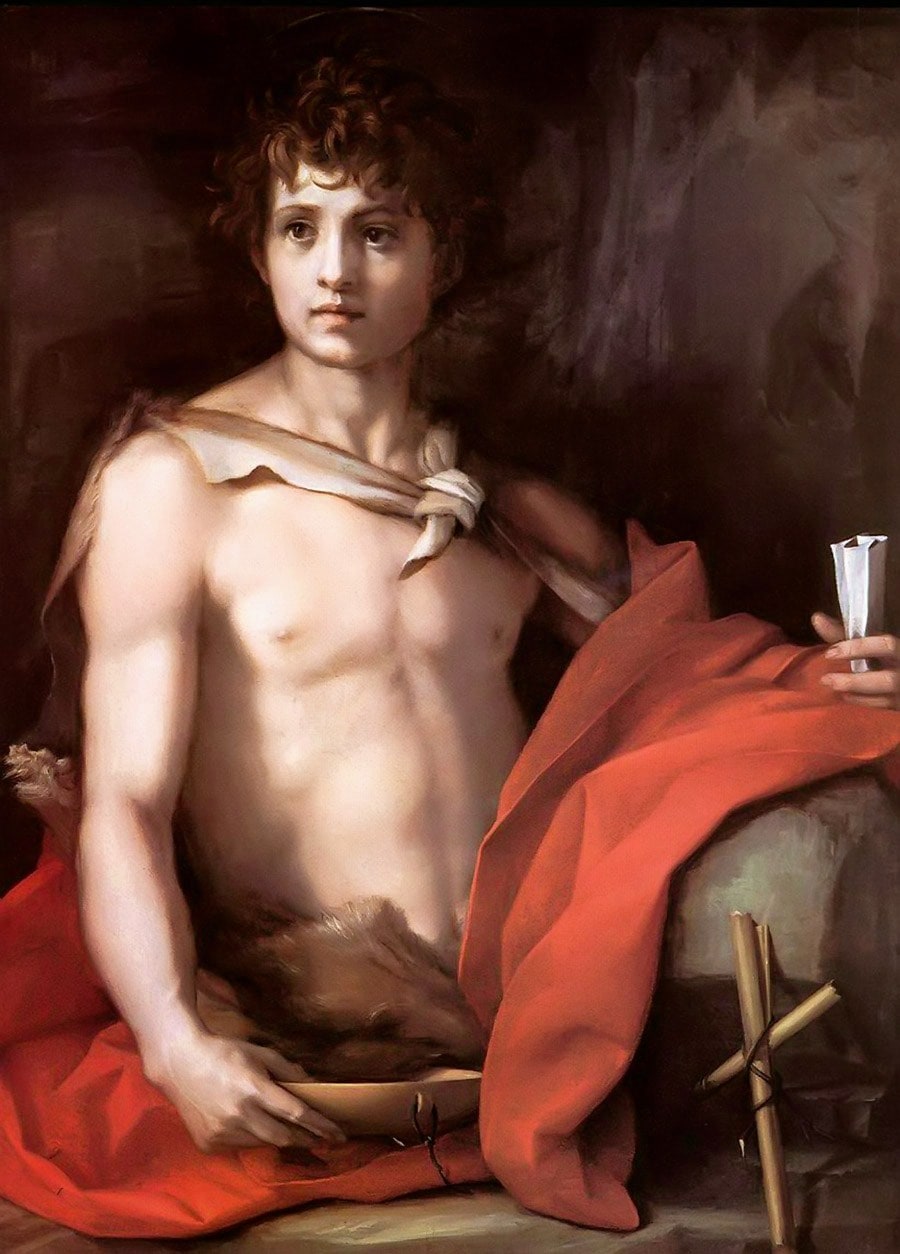
San Giovanni di Andrea del Sarto
San Giovanni Battista venne dipinto da Andrea del Sarto a olio su tavola. Ne esistono due versioni molto simili tra di loro, entrambe realizzate dall’artista.
La prima la realizzò per Giovan Maria Benintendi il quale la donò al duca Cosimo I de’ Medici e oggi appartiene alla Galleria Palatina di Palazzo Pitti.
La seconda versione invece era destinata al Gran Maestro di Francia ma venne però venduta a Ottaviano de’ Medici e oggi è custodita al Worcester Art Museum.
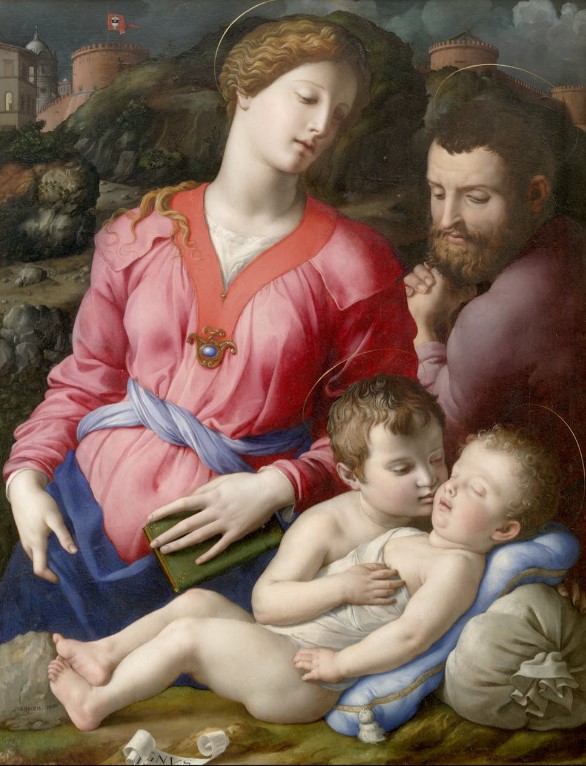
La Sacra Famiglia Panciatichi del Bronzino
Il Bronzino dipinse a olio su tavola la Sacra Famiglia con San Giovannino, nota anche come la Sacra Famiglia Panciatichi, tra il 1540 e il 1545. Probabilmente il dipinto è uno di quelli citati da Vasari tra i “quadri grandi di Nostre Donne con altre figure, belli a meraviglia” che il <bronzino dipinse per Bartolomeo Panciatichi al servizio di Cosimo I de’ Medici.
In basso, sulla pietra vicino ai piedi di Gesù Bambino si legge la firma dell’artista. L’opera appartiene alle Gallerie degli Uffizi.
Il San Giovanni Battista di Caravaggio
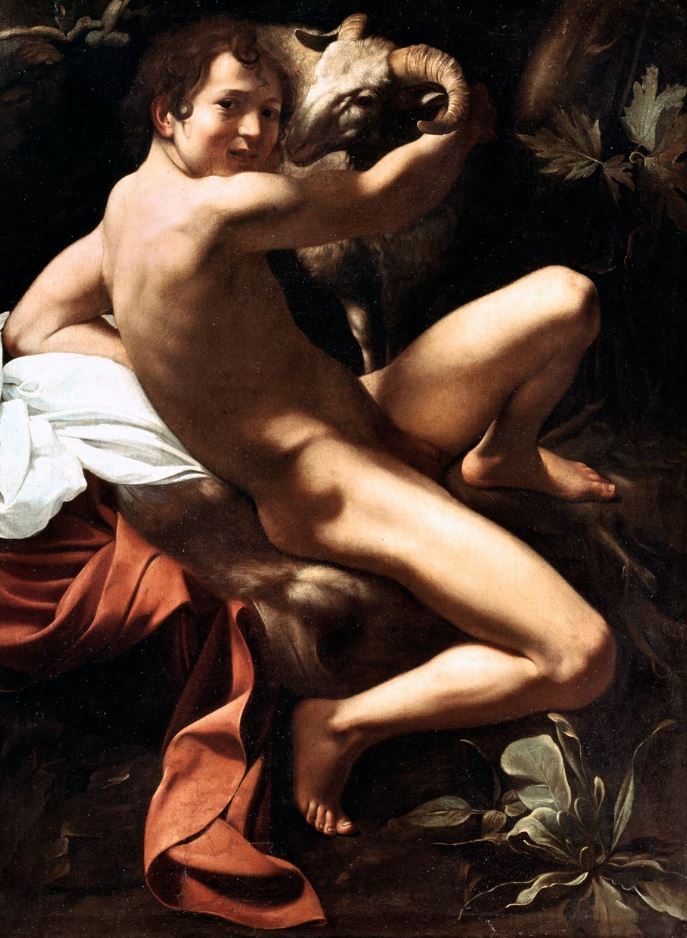
Noto anche con il nome di ‘Giovane con un montone’, il San Giovanni Battista di Caravaggio venne dipinto dall’artista in due versioni pressoché identiche realizzate attorno al 1602: una appartiene ai Musei Capitolini e l’altra alla Galleria Doria Pamphilj.
Il Santo è raffigurato mentre abbraccia un ariete che rappresenta il sacrifico di Cristo sulla Croce.
Per il momento il sempre vostro Michelangelo Buonarroti vi saluta dandovi appuntamento ai prossimi post e sui social.
June 24: Saint John in the world of art
Today, June 24, we celebrate the figure of Saint John the Baptist, precursor of Christ and symbol of purification. His life and his sad end by beheading have inspired a great number of artists over the centuries.
There are many works that have as their subject the Saint son of Elizabeth and cousin of Christ who baptized Our Lord, especially in Florence. Saint John is in fact the patron saint of the city and often appears in paintings or sculptures of the late fifteenth and sixteenth centuries made in this Tuscan land.
Saint John the Baptist by Ghiberti
Once upon a time, the bronze Saint John the Baptist made by Lorenzo Ghiberti was located in the external niches of the Florentine guilds of the church of Orsamichele. Today, for conservation reasons, the original has been moved to the Orsanmichele Museum.
The work, which is just over two and a half meters tall, was created between 1412 and 1416.
The Madonna and Child with the Infant Saint John by Botticelli
The following work belongs to Sandro Botticelli. It is the Madonna and Child with the Infant Saint John currently preserved in the Palatine Gallery.
He painted it in 1495 or at least that is what it seems because not everyone agrees on the attribution of this work to the artist.
Saint John the Baptist by Leonardo da Vinci
Leonardo da Vinci painted the Saint John the Baptist that today belongs to the Louvre collections probably between 1513 and 1516.
Saint John here is depicted as young and beardless. The figure emerges from the dark background and with a smile typical of Leonardo’s figures (no, the Mona Lisa is not the only work by Leonardo to have that expression, in fact, it is one of the artist’s distinctive traits) looks straight into the viewer’s eyes.
The Saint is illuminated by a light coming from the left and with his right hand and raised index finger he places the emphasis on the Cross he is holding with the other hand.
The Baptism of Christ by Sansovino
The sculptural group was created to be placed above Ghiberti’s Gates of Paradise in the Baptistery of San Giovanni but, for conservation reasons, the original work was brought to the Museo dell’Opera del Duomo a few years ago and replaced by a copy.
Christ and Saint John the Baptist were created by Andrea Sansovino between 1502 and 1505 but were completed by Vincenzo Danti.
The angel, on the other hand, is a slightly later work, from the seventeenth century to be precise, created by Innocenzo Spinazzi.
Saint John by Andrea del Sarto
Saint John the Baptist was painted by Andrea del Sarto in oil on wood. There are two very similar versions, both created by the artist.
The first was made for Giovan Maria Benintendi who donated it to Duke Cosimo I de’ Medici and today it belongs to the Palatine Gallery of Palazzo Pitti.
The second version was instead intended for the Grand Master of France but was sold to Ottaviano de’ Medici and is now kept at the Worcester Art Museum.
The Panciatichi Holy Family by Bronzino
Bronzino painted the Holy Family with the Infant Saint John, also known as the Panciatichi Holy Family, in oil on wood between 1540 and 1545. The painting is probably one of those cited by Vasari among the “large paintings of Our Women with other figures, wonderfully beautiful” that <Bronzino painted for Bartolomeo Panciatichi in the service of Cosimo I de’ Medici.
At the bottom, on the stone near the feet of Baby Jesus, you can read the artist’s signature. The work belongs to the Uffizi Galleries.
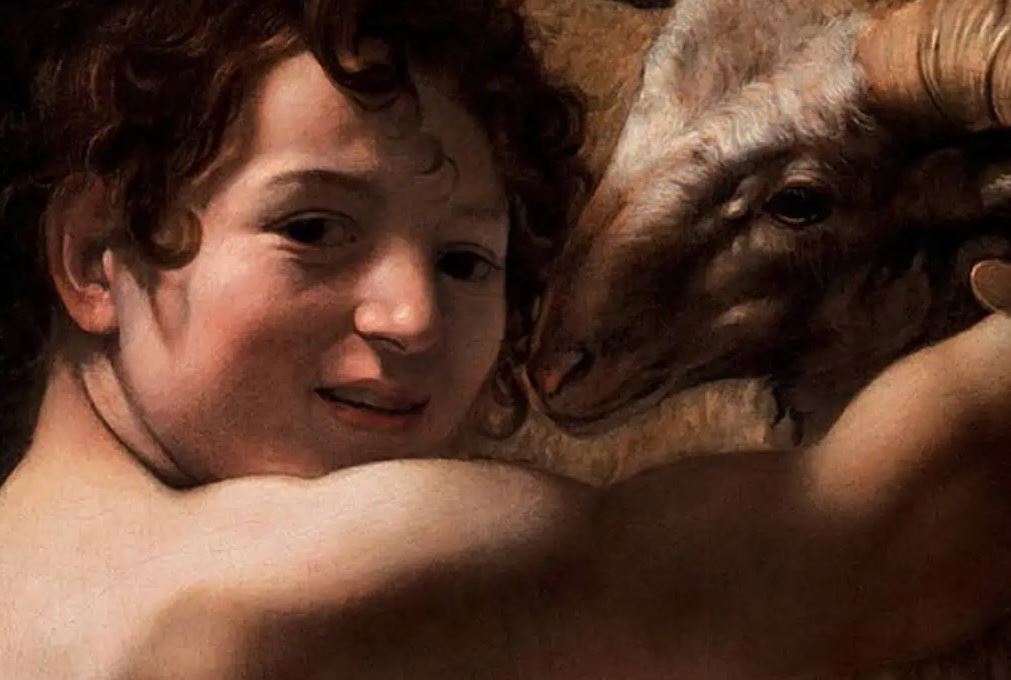
Caravaggio’s Saint John the Baptist
Also known as ‘Young Man with a Ram’, Caravaggio’s Saint John the Baptist was painted by the artist in two almost identical versions made around 1602: one belongs to the Capitoline Museums and the other to the Doria Pamphilj Gallery.
The Saint is depicted while embracing a ram that represents the sacrifice of Christ on the Cross.
For the moment, yours truly Michelangelo Buonarroti bids you farewell, making an appointment to see you in the next posts and on social media.

Sostienici – Support Us
Se questo blog ti piace e ti appassiona, puoi aiutarci a farlo crescere sempre più sostenendoci in modo concreto condividendo i post, seguendo le pagine social e con un contributo che ci aiuta ad andare avanti con il nostro lavoro di divulgazione. . ENGLISH: If you like and are passionate about this blog, you can help us make it grow more and more by supporting us in a concrete way by sharing posts, following social pages and with a contribution that helps us to move forward with our dissemination work.
10,00 €
Condividi:


Questo sono io





sostienici

Sostienici – Support Us
Se questo blog ti piace e ti appassiona, puoi aiutarci a farlo crescere sempre più sostenendoci in modo concreto condividendo i post, seguendo le pagine social e con un contributo che ci aiuta ad andare avanti con il nostro lavoro di divulgazione. . ENGLISH: If you like and are passionate about this blog, you can help us make it grow more and more by supporting us in a concrete way by sharing posts, following social pages and with a contribution that helps us to move forward with our dissemination work.
€10,00


Quanta Grazia in quel Botticelli…
"Mi piace"Piace a 1 persona
Bellissimo
"Mi piace""Mi piace"