

25 marzo: l’Annunciazione del Pollaiolo ricca di simbologie
Il 25 marzo si celebra l’Annunciazione dell’Arcangelo Gabriele a Maria ed è anche il giorno in cui, fin a qualche secolo fa, Firenze e il resto della Toscana cominciavano l’anno nuovo.
Per l’occasione vi propongo la mirabile Annunciazione dipinta da Piero del Pollaiolo, oggi appartenente allo Staatliche Museen Gemaldegalerie di Berlino.

L’opera dipinta a tempera su tavola venne realizzata dall’artista tra il 1480 e il 1485 circa ma non è dato sapere da chi venne commissionata né per quale luogo.
Probabilmente si tratta di una pala d’altare per una chiesa fiorentina anche se non ne abbiamo la certezza.
L’iconografia dell’opera riprende quella più tradizionale delle Annunciazioni fiorentine di quel periodo.
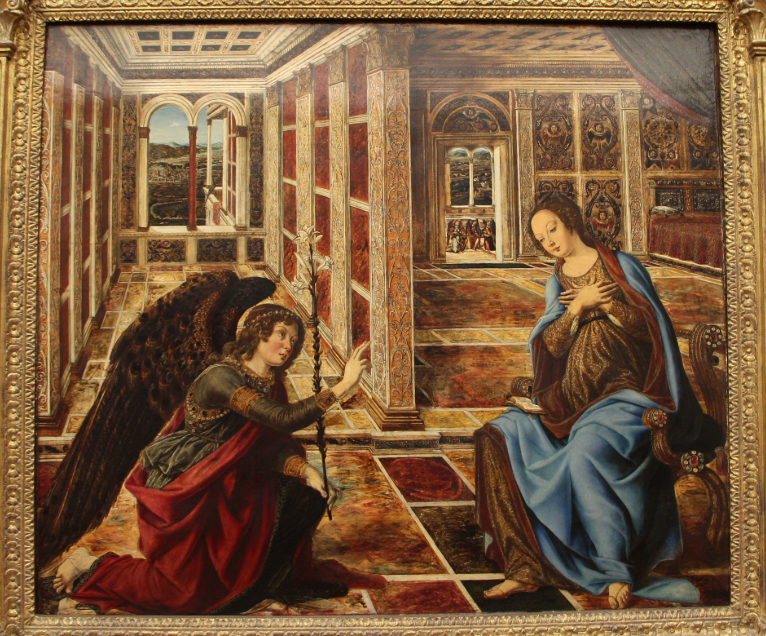
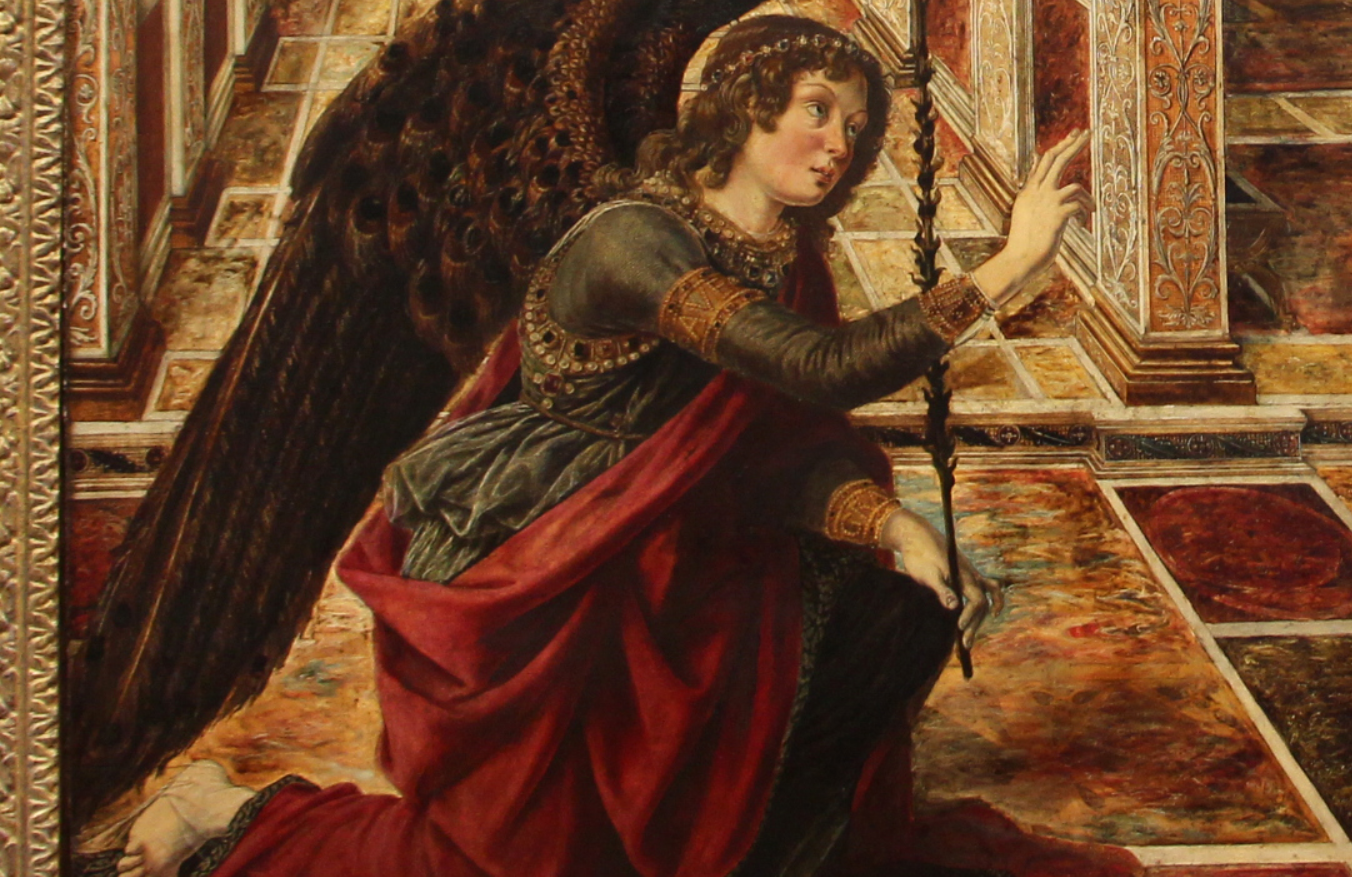
L’Arcangelo Gabriele riccamente abbigliato e con il capo coronato con un diadema arricchito di pietre preziose, si inginocchia dinanzi alla Vergine e con le tre dita alzate della mano destra la benedice mentre le annuncia la nascita di Nostro Signore.
Con la mano sinistra sostiene un ramo di gigli bianchi: simbolo di purezza.
Osservate i dettagli straordinari di questo capolavoro. Le ali dell’angelo, nella parte più alta, riproducono le classiche occhiellature della coda dei pavoni maschi.
Sui manicotti metallici e sul bracciale alla schiava che porta l’Arcangelo, si leggono le parole AVE, GRA e MRA. “Ave Maria piena di grazia” sono le parole con le quali Gabriele si rivolse a Maria.
Maria è seduta su una sedia arricchita con perle e rubini. Guardando bene vi renderete conto che le perle, simbolo di purezza ma anche di lacrime, sono disposte a cerchio mentre al centro è collocato un rubino.
Il suo colore rosso richiama il sangue di Cristo e quindi la passione che gli toccherà affrontare.
Ogni dettaglio è curato in modo quasi maniacale. Il manto della Vergine, azzurro all’esterno e foderato di pelliccia marrone all’interno, lascia intravedere il raffinatissimo abito in broccato.
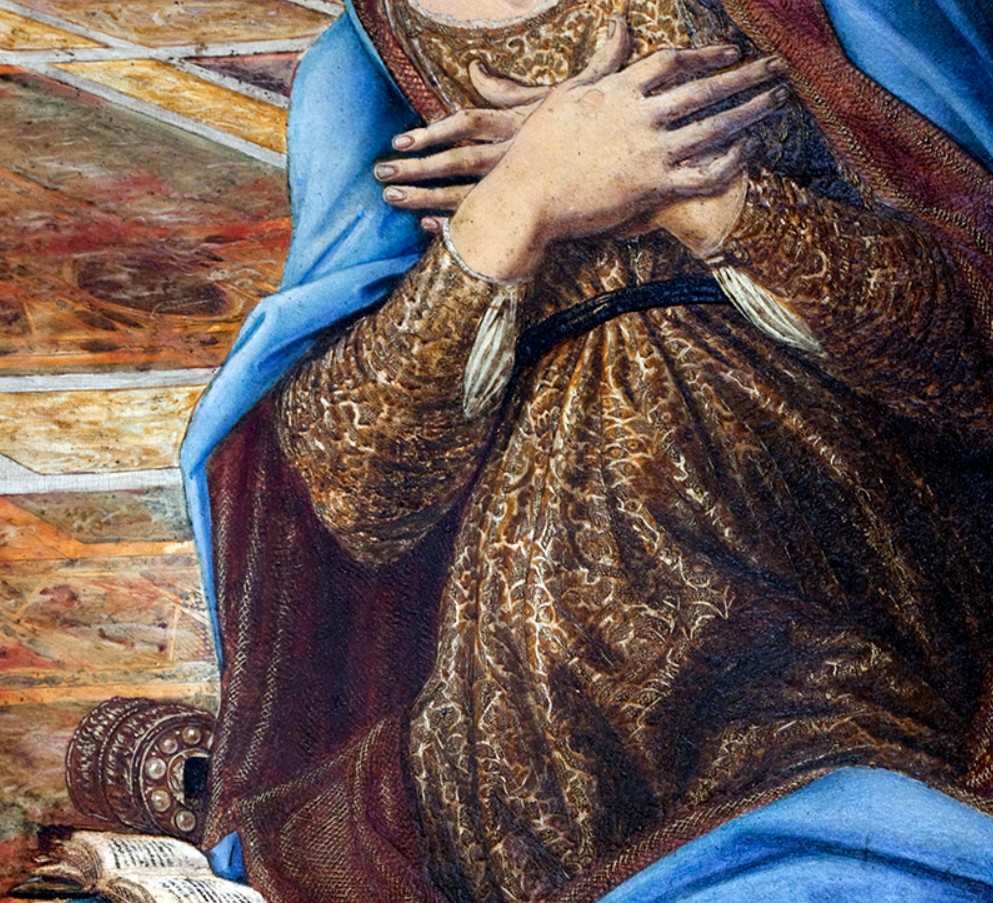
La Vergine ha sulla gamba destra un libro di Sacre Scritture che stava leggendo prima dell’arrivo dell’Arcangelo.
La scena in cui sono raffigurati i due protagonismi è ricca e complessa. Come di consueto accade in tante annunciazioni, l’Arcangelo e la Madonna sono visivamente ma non fisicamente separati da una parete vista di taglio.
Alle spalle della Vergine si intravede il letto il che ci fa pensare fosse stata sorpresa in camera sua. Alle sue spalle una serie di grottesche e tre angeli musicanti dipinti al di sotto della bifora.
Per il momento il sempre vostro Michelangelo Buonarroti vi saluta dandovi appuntamento ai prossimi post e sui social.
March 25: the highly detailed Annunciation by Pollaiolo
The work painted in tempera on wood was created by the artist between 1480 and 1485 approximately, but it is not known who commissioned it or for what place.
It is probably an altarpiece for a Florentine church, although we are not certain.
The iconography of the work follows the more traditional Florentine Annunciations of that period.
The Archangel Gabriel, richly dressed and with his head crowned with a diadem enriched with precious stones, kneels before the Virgin and with the three raised fingers of his right hand blesses her while announcing the birth of Our Lord.
With his left hand he holds a branch of white lilies: a symbol of purity.
Observe the extraordinary details of this masterpiece. The angel’s wings, in the highest part, reproduce the classic eyelets of the tail of male peacocks. On the metal sleeves and on the bracelet of the slave that the Archangel wears, you can read the words AVE, GRA and MRA. “Ave Maria piena di grazia” are the words with which Gabriele addressed Mary.
Mary is sitting on a chair enriched with pearls and rubies. Looking closely you will realize that the pearls, symbol of purity but also of tears, are arranged in a circle while in the center is placed a ruby. Its red color recalls the blood of Christ and therefore the passion that he will have to face.
Every detail is taken care of in an almost obsessive way. The Virgin’s cloak, blue on the outside and lined with brown fur on the inside, allows a glimpse of the very refined brocade dress.
The Virgin has on her right leg a book of Holy Scriptures that she was reading before the arrival of the Archangel.
The scene in which the two protagonists are depicted is rich and complex. As usual in many annunciations, the Archangel and the Madonna are visually but not physically separated by a wall seen from the side.
Behind the Virgin we can see the bed which makes us think she was surprised in her room. Behind her a series of grotesques and three musician angels painted below the mullioned window.
For the moment, the ever-your Michelangelo Buonarroti bids you farewell, making an appointment with you in the next posts and on social media.

Sostienici – Support Us
Se questo blog ti piace e ti appassiona, puoi aiutarci a farlo crescere sempre più sostenendoci in modo concreto condividendo i post, seguendo le pagine social e con un contributo che ci aiuta ad andare avanti con il nostro lavoro di divulgazione. . ENGLISH: If you like and are passionate about this blog, you can help us make it grow more and more by supporting us in a concrete way by sharing posts, following social pages and with a contribution that helps us to move forward with our dissemination work.
10,00 €
Condividi:


Questo sono io





sostienici

Sostienici – Support Us
Se questo blog ti piace e ti appassiona, puoi aiutarci a farlo crescere sempre più sostenendoci in modo concreto condividendo i post, seguendo le pagine social e con un contributo che ci aiuta ad andare avanti con il nostro lavoro di divulgazione. . ENGLISH: If you like and are passionate about this blog, you can help us make it grow more and more by supporting us in a concrete way by sharing posts, following social pages and with a contribution that helps us to move forward with our dissemination work.
€10,00


Verrebbe da dire una ricchezza inconsueta per l’umile madre di Cristo
"Mi piace"Piace a 1 persona